Chicken Breast Fajitas
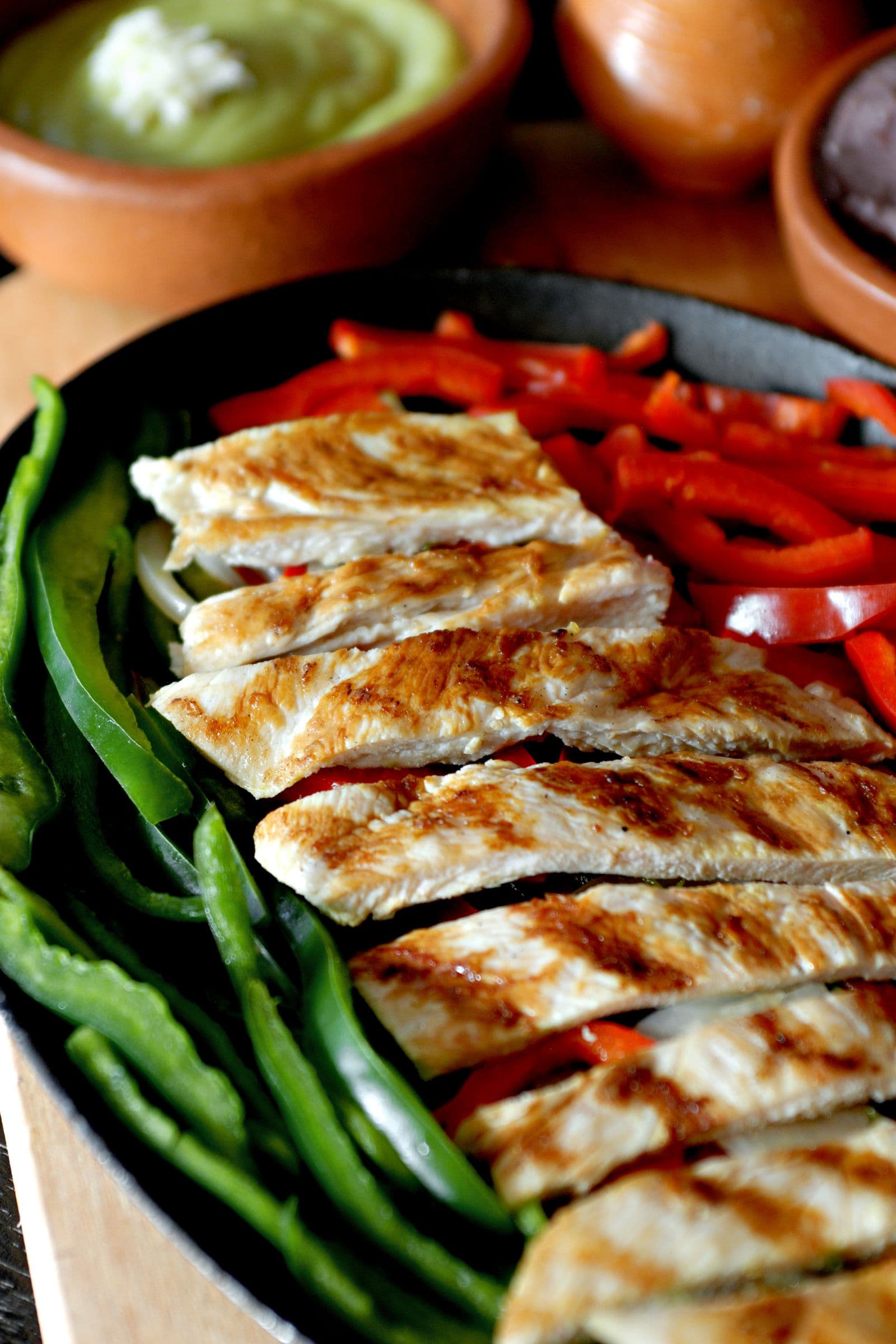
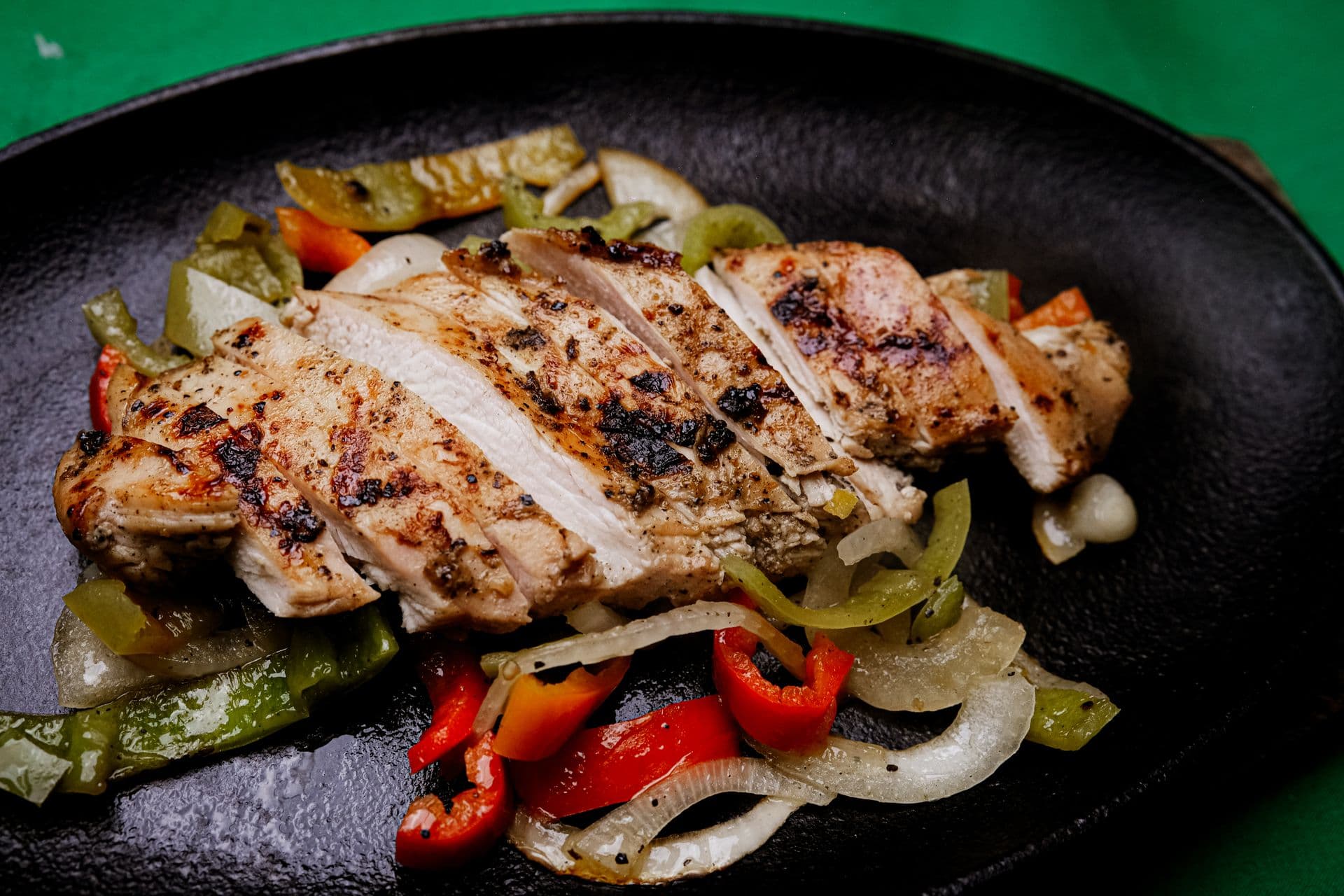
Chicken breast fajitas stay juicy when you fix the two things that dry breast out: uneven thickness and overcooking. Pound the breasts to an even 1/2 inch so the thin end does not finish minutes before the thick end, then sear hot and fast and pull the moment a thermometer reads 165°F. A quick 20-minute saltwater brine adds a further buffer. Slice against the grain and toss with charred peppers for a leaner take on the classic.
- Prep
- 35m
- Cook
- 12m
- Rest
- 5m
- Total
- 45m
- Serves
- 4
- Level
- moderate
 Pexels contributor · Pexels License
A technique-focused breast recipe: even pounding, a short brine, and a hard stop at 165°F to keep lean meat from drying out.
Ingredients
Showing ingredients for 4 servings in US customary units.
Brine
- 3 cupsWater
- 3 tbspKosher salt (optional)Dissolved in the water for a quick 20-minute brine, not the finishing salt.Shop
Chicken
Vegetables
To serve
- 8Flour tortillas, warmedShop
Cook times are not scaled with servings — adjust pan size and cook in batches as needed. Salt and “to taste” items are intentionally left for your judgment.
🛒 links open an Amazon search for that ingredient. Some links may earn FajitaRecipe.com a commission if you buy through Amazon, at no extra cost to you.
Step by step
How to make it
Pound
Step 1. Place each breast between sheets of plastic wrap and pound with the flat side of a meat mallet to an even 1/2-inch thickness throughout, including the thick lobe.
~10 min
Brine
Step 2. Stir the salt into the water until dissolved and submerge the pounded breasts for 20 minutes. This is optional but adds a buffer of seasoned moisture before cooking.
~20 min
Season
Step 3. Remove the chicken from the brine and pat completely dry — a wet surface will not sear. Rub with 1 tablespoon oil and the fajita seasoning.
~5 min
Sear
Step 4. Heat a cast-iron skillet over medium-high until it shimmers. Sear the breasts 4–5 minutes per side, checking early with a thermometer, and pull them the instant the thickest part reads 165°F.
~9 min165°F
Rest and slice
Step 5. Rest the chicken on a cutting board 5 minutes, then slice against the grain into 1/2-inch strips.
~5 min
Cook vegetables
Step 6. Add the remaining oil to the same pan and cook the peppers and onion over high heat 5–6 minutes, stirring occasionally, until charred and just tender.
~6 min
Combine
Step 7. Return the sliced chicken to the pan just long enough to warm through, about 30 seconds — any longer risks drying it out further. Squeeze lime over the top and adjust salt.
~1 min
Serve
Step 8. Serve immediately in warm tortillas so the chicken does not keep cooking on a hot platter.
Doneness & safety
Chicken (all cuts)165°F / 74°C
Cook chicken to a minimum internal temperature of 165°F (74°C), measured at the thickest part with an instant-read thermometer.
Source: USDA Food Safety and Inspection Service · reviewed 2026-07-04
Leftover storage
Refrigerate cooked fajita fillings within 2 hours (1 hour if above 90°F ambient). Store at or below 40°F, use within 3–4 days, and reheat to 165°F.
Source: USDA Food Safety and Inspection Service · reviewed 2026-07-04
🛒 Shop this recipe
Pantry & spices
Fresh ingredients
Fresh items open an Amazon search — availability varies by location.
Cookware & tools
- Lodge 12-inch Cast Iron Skillet · L10SK3Find →
- Lodge Silicone Hot Handle Holder · ASHH11Find →
- ThermoWorks Thermapen ONE · Thermapen ONEFind →
- OXO Good Grips 12-inch Tongs · Good Grips 12" Locking TongsFind →
- Victorinox Fibrox Pro 8-inch Chef’s Knife · 5.2063.20 (Fibrox Pro 8")Find →
Already own these? Use what you have — no need to buy.
Recommendations are chosen to help you cook better fajitas; some Amazon links may earn a commission at no extra cost to you.
Fix it
If your breast fajitas keep coming out dry
Three culprits cover almost every case: uneven thickness (fix with pounding), pulling the chicken later than 165°F (fix with an instant-read thermometer, not a timer), and reheating the sliced chicken too long when you add it back to the pan with the vegetables — thirty seconds is enough. If it is still dry after fixing those, try the brine step, which is the difference-maker for a cut this lean.
Substitutions
| Instead of | Use | Adjust | Expect | Avoid when |
|---|---|---|---|---|
| Chicken breast | Boneless skinless chicken thighs | Same weight; skip the pounding step since thigh is naturally more even. Sear a couple minutes longer per side and do not worry as much about hitting 165°F exactly. | Richer and far more forgiving, with less risk of drying out. | — |
| Saltwater brine | Buttermilk brine | Substitute buttermilk for the water and salt, 20–30 minutes in the fridge. | Slightly more tender texture from the mild acidity, with a faint tang. | Skip if you are short on time — the plain 20-minute saltwater version is nearly as effective. |
| Cast-iron skillet | Stainless steel skillet | Preheat the same way and use a bit more oil to prevent sticking. | Comparable sear with slightly less heat retention between batches. | — |
The science
Why breast dries out so easily
Chicken breast is almost entirely lean muscle fiber with very little intramuscular fat to baste it and no connective tissue to soften into moisture-holding gelatin. Its proteins begin to tighten and squeeze out water steadily as internal temperature climbs, and unlike thigh, there is no fat reserve to offset that loss. That means breast has a narrow window: undercooked below 165°F, dry within a few degrees above it. A short saltwater brine helps because dissolved salt lets muscle fibers hold onto more of their own water through that narrow window.
The call: Treat 165°F as a ceiling, not a target, and consider a brine to buy a wider margin.
Technique
Pound to one thickness before you do anything else
A whole chicken breast tapers from a thick lobe to a thin tail, so cooked as-is, the thin end is often dry and overdone by the time the thick end clears 165°F. Pounding it to one even thickness with a mallet solves this at the source: every part of the piece reaches doneness at the same moment, so there is no compromise between an undercooked center and an overcooked edge. Do this before brining or seasoning so the surface takes on flavor evenly too.
The call: Pound to an even thickness first so the whole piece finishes cooking at the same time.
Equipment for this recipe
Disclosure: As an Amazon Associate, FajitaRecipe.com earns from qualifying purchases. Recommendations are chosen to help you cook better fajitas; some Amazon links may earn a commission at no extra cost to you. See our selection methodology.
For cast-iron fajitas
 Lodge
LodgeModel L10SK3
A heavy 12-inch Lodge gives two servings of steak enough hot surface to brown without crowding. It is still too small for a six-person batch, which should be seared in rounds.
Best for: Everyday 2–4 serving skillet fajitas with a hard sear.
 Lodge
LodgeModel ASHH11
A cast-iron handle reaches the same temperature as the pan. A slip-on holder is the difference between confidently moving the skillet and dropping it.
Best for: Anyone using a blazing-hot cast-iron or carbon-steel handle.
 ThermoWorks
Model Thermapen ONE
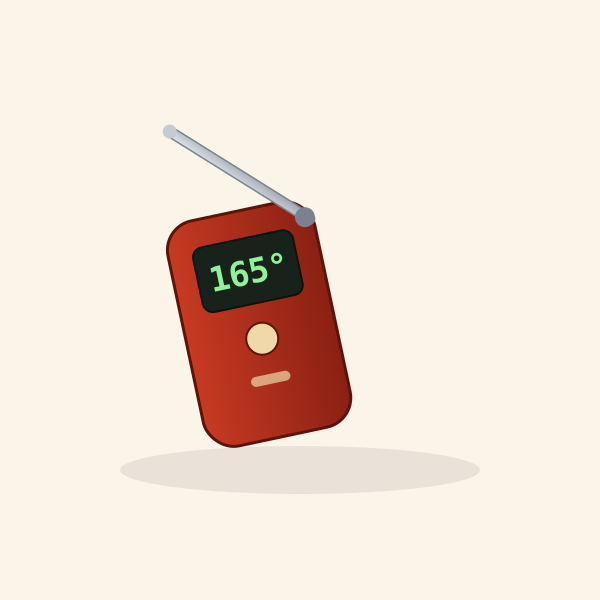
Thin fajita chicken and steak swing past target in seconds. A one-second read lets you pull chicken at 165°F and steak at your chosen doneness before carryover overshoots.
Best for: A one-second, dependable read on thin proteins.
OXOModel Good Grips 12" Locking Tongs
Twelve-inch tongs keep your hand out of the smoke while you toss peppers and flip strips in a ripping-hot pan.
Best for: Tossing peppers and turning strips over high heat.
For peppers & onions
 Victorinox
Model 5.2063.20 (Fibrox Pro 8")
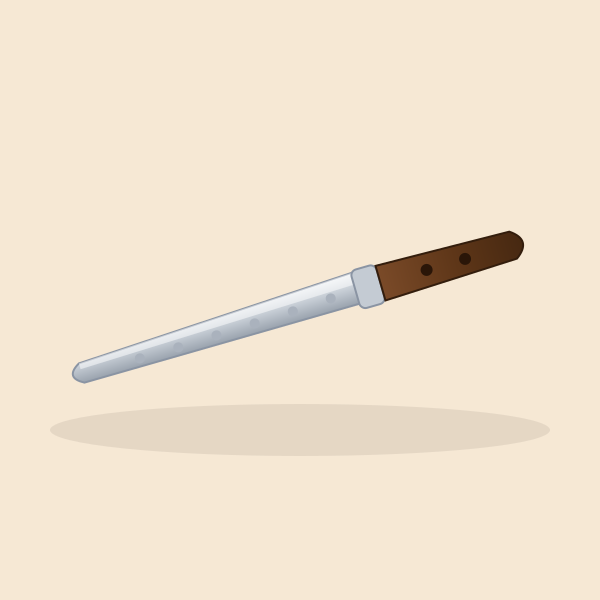
A sharp 8-inch chef’s knife handles the pepper and onion prep fajitas live on. The Fibrox handle grips even when your hands are wet from vegetables.
Best for: Slicing peppers and onions and general prep.
OXOModel Good Grips 12" Locking Tongs
Twelve-inch tongs keep your hand out of the smoke while you toss peppers and flip strips in a ripping-hot pan.
Best for: Tossing peppers and turning strips over high heat.
Frequently asked questions
+How do I keep chicken breast from drying out in fajitas?
Pound it to an even thickness so it cooks uniformly, pull it from the heat at exactly 165°F using a thermometer, and only reheat it briefly once sliced. A short brine adds extra insurance.
+Is brining chicken breast for fajitas worth it?
For a lean cut like breast, yes — even 20 minutes in a simple saltwater brine measurably improves juiciness with almost no extra effort. It is optional but recommended if you have the time.
+How thin should I pound chicken breast for fajitas?
About 1/2 inch, and evenly across the whole piece including the thick lobe. That uniform thickness is what keeps the thin end from overcooking before the thick end is done.
+Can I use a meat thermometer instead of cutting into the chicken to check doneness?
Yes, and you should — an instant-read thermometer in the thickest part reading 165°F is more reliable than color or cutting, which lets juices escape before you even plate it.
Testing, sources & disclosure
This recipe was developed and reviewed by our editors. We publish full kitchen-test notes here once a recipe has been cooked and verified in our kitchen.
- Author:
- FajitaRecipe Editorial
- Last reviewed:
- 2026-07-06
Sources
- Safe Minimum Internal Temperature Chart, USDA FSIS linkSupports: Poultry minimum internal temperature
As an Amazon Associate, FajitaRecipe.com earns from qualifying purchases. We do not provide medical or dietary advice; follow USDA guidance for food safety.
Keep cooking
You might also like
 Pexels contributor · Pexels License
Cast-Iron Chicken Fajitas
33 min · moderate
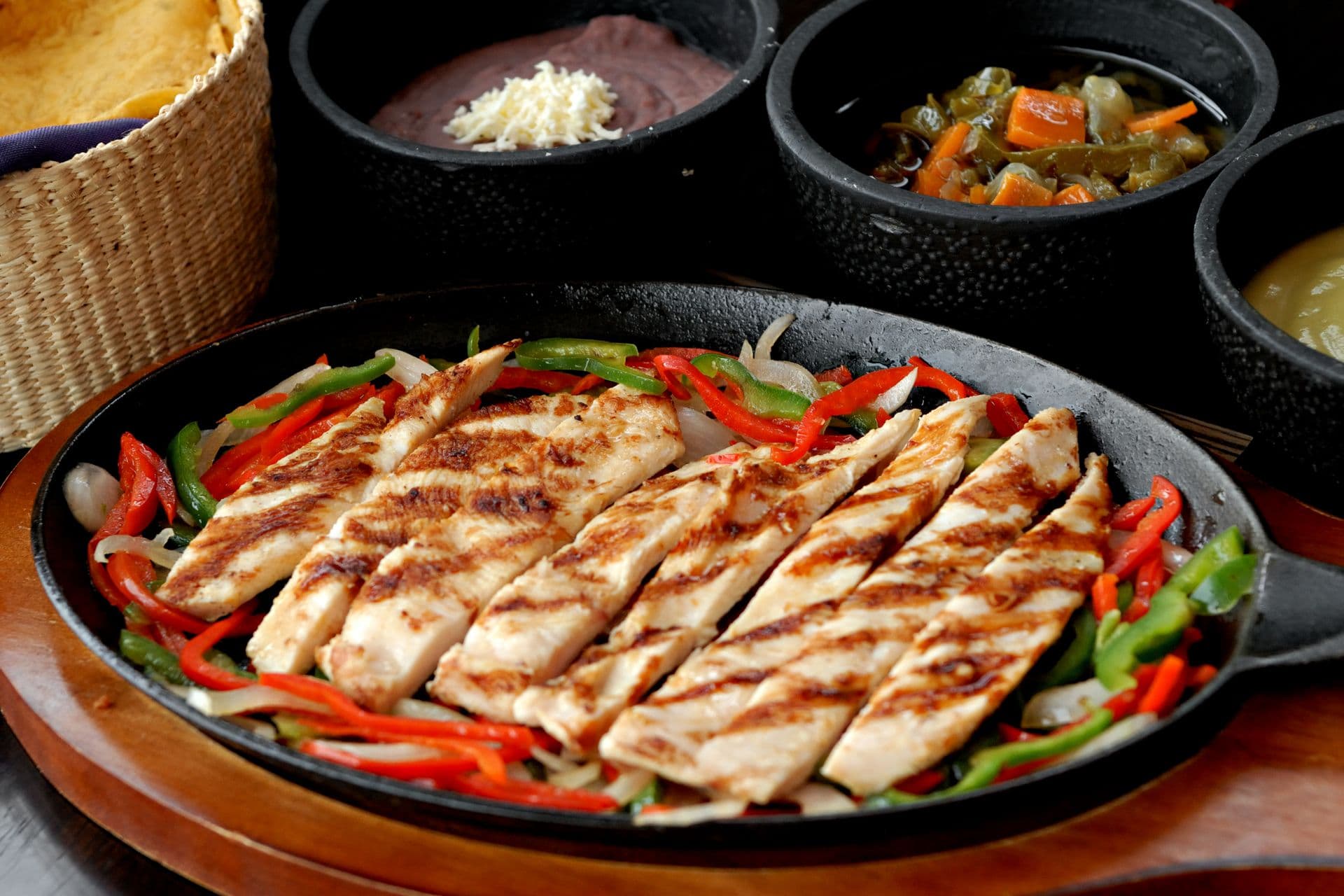
Cast-iron chicken fajitas trade convenience for a deep restaurant-style sear. A preheated cast-iron skillet holds so much heat that seasoned thigh strips brown hard without cooling the pan, and the peppers blister in batches rather than steaming. Work in stages, keep the pan roaring, and cook the chicken to 165°F. The payoff is charred edges and juicy meat you cannot get from a lighter pan.
 Pexels contributor · Pexels License
Classic Chicken Fajitas
30 min · easy
Classic chicken fajitas come together in one skillet in about half an hour. Sear seasoned strips of boneless skinless thigh over medium-high heat until browned, cook the peppers and onions in the same pan so they pick up the fond, then finish with a squeeze of lime. Cook the chicken to 165°F, pile it into warm tortillas, and add your toppings.
Chicken Fajita Marinade
A chicken fajita marinade leans on lime and cumin with plenty of oil and garlic, and because chicken is forgiving it can soak longer than steak — one to six hours in the fridge. An optional buttermilk or plain yogurt version uses gentle dairy acid and enzymes to keep lean breast juicy without the mushy edge that too much citrus causes. It comes together in about ten minutes.