Culture & history
The History of Fajitas: From Ranch Scraps to National Dish
Fajitas began as a practical way for Mexican and Tejano ranch hands to use a tough, inexpensive cut of beef, then traveled through South Texas kitchens and restaurant grills to become one of the best-known dishes in American dining. The exact path from cattle camp to menu icon is documented in pieces, not as a single tidy story.
 Garune-San · CC BY-SA 4.0
A cut born of the cattle economy
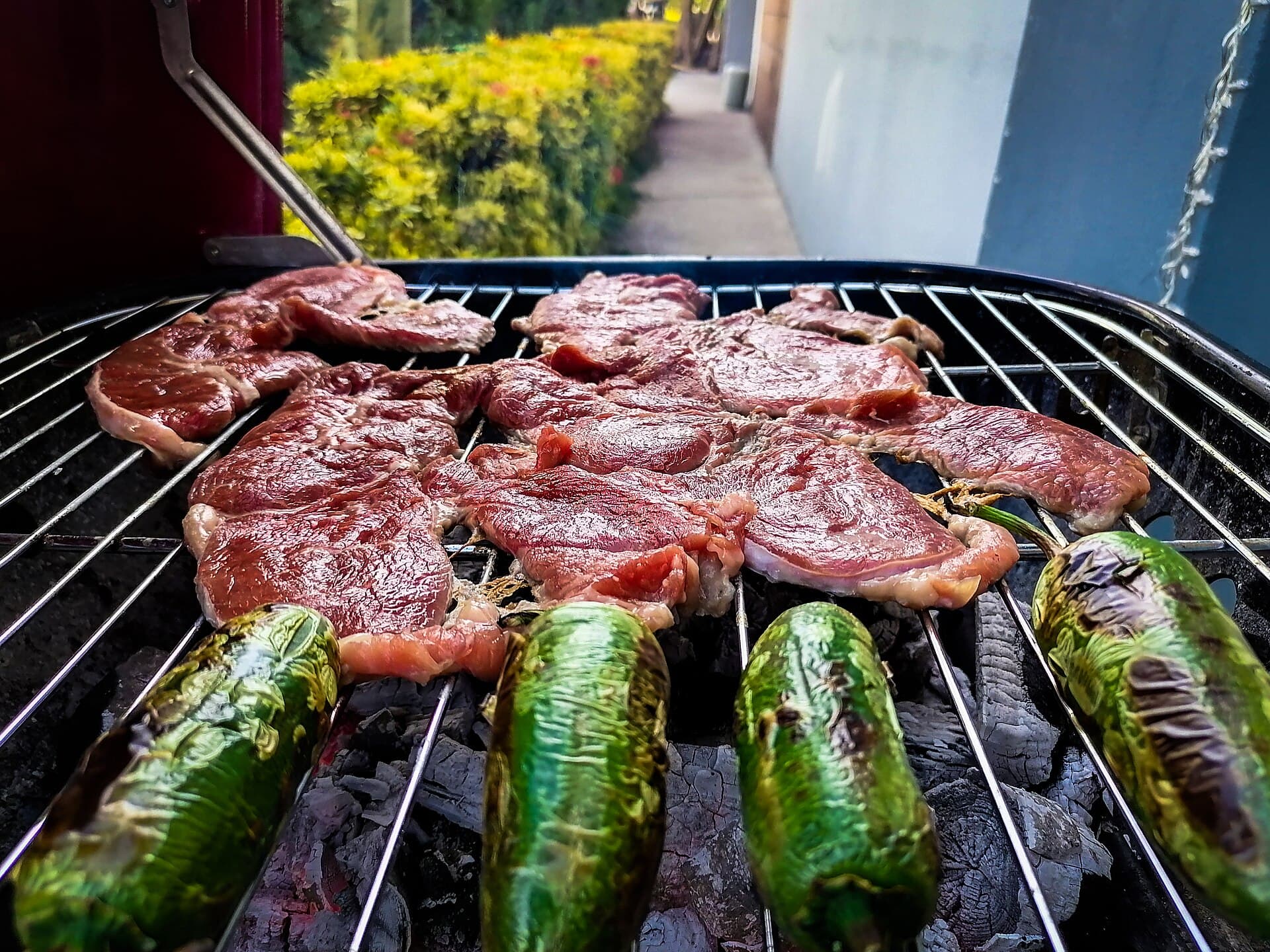
The word "fajita" traces to "faja," Spanish for belt or strip, describing the skirt steak's long, fibrous shape as it lies against the cow's diaphragm. When cattle were butchered on South Texas and northern Mexican ranches in the early-to-mid twentieth century, the skirt was rarely a cut a rancher kept for himself. Beef companies and landowners often paid vaquero and Tejano workers partly in cash and partly in undervalued cuts of meat, and skirt steak — tough, sinewy, and cheap — was among them.
That distribution pattern, documented by Texas food historians and the Texas State Historical Association's Handbook of Texas, put skirt steak into the hands of people who knew how to cook it well: marinate it, grill it hot and fast over mesquite or an open flame, then slice it thin against the grain. The result was a ranch-kitchen dish born of thrift and skill rather than luxury.
From cattle camp to home kitchen
Long before it appeared on a restaurant menu, this dish existed informally across ranching communities in the Rio Grande Valley and the borderlands, prepared at home or cooked outdoors at gatherings. Because it lived in oral and domestic tradition rather than in cookbooks or newspapers for decades, historians describe its earliest years as loosely documented — a food that many families associate with a specific grandparent or hometown, but that no single written record pins to one origin point.
This is also why food historians resist crowning a single inventor. The Handbook of Texas and food-history researchers who have studied Tex-Mex cuisine agree that "fajitas" as a home and ranch-kitchen practice predates its restaurant fame by decades, but they stop short of naming an individual originator, since the practice appears to have developed in parallel across ranching communities.
Skirt steak was a rancher's cut before it was a restaurant's signature.
The leap to restaurant menus
The dish's transformation into "fajitas" as a named, orderable menu item is better documented, though still contested in its finer details. In 1973, Houston restaurateur Ninfa Laurenzo began serving grilled, chopped skirt steak wrapped in handmade flour tortillas — tacos al carbón — at her small East End restaurant, Ninfa's, and is widely credited with popularizing the dish in Houston. Around the same period, a Hyatt Regency hotel restaurant in Austin also began serving a version of fajitas, and food writers researching the dish's history have found that determining which came first, or who deserves credit for the now-iconic sizzling presentation, is not something the historical record settles cleanly.
What is well established is the trajectory afterward: by the early 1980s, fajitas had moved from a regional South Texas specialty into national restaurant chains, and by the 1990s the word was common on menus across the United States, frequently applied to chicken, shrimp, and vegetables far removed from the original skirt steak.
Why the record stays incomplete
Much of this history was preserved through interviews, restaurant lore, and regional journalism rather than formal archives, which is typical of working-class and immigrant foodways more broadly. Historians studying Tex-Mex cuisine note that dishes tied to ranch labor and border communities were often written about only after they had already become commercially successful, which means the earlier, unglamorous history is reconstructed from memory and secondary sources rather than contemporaneous documentation.
That gap is worth naming honestly rather than papering over with a tidy founding myth. The fajita's history is best understood as a convergence: a butchery custom, a ranching economy, and a wave of Tex-Mex restaurants that each played a role, none of them the sole author of the dish.
Timeline
- c. 1930s–1940sContested
Skirt steak enters ranch-kitchen cooking
Ranch and cattle-company workers in South Texas and northern Mexico receive skirt steak as part of in-kind pay and develop marinating and grilling techniques to make the tough cut palatable.
- 1960s–1970sContested
Restaurant popularization begins
South Texas restaurateurs, particularly around Austin and the Rio Grande Valley, begin serving grilled, sliced skirt steak as a named menu item, though the first specific restaurant is disputed.
- 1969–1973Contested
Sizzling presentation popularized
The now-iconic tableside sizzling cast-iron platter is associated with several competing restaurant claims from this period; historians treat none as conclusively "first."
- Early 1980s
Fajitas go national
Chain restaurants begin adding fajitas to menus outside Texas, accelerating the dish's spread across the United States.
- 1990s
The word broadens
"Fajita" becomes a generic restaurant term applied to chicken, shrimp, and vegetable preparations well beyond the original skirt-steak dish.
Related on Amazon
Some links may earn FajitaRecipe.com a commission if you buy through Amazon, at no extra cost to you.
Sources & further reading
- Tex-Mex Foods — Texas State Historical Association, Handbook of Texas. Notes fajitas as a South Texas folk dish and situates it within Tex-Mex regional foodways.
- Low Steaks — Texas Monthly. Reporting on the contested restaurant history of the fajita, including competing claims to its popularization.
- Fajita History — Austin Chronicle. Regional journalism on the fajita's move from ranch cooking to Austin-area restaurant menus.
- Ninfa's Mexican Restaurants — Texas State Historical Association, Handbook of Texas. History of Houston's Ninfa's and its role in popularizing grilled skirt steak tacos in the 1970s.