Cast-Iron Steak Fajitas
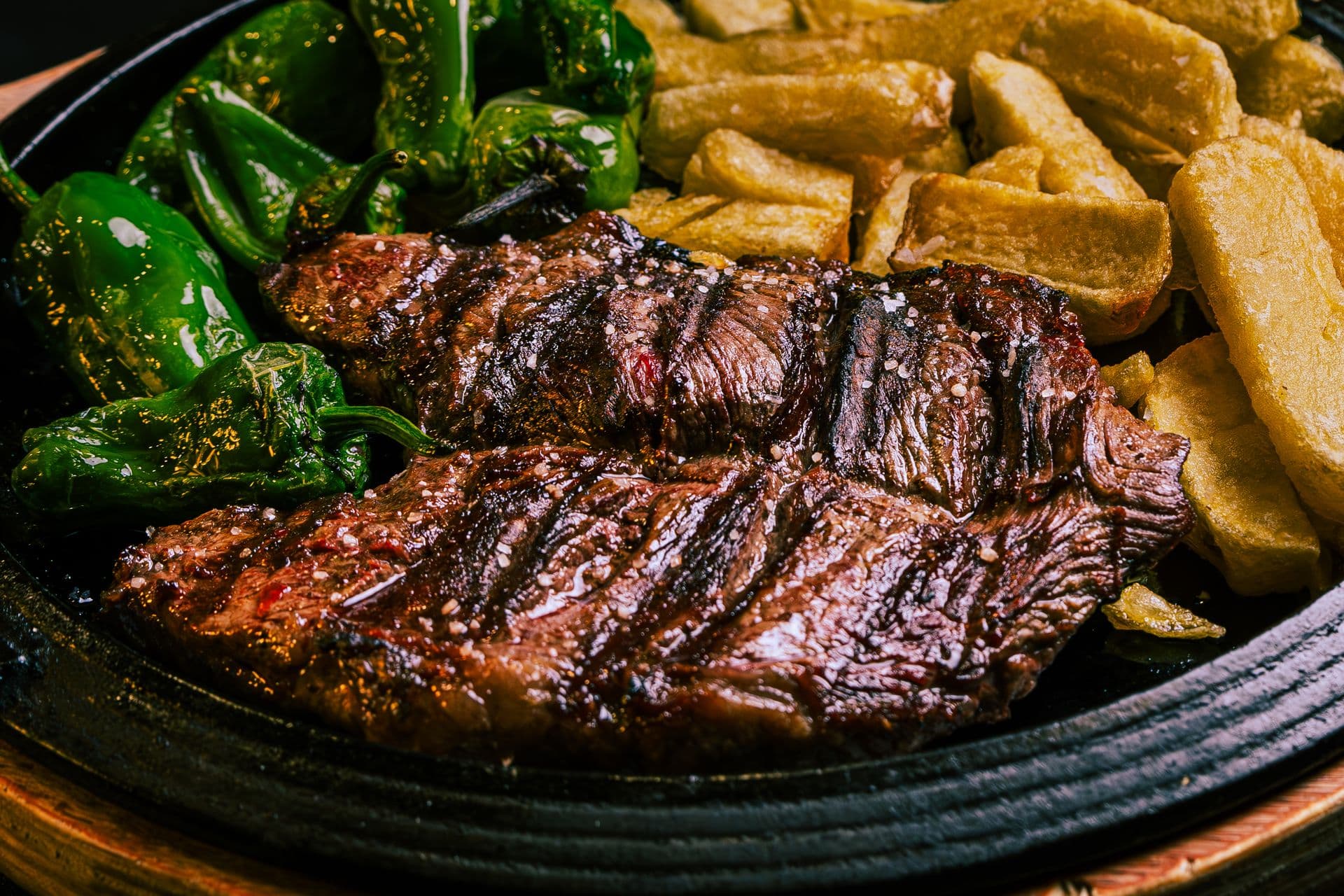
Cast-iron steak fajitas rely on a blazing-hot skillet to sear thin skirt or flank steak in under four minutes, then char peppers and onions in the rendered beef fat. Slice the rested steak against the grain, keep the pan crowd-free, and you get deep browning without steaming the meat gray. It is the closest a home stove comes to a restaurant flat-top.
- Prep
- 20m
- Cook
- 15m
- Rest
- 5m
- Total
- 40m
- Serves
- 4
- Level
- moderate
 Pexels contributor · Pexels License
A one-pan, high-heat skillet method that mimics a restaurant flat-top for weeknight steak fajitas.
Ingredients
Showing ingredients for 4 servings in US customary units.
Steak & marinade
- 1½ lbSkirt steak, trimmed, cut into 2 pieces to fit the panSearch
- 3 tbspLime juice, freshly squeezed (about 2 limes)Search
- 2 tbspNeutral oilUse a high-smoke-point oil for the hot sear.Shop
- 2 tbspFajita seasoningUse the homemade blend from our seasoning guide.Shop
- To tasteKosher saltTo taste — salt judgment depends on your seasoning blend.Shop
Peppers & onions
To serve
- 8Flour tortillas, warmedShop
Cook times are not scaled with servings — adjust pan size and cook in batches as needed. Salt and “to taste” items are intentionally left for your judgment.
🛒 links open an Amazon search for that ingredient. Some links may earn FajitaRecipe.com a commission if you buy through Amazon, at no extra cost to you.
Step by step
How to make it
Marinate
Step 1. Combine lime juice, oil, and fajita seasoning. Coat the steak and marinate 15–30 minutes in the refrigerator — no longer, or the acid turns the surface mushy.
~20 min
Sear
Step 2. Heat a 12-inch cast-iron skillet over high until it lightly smokes (about 5 minutes). Pat the steak dry, then sear undisturbed 2–3 minutes per side to 130–135°F for medium-rare.
~6 min135°F
Rest
Step 3. Move the steak to a board and rest 5 minutes while you cook the vegetables. Resting lets carryover finish the cook and keeps juices in the meat.
~5 min
Char vegetables
Step 4. In the same pan and rendered fat, cook onions and peppers over high heat, tossing only every 60–90 seconds so they blister instead of steam, 5–7 minutes.
~7 min
Slice & serve
Step 5. Slice the steak against the grain into thin strips, toss with the vegetables and any board juices, and serve immediately with warm tortillas.
Doneness & safety
Beef steak (whole cuts)145°F / 63°C
Cook whole-muscle beef (skirt, flank, sirloin) to a minimum internal temperature of 145°F (63°C), then rest 3 minutes. Many cooks pull skirt/flank medium-rare to medium for tenderness; 145°F is the published minimum for whole cuts.
Source: USDA Food Safety and Inspection Service · reviewed 2026-07-04
Marinating safely
Always marinate in the refrigerator, never on the counter. Discard used marinade or boil it before reusing as a sauce.
Source: USDA Food Safety and Inspection Service · reviewed 2026-07-04
🛒 Shop this recipe
Pantry & spices
Fresh ingredients
Fresh items open an Amazon search — availability varies by location.
Cookware & tools
- Lodge 12-inch Cast Iron Skillet · L10SK3Find →
- Lodge Silicone Hot Handle Holder · ASHH11Find →
- ThermoWorks Thermapen ONE · Thermapen ONEFind →
- OXO Good Grips 12-inch Tongs · Good Grips 12" Locking TongsFind →
- Victorinox Fibrox 12-inch Granton Slicing Knife · 5.4233.30 (Fibrox 12" Granton)Find →
- John Boos Reversible Maple Cutting Board · RA03 (24 x 18 in)Find →
- ThermoWorks ThermoPop 2 · ThermoPop 2Find →
Already own these? Use what you have — no need to buy.
Recommendations are chosen to help you cook better fajitas; some Amazon links may earn a commission at no extra cost to you.
Substitutions
| Instead of | Use | Adjust | Expect | Avoid when |
|---|---|---|---|---|
| Skirt steak | Flank steak | Use the same weight. Flank is thicker — sear an extra minute per side and slice thinner. | Slightly leaner, a touch less beefy. | Avoid for well-done doneness; flank dries out faster than skirt. |
| Cast-iron skillet | Carbon-steel or heavy stainless pan | Preheat longer and cook in two batches to keep the surface hot. | Comparable char if you avoid crowding the pan. | Skip nonstick — it cannot take the heat needed for a real sear. |
The science
Why a dry surface and a hot pan matter
Browning (the Maillard reaction) accelerates above roughly 300°F, but it only starts once surface moisture has boiled off. A wet steak dropped into a crowded pan spends its first minutes steaming — the pan temperature crashes, no crust forms, and the meat turns gray. Patting the steak dry and preheating cast iron until it faintly smokes means the surface browns immediately instead of simmering in its own juices.
The call: Pat the steak dry and preheat until smoking before it touches the pan.
The science
Citrus works on the surface, not the center
Lime juice denatures proteins on the very outer layer of the steak, which improves flavor and a thin bit of texture — but acid does not deeply tenderize a whole cut, and given hours it makes the exterior chalky. That is why this marinade is short. Real tenderness on skirt and flank comes from slicing thinly against the grain, not from long acidic soaks.
The call: Keep the marinade to 15–30 minutes; rely on slicing for tenderness.
Technique
Slicing against the grain
Skirt and flank steak have long, visible muscle fibers. Cutting perpendicular to those fibers shortens them, so each bite needs far less chewing. Look for the direction the lines run, then slice across them at a slight angle into 1/4-inch strips.
The call: Identify the grain direction before slicing and cut across it.
Equipment for this recipe
Disclosure: As an Amazon Associate, FajitaRecipe.com earns from qualifying purchases. Recommendations are chosen to help you cook better fajitas; some Amazon links may earn a commission at no extra cost to you. See our selection methodology.
For cast-iron fajitas
 Lodge
LodgeModel L10SK3
A heavy 12-inch Lodge gives two servings of steak enough hot surface to brown without crowding. It is still too small for a six-person batch, which should be seared in rounds.
Best for: Everyday 2–4 serving skillet fajitas with a hard sear.
 Lodge
LodgeModel ASHH11
A cast-iron handle reaches the same temperature as the pan. A slip-on holder is the difference between confidently moving the skillet and dropping it.
Best for: Anyone using a blazing-hot cast-iron or carbon-steel handle.
 ThermoWorks
Model Thermapen ONE
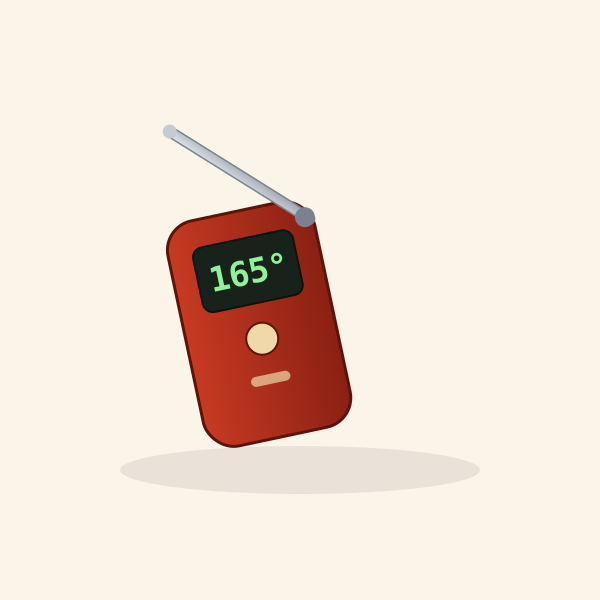
Thin fajita chicken and steak swing past target in seconds. A one-second read lets you pull chicken at 165°F and steak at your chosen doneness before carryover overshoots.
Best for: A one-second, dependable read on thin proteins.
OXOModel Good Grips 12" Locking Tongs
Twelve-inch tongs keep your hand out of the smoke while you toss peppers and flip strips in a ripping-hot pan.
Best for: Tossing peppers and turning strips over high heat.
For slicing steak
 Victorinox
Model 5.4233.30 (Fibrox 12" Granton)
Thin, even slices across the grain are what make skirt and flank tender. A long granton slicer does it in one clean stroke instead of sawing.
Best for: Clean, thin, against-the-grain slices on skirt and flank steak.
John BoosModel RA03 (24 x 18 in)
A roomy board with a juice groove lets steak rest and be sliced in one place; pour the caught juices back over the strips before serving.
Best for: Resting and slicing steak with room to spare.
ThermoWorksModel ThermoPop 2
You do not need a premium thermometer to cook safe chicken. The ThermoPop 2 is accurate and a few seconds slower — a great-value pick from the same maker.
Best for: A reliable read without the premium price.
Gear & how it works
What cast iron does that a thin pan cannot
Cast iron’s value is thermal mass. A thick iron skillet stores a large reserve of heat, so when cold steak hits the surface the pan barely dips in temperature and keeps searing. A thin stainless or nonstick pan sheds its heat instantly, stalls at the steaming point, and never recovers before the meat overcooks. That stored energy is also why cast iron holds a steady high heat for the vegetables after the steak comes out, giving them char instead of a soggy braise.
The call: Use a heavy iron pan so the surface stays hot when the cold steak lands.
Serving & storage
Storing and reheating
Refrigerate leftover filling within two hours in a shallow container and use within 3–4 days. Reheat quickly in a hot skillet rather than a microwave to avoid overcooking the already-cooked steak; add a splash of water to the pan to loosen the vegetables.
Frequently asked questions
+Should I slice the steak before or after cooking?
After. Searing whole pieces builds a better crust and keeps the interior juicy; slicing before cooking overcooks the thin strips and loses juices to the pan.
+How long should I marinate skirt steak for fajitas?
15–30 minutes is plenty. The lime acid mostly affects the surface, and longer soaks make the exterior mushy without tenderizing the center.
+Will searing steak ruin my cast-iron seasoning?
No. A well-seasoned pan is built for high heat. Just avoid simmering acidic marinade in it — sear the patted-dry steak, and the brief contact with lime on the surface will not strip the seasoning.
+My kitchen fills with smoke — am I doing it wrong?
A little smoke is expected at searing temperatures. Use a high-smoke-point oil, turn on the vent, and crack a window. If it is billowing, your pan is above the oil’s smoke point; pull it off the heat briefly before adding the steak.
Testing, sources & disclosure
This recipe was developed and reviewed by our editors. We publish full kitchen-test notes here once a recipe has been cooked and verified in our kitchen.
- Author:
- FajitaRecipe Editorial
- Last reviewed:
- 2026-07-05
Sources
- Safe Minimum Internal Temperature Chart, USDA FSIS linkSupports: Beef steak minimum internal temperature
As an Amazon Associate, FajitaRecipe.com earns from qualifying purchases. We do not provide medical or dietary advice; follow USDA guidance for food safety.
Keep cooking
You might also like
 Pexels contributor · Pexels License
Steak Fajitas
43 min · moderate
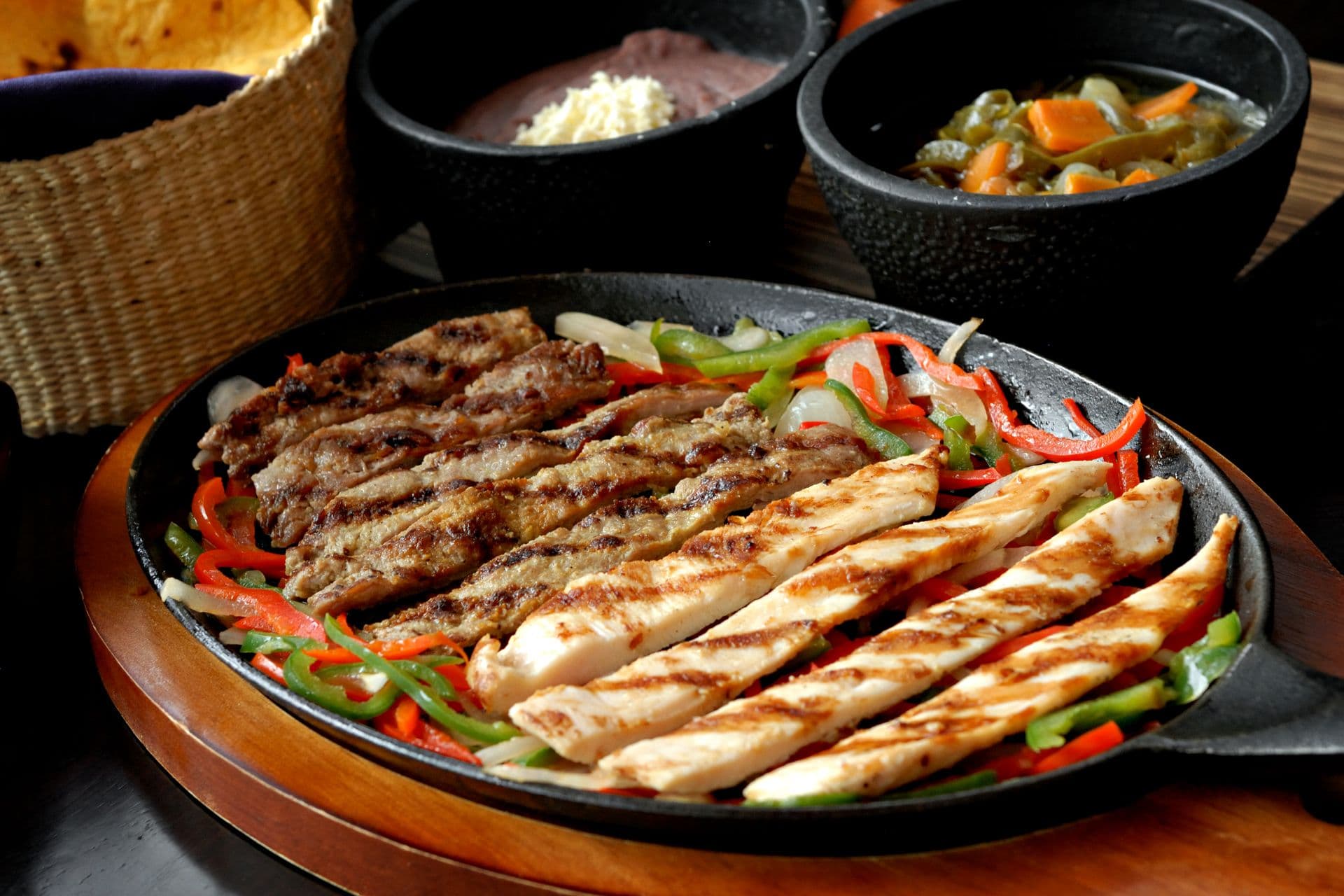
Steak fajitas start with a well-marbled cut like skirt or flank, a short lime-and-spice marinade, and a very hot skillet. Sear the steak fast, rest it, then char peppers and onions in the same pan. Slice thin against the grain and pile into warm tortillas. Most cooks pull the beef at 130–135°F for medium-rare, well below the 145°F whole-cut mark.
 Pexels contributor · Pexels License
Skirt Steak Fajitas
37 min · moderate
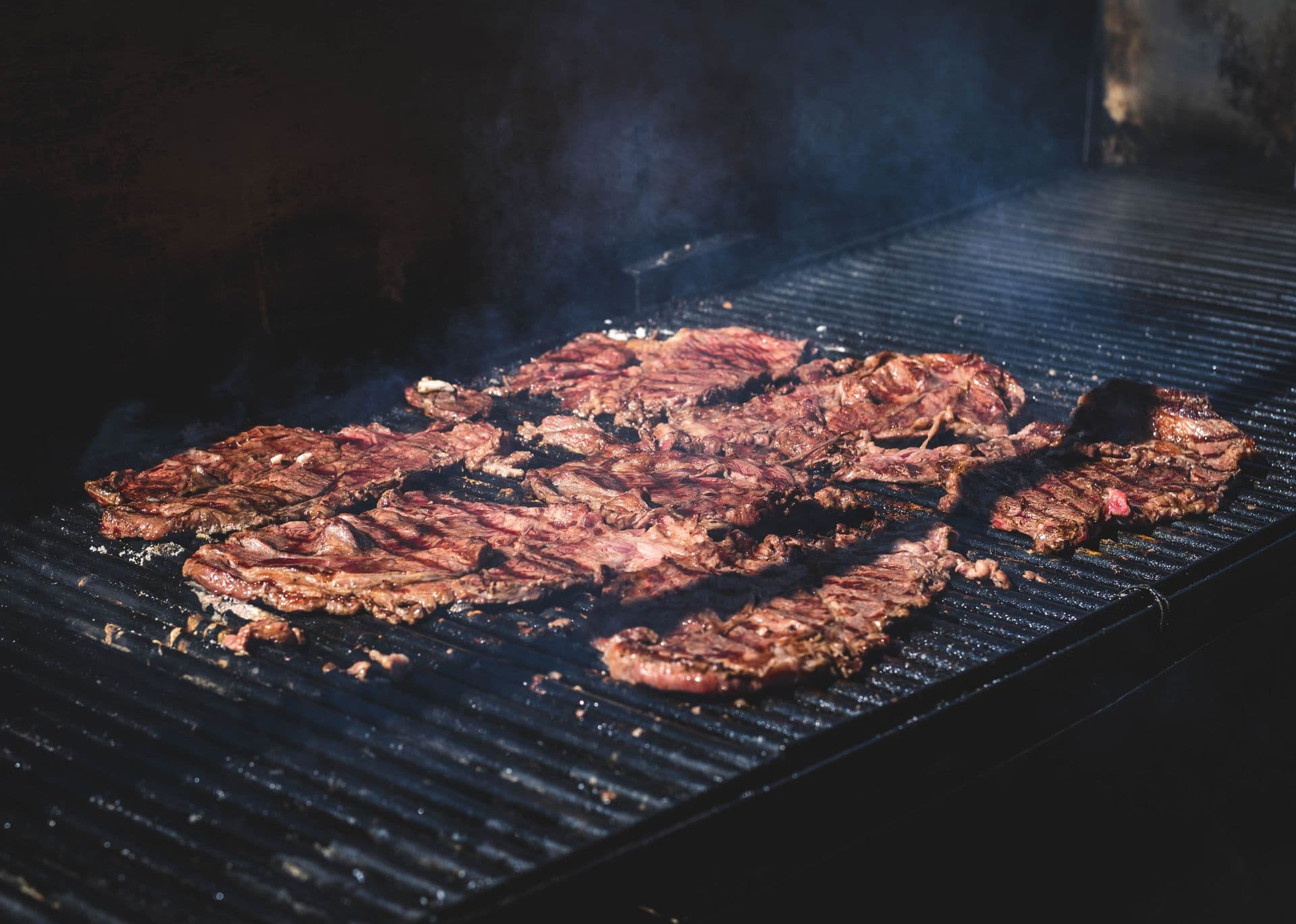
Skirt steak is the original fajita cut: a thin, loose-grained muscle with generous marbling that sears in about three minutes and drinks up a lime marinade. Get your cast iron ripping hot, cook the steak fast to medium-rare, rest it, then slice it thin straight across the grain. Char peppers and onions in the beefy drippings and serve in warm tortillas.
How to Cook Fajitas Without Cast Iron
You do not need a cast-iron skillet to make great fajitas. A well-preheated stainless or carbon-steel pan sears beautifully, a sheet pan under a hot oven or broiler chars a big batch hands-off, and a grill delivers real smoke. The one pan to skip is nonstick, which cannot safely take the high heat fajitas want. Match the method to what you own and adjust your expectations for each.
Best Cast Iron Skillet for Fajitas
For fajitas, the best cast-iron skillet is a heavy 12-inch pan with a helper handle: big enough to sear a batch without crowding, but still liftable. A 10-inch is fine for two people, while a 15-inch or a large flat griddle suits crowds if you can heft it. Nearly all modern cast iron comes pre-seasoned, so surface finish matters less than size and weight.