Chicken Fajita Marinade
A chicken fajita marinade leans on lime and cumin with plenty of oil and garlic, and because chicken is forgiving it can soak longer than steak — one to six hours in the fridge. An optional buttermilk or plain yogurt version uses gentle dairy acid and enzymes to keep lean breast juicy without the mushy edge that too much citrus causes. It comes together in about ten minutes.

A tangy, cumin-forward marinade for chicken fajitas, with a buttermilk or yogurt option for extra-juicy breast meat.
Ingredients
Showing ingredients for 1 serving in US customary units.
Marinade
- ¼ cupFresh lime juiceAbout 2 to 3 limes.Search
- ⅓ cupOlive or avocado oilShop
- 4 clovesGarlic, mincedSearch
- 2 tspGround cuminCumin-forward is what makes it taste like fajitas rather than plain lime chicken.Shop
- 1 tbspFajita seasoningShop
- 1 tspHoney (optional)Balances the lime and helps the chicken brown.Shop
- To tasteKosher saltSeason the marinade lightly; the fajita blend already carries some salt.Shop
Dairy option (choose one base)
- ½ cupButtermilk or plain yogurt (optional)Optional: replace half the oil with this for a gentler, juicier marinade.Search
Cook times are not scaled with servings — adjust pan size and cook in batches as needed. Salt and “to taste” items are intentionally left for your judgment.
🛒 links open an Amazon search for that ingredient. Some links may earn FajitaRecipe.com a commission if you buy through Amazon, at no extra cost to you.
Step by step
How to make it
Mix
Step 1. Whisk the lime juice, oil, garlic, cumin, fajita seasoning, and honey together until smooth. For the dairy version, whisk the buttermilk or yogurt in and cut the lime to 2 tablespoons so the mix does not curdle.
~4 minStep 2. Taste and adjust the salt and lime. The marinade should be bright and savory, not sharp.
~2 min
Marinate
Step 3. Add the chicken, coat well, and refrigerate. Citrus version: 1 to 6 hours. Dairy version: 2 to 12 hours, since dairy acid is gentler.
Cook
Step 4. Lift the chicken out, wipe off excess dairy or drips, and discard the used marinade. Cook to an internal temperature of 165°F.
165°F
Doneness & safety
Marinating safely
Always marinate in the refrigerator, never on the counter. Discard used marinade or boil it before reusing as a sauce.
Source: USDA Food Safety and Inspection Service · reviewed 2026-07-04
🛒 Shop this recipe
Pantry & spices
Fresh ingredients
Fresh items open an Amazon search — availability varies by location.
Recommendations are chosen to help you cook better fajitas; some Amazon links may earn a commission at no extra cost to you.
Substitutions
| Instead of | Use | Adjust | Expect | Avoid when |
|---|---|---|---|---|
| Buttermilk | Plain yogurt thinned with a splash of milk, or milk plus lime | Use 1/2 cup yogurt loosened to a pourable consistency, or 1/2 cup milk with 1 tsp lime stirred in. | Yogurt is thicker and clings more; the milk-and-lime shortcut is thinner and less tangy. | — |
| Fresh lime juice | Bottled lime juice or fresh lemon | Swap 1:1 by volume. | Bottled is flatter and slightly bitter; lemon is brighter and less distinctly Tex-Mex. | Avoid bottled when the fresh lime brightness is doing most of the flavor work. |
The science
Why chicken tolerates a longer soak than steak
Chicken is more forgiving in a marinade than skirt or flank steak, so the usable window is wider — comfortably one to six hours in a citrus marinade. The reason is partly structure and partly what you are cooking to: chicken gets cooked through to 165°F, so a slightly softened surface firms back up, whereas a medium-rare steak shows every bit of mushiness the acid caused. Even so, chicken has a limit. Push a pure-citrus marinade well past six hours and the outer layer of a lean breast starts to go chalky and dry when cooked.
The call: Give chicken 1 to 6 hours in citrus; use the dairy option when you want to prep further ahead.
Technique
The buttermilk or yogurt option for juicy breast meat
Lean chicken breast dries out easily, and a dairy-based marinade is the classic fix. Buttermilk and plain yogurt are only mildly acidic, so they tenderize slowly and gently rather than blasting the surface the way straight lime does, and their proteins and fats cling to the meat and help it brown. Swap half the oil for buttermilk or yogurt, dial the lime back so it does not curdle the dairy, and you can leave the chicken in for up to twelve hours. Wipe the excess off before cooking so it sears rather than steams.
The call: Use a buttermilk or yogurt base for lean breast or for overnight marinating without a mushy exterior.
The science
What each part of the marinade is actually doing
A working chicken marinade is really four jobs sharing one bowl. Salt does the heaviest lifting: it seasons past the surface and helps the meat hold moisture, which is why a marinade with too little salt tastes flat no matter how much lime it carries. Acid — here lime — brightens and lightly loosens the outer proteins so seasoning takes hold, but it works only skin-deep and turns lean breast chalky if it runs too long. Oil carries the fat-soluble flavor in cumin, garlic, and the fajita blend into contact with the meat and coats the strips evenly instead of letting the spices pool. The aromatics themselves supply the cumin-forward, garlicky character that reads as fajitas rather than plain citrus chicken. If you want a softer, more forgiving version, buttermilk or plain yogurt swaps in mild lactic acid and a little enzyme action for the sharp lime, tenderizing slowly instead of all at once. Balance matters more than any single ingredient: enough salt to season, enough acid for lift, enough oil to carry it, and restraint on the acid so the surface stays meaty rather than mushy.
The call: Lead with salt and oil for seasoning and carry, and keep the lime in check so it brightens without turning the surface chalky.
Technique
Getting real color on marinated chicken
A wet marinade is the enemy of browning. Chicken lifted straight from the bowl is coated in liquid, and that water has to boil off before the surface can brown — so the strips steam and go pale grey instead of catching color. The fix is simple: lift the chicken out, let the excess drip, and blot the strips dry with paper towels before they hit the pan. A dry surface starts searing almost immediately. Get the pan properly hot first, use a thin film of oil, and resist crowding — pack the strips in and they release steam that pools and stalls the browning, so work in two batches if the pan is small. The honey in the marinade helps here, since a trace of sugar accelerates browning, but too much scorches, which is why it stays at a teaspoon. Leave each batch undisturbed for a minute or two to build a crust before tossing. You are still cooking to an internal temperature of 165°F; the goal is to reach it with charred, caramelized edges rather than a steamed, uniform surface.
The call: Blot the chicken dry and use a hot, uncrowded pan so the strips sear and char instead of steaming.
Recommended gear
Disclosure: As an Amazon Associate, FajitaRecipe.com earns from qualifying purchases. Recommendations are chosen to help you cook better fajitas; some Amazon links may earn a commission at no extra cost to you. See our selection methodology.
For making seasoning
 Cuisinart
Model SG-10
Toasting whole cumin and grinding it fresh gives a homemade seasoning noticeably more aroma than pre-ground jars that have sat for months.
Best for: Grinding whole cumin and dried chiles for a fresher blend.
Homemade blend keeps its potency about six months in an airtight jar away from light and stove heat — worth it if you mix a big batch.
Best for: Storing homemade fajita seasoning so it keeps its punch.
Serving & storage
Safe handling and cooking temperature
Marinate chicken in the refrigerator, not on the counter, so the surface never lingers in the 40-to-140-degree danger zone. Treat the used marinade as raw: discard it, or if you want a drizzle, reserve a clean portion before the chicken goes in. Cook the chicken to an internal temperature of 165°F measured at the thickest strip with an instant-read thermometer — color is not a reliable doneness cue. Leftovers keep three to four days refrigerated and reheat well for a second round of fajitas.
The call: Keep it in the fridge, discard used marinade, and cook chicken to 165°F confirmed with a thermometer.
Frequently asked questions
+How long can I marinate chicken for fajitas?
One to six hours in a citrus-based marinade is the sweet spot. With the buttermilk or yogurt version you can safely go up to twelve hours because dairy acid is much gentler. Beyond those windows the surface of lean breast can turn chalky, so set a timer rather than leaving it in indefinitely.
+Can I freeze chicken in the marinade?
Yes, and it is a great make-ahead move. Combine raw chicken and marinade in a freezer bag and freeze flat. The chicken effectively marinates as it thaws in the refrigerator, so by the time it is defrosted it is seasoned and ready. Cook it within a day of thawing and always to 165°F.
+Thighs or breasts for chicken fajitas?
Both work with this marinade. Thighs are more forgiving, stay juicier, and shrug off a longer soak, which suits busy timing. Breasts are leaner and cook faster but dry out if overcooked, so they benefit most from the buttermilk or yogurt option and a careful eye on the thermometer.
+Why is my marinated chicken not browning?
Usually because it went into the pan wet. The marinade clings as liquid, and that moisture has to evaporate before the surface can brown, so the chicken steams and stays pale. Blot the strips dry with paper towels, heat the pan until it is properly hot, and cook in batches so they are not crowded. Dry chicken in a hot, roomy pan sears and chars; wet, crowded chicken greys. Cook to 165°F either way.
Testing, sources & disclosure
Researched and reviewed by our editors. See our recommendation methodology.
- Author:
- FajitaRecipe Editorial
- Last reviewed:
- 2026-07-13
Sources
- Safe Minimum Internal Temperature Chart, USDA FSIS linkSupports: Cook chicken to a safe minimum internal temperature of 165°F.
As an Amazon Associate, FajitaRecipe.com earns from qualifying purchases. We do not provide medical or dietary advice; follow USDA guidance for food safety.
Keep cooking
You might also like
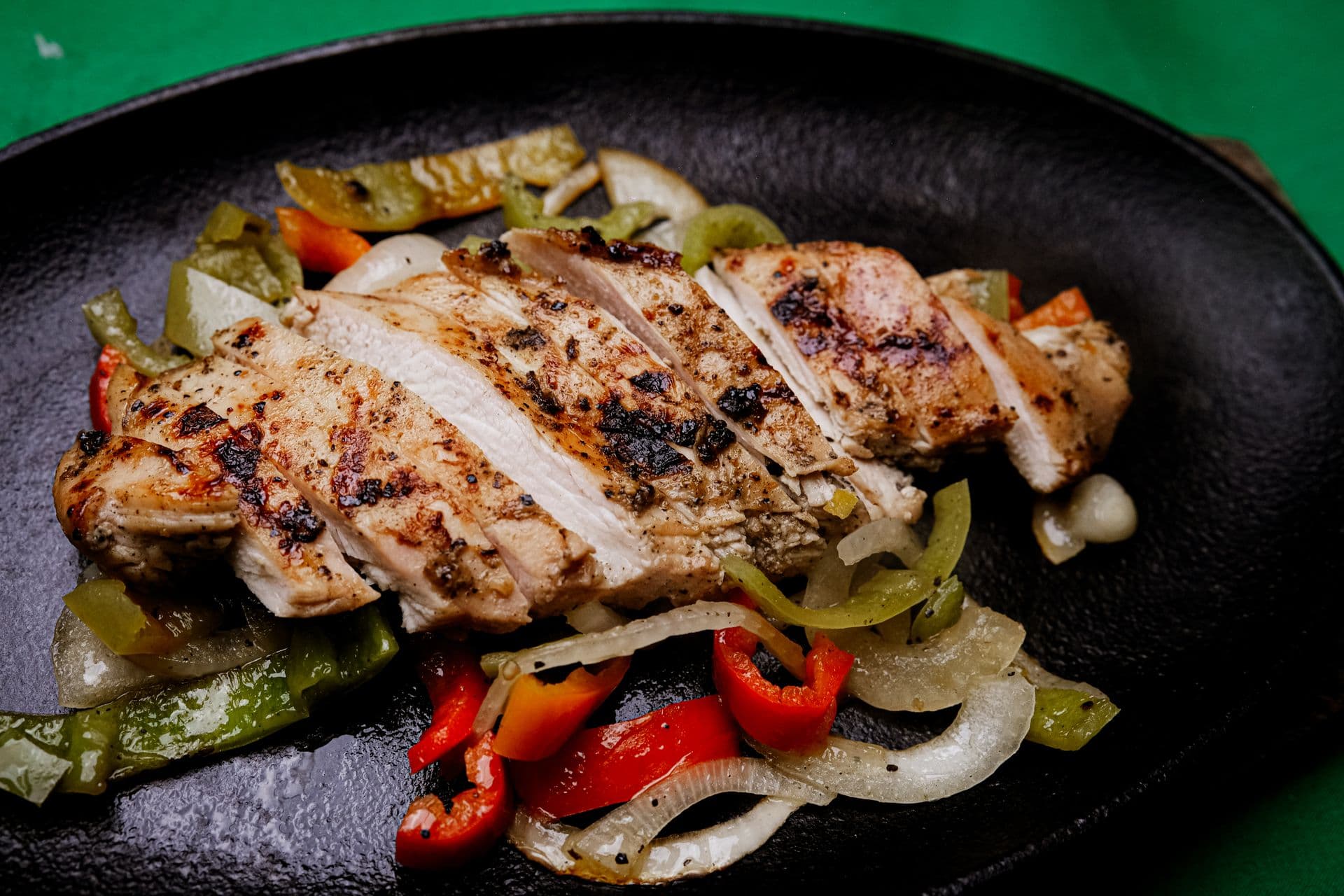
Fajita Marinade
A master fajita marinade is lime juice for brightness, oil to carry flavor and prevent sticking, garlic and fajita seasoning for depth, and a splash of soy or Worcestershire for savory backbone. Timing is everything: 15 to 30 minutes for shrimp or thin cuts, up to a few hours for chicken and steak. The acid mostly works the surface, so longer is not better — too long turns the exterior mushy.
 Pexels contributor · Pexels License
Classic Chicken Fajitas
30 min · easy
Classic chicken fajitas come together in one skillet in about half an hour. Sear seasoned strips of boneless skinless thigh over medium-high heat until browned, cook the peppers and onions in the same pan so they pick up the fond, then finish with a squeeze of lime. Cook the chicken to 165°F, pile it into warm tortillas, and add your toppings.
How Long to Marinate Fajitas
Marinate fajitas by protein: shrimp 15 to 30 minutes, chicken 1 to 4 hours, and skirt or flank steak 1 to 3 hours. Even 30 minutes is worth doing when time is short. A citrus-based fajita marinade works on the surface, so longer is not better, and too much acid turns delicate proteins mushy. Always marinate covered in the refrigerator, never on the counter, and discard the used marinade after it touches raw meat.
Homemade Fajita Seasoning
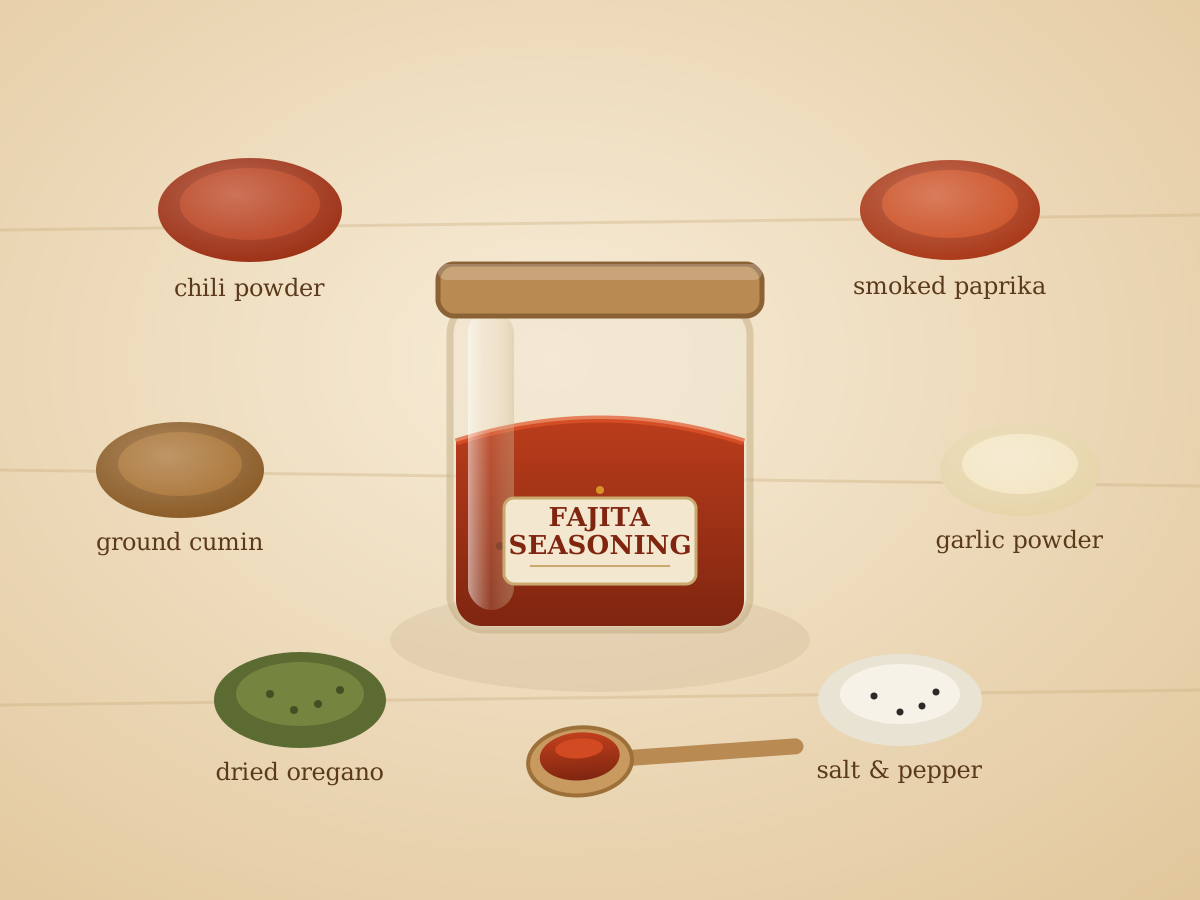
Homemade fajita seasoning is a chili-powder base rounded out with cumin, smoked paprika, garlic and onion powder, oregano, salt, cayenne, and black pepper. Mixing your own skips the anti-caking fillers packets rely on and lets you dial the salt and heat yourself. One batch whisks together in five minutes and keeps its punch for about six months in an airtight jar.