Shrimp Fajitas
Shrimp fajitas come together in about fifteen minutes because shrimp cook in just two to three. Char the peppers and onions first, then sear the shrimp in a hot skillet only until they turn opaque and curl into a loose C. Skip the long marinade — citrus acid will start to firm and cloud raw shrimp on the counter. Toss with lime and pile into warm tortillas.
- Prep
- 15m
- Cook
- 10m
- Total
- 25m
- Serves
- 4
- Level
- easy
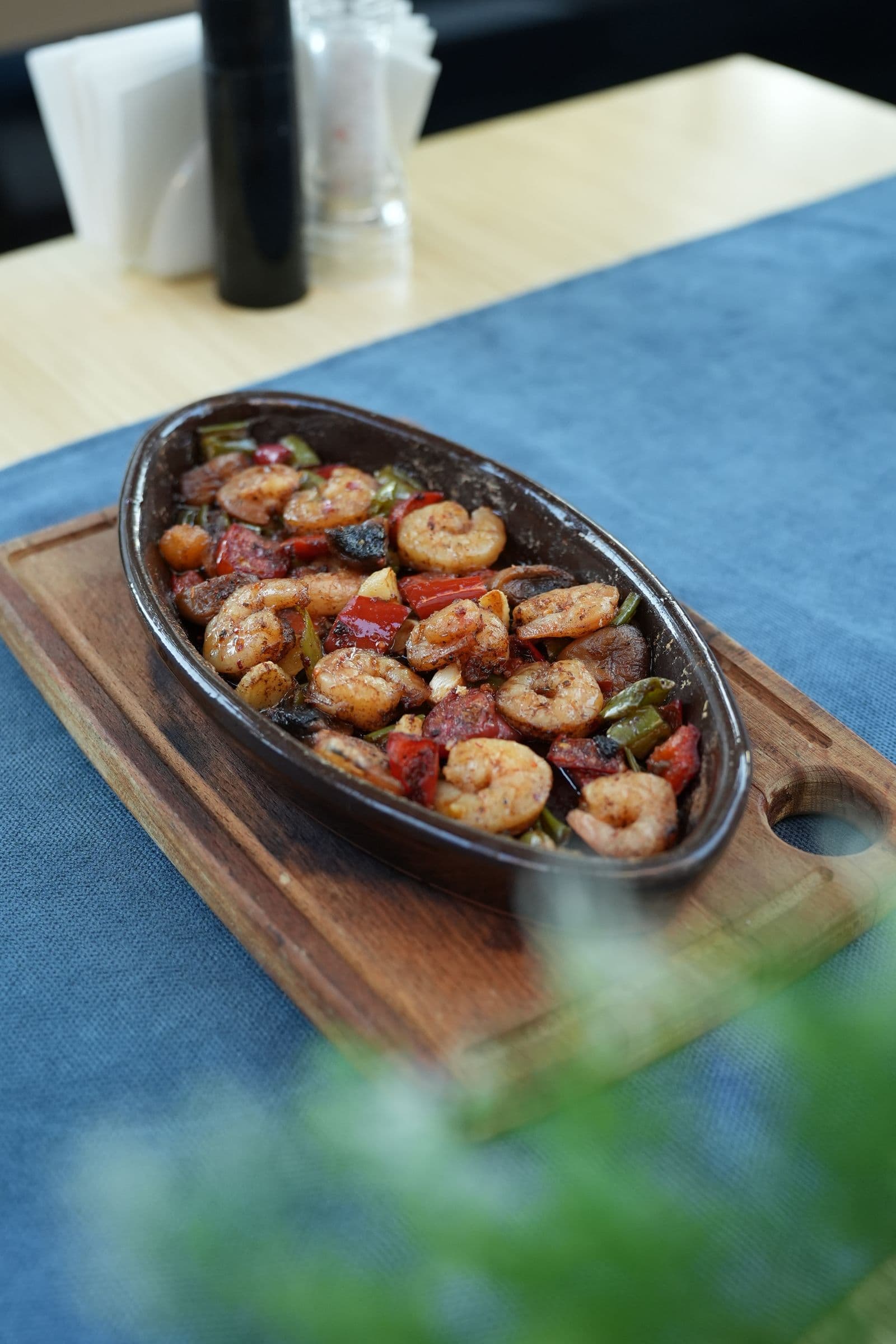 Pexels contributor · Pexels License
A fast weeknight shrimp fajita recipe that keeps the shrimp tender by cooking them briefly.
Ingredients
Showing ingredients for 4 servings in US customary units.
Shrimp
Peppers & onions
To finish & serve
Cook times are not scaled with servings — adjust pan size and cook in batches as needed. Salt and “to taste” items are intentionally left for your judgment.
🛒 links open an Amazon search for that ingredient. Some links may earn FajitaRecipe.com a commission if you buy through Amazon, at no extra cost to you.
Step by step
How to make it
Prep
Step 1. Pat the shrimp thoroughly dry and toss with the fajita seasoning and garlic just before cooking. Do not let them sit in an acidic marinade — see the note below on why citrus starts to "cook" raw shrimp.
~5 min
Char vegetables
Step 2. Heat 1 tablespoon oil in a 12-inch skillet over high. Add the onion and peppers and char 6–8 minutes, tossing occasionally, until blistered and just tender. Move them to a plate.
~7 min
Sear shrimp
Step 3. Add the remaining oil to the hot pan. Lay the shrimp in a single layer and cook 1–1.5 minutes per side, just until they turn opaque and pink and curl into a loose C shape. Pull them the moment they are opaque throughout.
~3 min
Combine
Step 4. Return the vegetables to the pan and toss with the shrimp for 15–30 seconds to warm through. Do not keep cooking, or the shrimp will tighten and turn rubbery.
~1 min
Serve
Step 5. Squeeze fresh lime over the top, adjust salt, and serve immediately with warm tortillas.
Doneness & safety
Shrimp
Cook shrimp until the flesh is opaque and firm (an internal temperature near 145°F / 63°C). Shrimp overcook quickly — pull them the moment they curl and turn opaque.
Source: USDA Food Safety and Inspection Service · reviewed 2026-07-04
🛒 Shop this recipe
Pantry & spices
Fresh ingredients
Fresh items open an Amazon search — availability varies by location.
Cookware & tools
- Lodge 12-inch Cast Iron Skillet · L10SK3Find →
- Lodge Silicone Hot Handle Holder · ASHH11Find →
- ThermoWorks Thermapen ONE · Thermapen ONEFind →
- OXO Good Grips 12-inch Tongs · Good Grips 12" Locking TongsFind →
- Victorinox Fibrox Pro 8-inch Chef’s Knife · 5.2063.20 (Fibrox Pro 8")Find →
Already own these? Use what you have — no need to buy.
Recommendations are chosen to help you cook better fajitas; some Amazon links may earn a commission at no extra cost to you.
Substitutions
| Instead of | Use | Adjust | Expect | Avoid when |
|---|---|---|---|---|
| Large shrimp | Jumbo or extra-large shrimp | Same weight; expect fewer pieces. Add 30–60 seconds per side and confirm the center is opaque. | Meatier bite; slightly more forgiving on timing. | — |
| Fajita seasoning | Chili powder, cumin, garlic powder, and smoked paprika | About 1.5 tsp chili powder, 1 tsp cumin, 1/2 tsp each of the rest. | Comparable flavor with control over the salt. | — |
The science
How to tell when shrimp are done
Raw shrimp are translucent and gray-blue; cooked shrimp are opaque and pink-white. As they cook they curl, and here is the tell: a loose C is perfect, a tight O means overcooked. Shrimp go from translucent to done in two to three minutes over high heat, then keep firming from carryover, so pull them the instant the flesh turns opaque and toss the vegetables back in off the direct blast. Overcooked shrimp are the single most common failure of this dish.
The call: Pull the shrimp at a loose C, the moment they turn opaque.
Technique
Cook the vegetables first, shrimp last
Peppers and onions need six to eight minutes to char, while shrimp need two to three. If you cook them together the shrimp overcook long before the vegetables soften. Char the vegetables first and set them aside, then sear the shrimp in the same hot pan and reunite them only for a brief toss at the end. This staggered order is what lets a single skillet deliver both good char and tender shrimp.
The call: Sequence the pan so shrimp spend the least time over heat.
The science
Why shrimp get almost no marinade
Citrus acid denatures shrimp protein even without heat — it is the exact mechanism behind ceviche, where lime "cooks" raw seafood over time. Leave shrimp in a lime marinade and the surface turns opaque, firm, and chalky before it ever hits the pan, then overcooks in the skillet. So season shrimp with the dry spices and garlic right before cooking and add the lime only after, as a bright finishing squeeze.
The call: Add lime after cooking, never as a soak, to avoid pre-cooking the shrimp.
Equipment for this recipe
Disclosure: As an Amazon Associate, FajitaRecipe.com earns from qualifying purchases. Recommendations are chosen to help you cook better fajitas; some Amazon links may earn a commission at no extra cost to you. See our selection methodology.
For cast-iron fajitas
 Lodge
LodgeModel L10SK3
A heavy 12-inch Lodge gives two servings of steak enough hot surface to brown without crowding. It is still too small for a six-person batch, which should be seared in rounds.
Best for: Everyday 2–4 serving skillet fajitas with a hard sear.
 Lodge
LodgeModel ASHH11
A cast-iron handle reaches the same temperature as the pan. A slip-on holder is the difference between confidently moving the skillet and dropping it.
Best for: Anyone using a blazing-hot cast-iron or carbon-steel handle.
 ThermoWorks
Model Thermapen ONE
Thin fajita chicken and steak swing past target in seconds. A one-second read lets you pull chicken at 165°F and steak at your chosen doneness before carryover overshoots.
Best for: A one-second, dependable read on thin proteins.
OXOModel Good Grips 12" Locking Tongs
Twelve-inch tongs keep your hand out of the smoke while you toss peppers and flip strips in a ripping-hot pan.
Best for: Tossing peppers and turning strips over high heat.
For peppers & onions
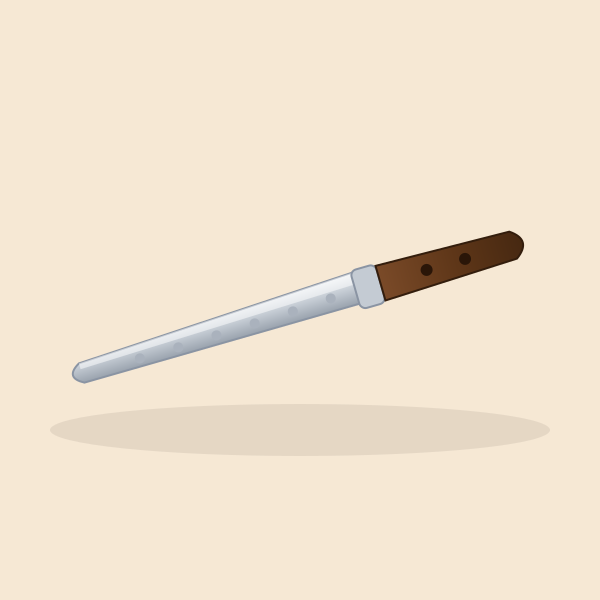 Victorinox
Model 5.2063.20 (Fibrox Pro 8")
A sharp 8-inch chef’s knife handles the pepper and onion prep fajitas live on. The Fibrox handle grips even when your hands are wet from vegetables.
Best for: Slicing peppers and onions and general prep.
OXOModel Good Grips 12" Locking Tongs
Twelve-inch tongs keep your hand out of the smoke while you toss peppers and flip strips in a ripping-hot pan.
Best for: Tossing peppers and turning strips over high heat.
Serving & storage
Storing and reheating
Refrigerate leftovers within two hours and use within 1–2 days, since cooked shrimp are more perishable than beef or chicken. Reheat very gently — a brief warm-through in a skillet or even eaten cold in a salad — because a second round of heat easily pushes shrimp into rubbery territory.
Frequently asked questions
+How long do shrimp take to cook for fajitas?
Only about 2–3 minutes total over high heat. Cook 1 to 1.5 minutes per side and pull them the moment they turn opaque and curl into a loose C.
+Should I marinate shrimp for fajitas?
Skip a long acidic marinade. Lime juice starts to "cook" raw shrimp the way ceviche does, turning them firm and chalky. Season with dry spices before cooking and add lime as a finishing squeeze.
+Can I use frozen shrimp?
Yes. Thaw them completely, then pat very dry so they sear instead of steam. Wet shrimp release water into the pan and never brown.
+How do I know the shrimp are safe to eat?
Cook shrimp until the flesh is opaque and firm throughout with no translucent gray center. That opaque, C-shaped curl is your doneness signal.
Testing, sources & disclosure
This recipe was developed and reviewed by our editors. We publish full kitchen-test notes here once a recipe has been cooked and verified in our kitchen.
- Author:
- FajitaRecipe Editorial
- Last reviewed:
- 2026-07-05
Sources
- Safe Minimum Internal Temperature Chart, USDA FSIS linkSupports: Shrimp doneness and safe handling
As an Amazon Associate, FajitaRecipe.com earns from qualifying purchases. We do not provide medical or dietary advice; follow USDA guidance for food safety.
Keep cooking
You might also like
 Pexels contributor · Pexels License
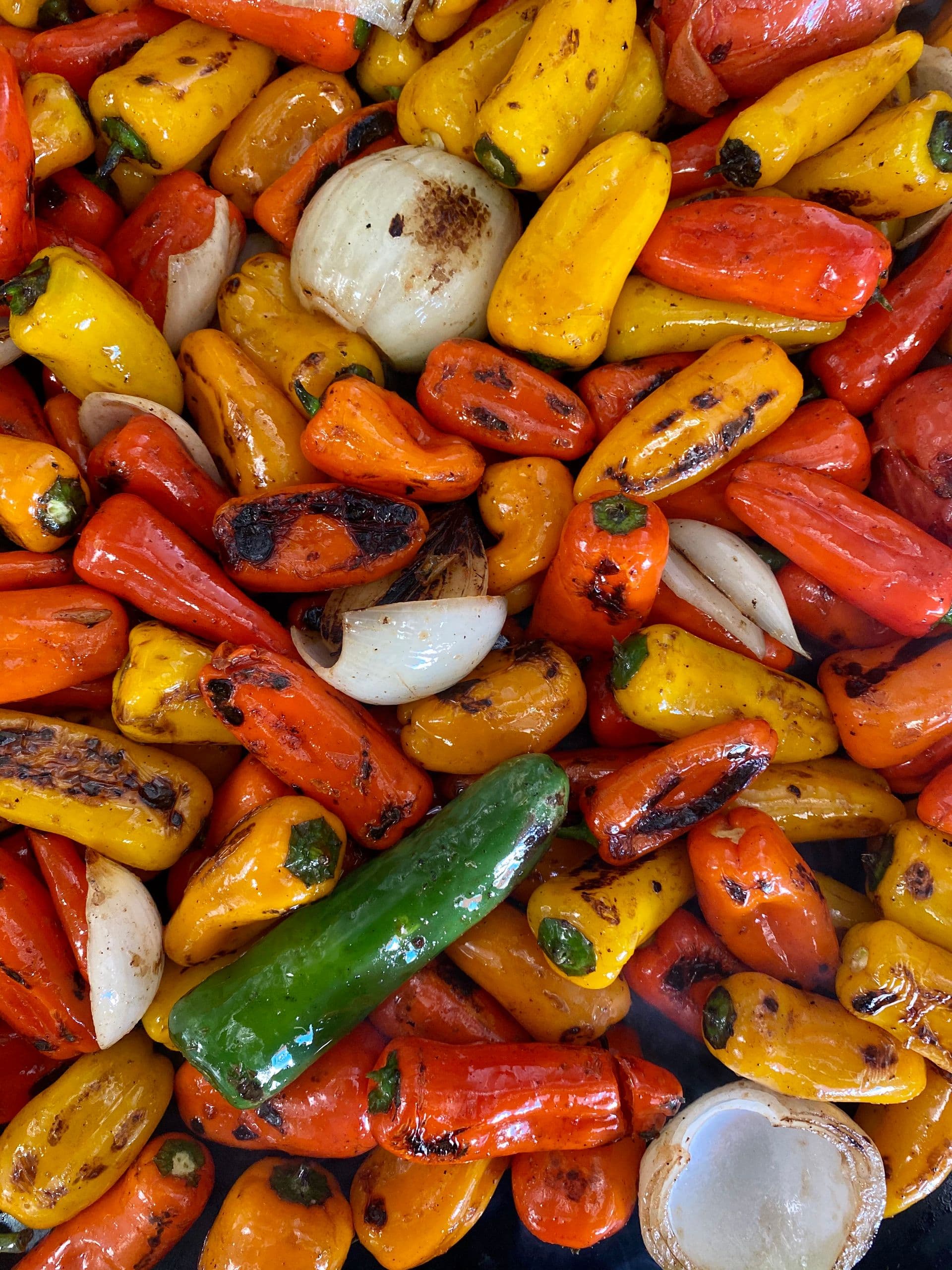
Vegetable Fajitas
40 min · easy
Vegetable fajitas load a sheet pan with portobello, zucchini, peppers, and onion, then roast them in a very hot oven so the edges char instead of steaming to mush. The trick is high heat, a single uncrowded layer, and roomy spacing so moisture evaporates. Meaty portobello gives the dish real heft. Finish with lime and fold into warm tortillas for a satisfying meatless meal.
 Pexels contributor · Pexels License
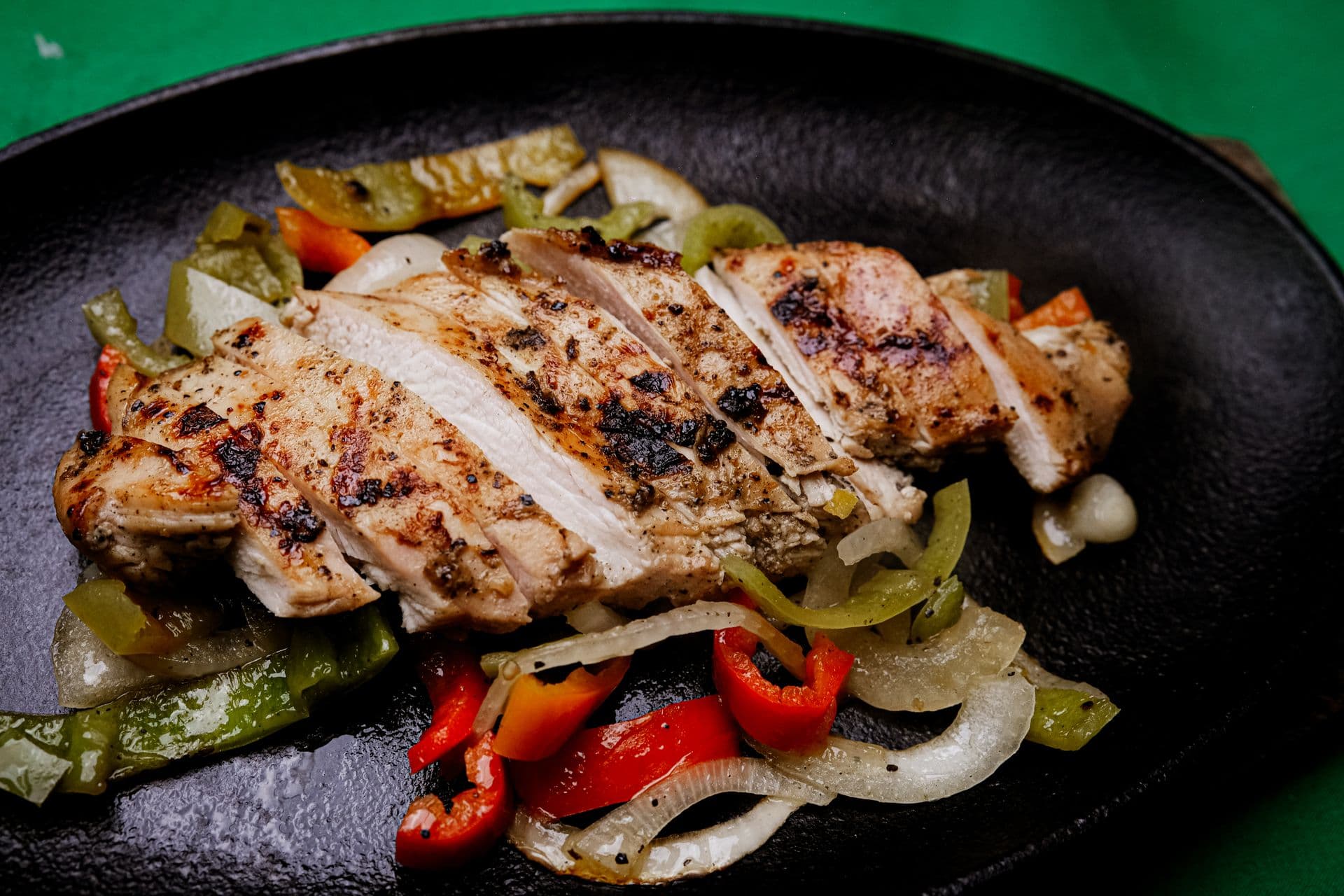
Classic Chicken Fajitas
30 min · easy
Classic chicken fajitas come together in one skillet in about half an hour. Sear seasoned strips of boneless skinless thigh over medium-high heat until browned, cook the peppers and onions in the same pan so they pick up the fond, then finish with a squeeze of lime. Cook the chicken to 165°F, pile it into warm tortillas, and add your toppings.
Best Peppers for Fajitas
Bell peppers are the fajita standard: use a mix of red, yellow, or orange for sweetness and green for a slightly bitter edge. Add a poblano when you want gentle warmth without real heat. Slice peppers about a quarter inch thick and cook them hot and fast so they char at the edges but keep some crunch instead of collapsing into softness.