Best Steak for Fajitas: Skirt vs. Flank vs. Sirloin
Skirt steak is the best cut for fajitas: it is loosely grained, well marbled, and drinks up marinade, giving that classic beefy chew when sliced across the grain. Flank steak is the leaner, easier-to-find backup, and top sirloin or flap meat work when you want a budget cut. Whatever you buy, slice it thin against the grain.
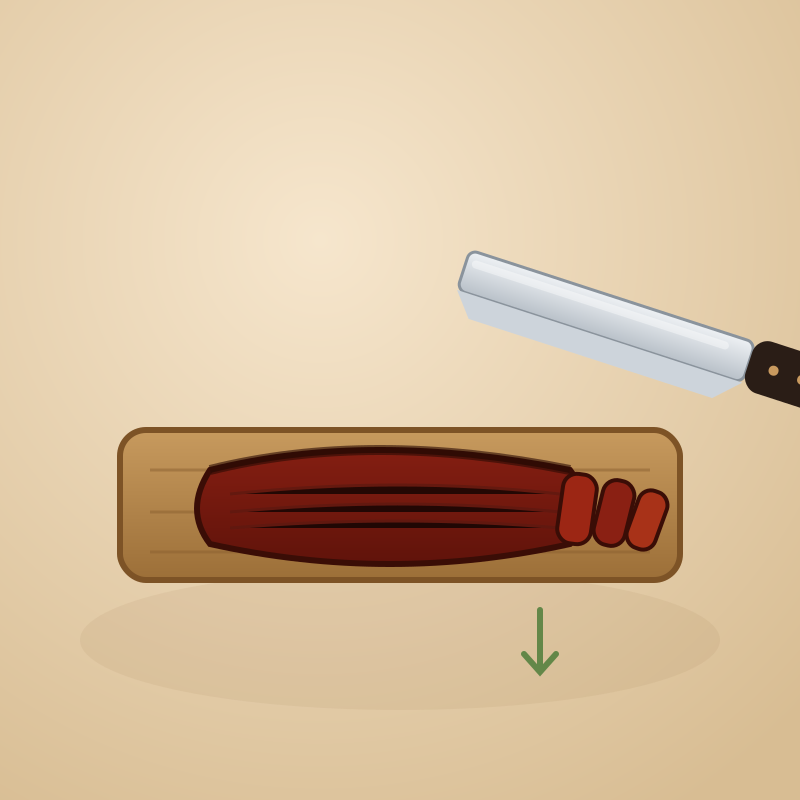
How skirt, flank, sirloin, and flap meat compare on grain, fat, price, and tenderness — and which to buy.
Substitutions
| Instead of | Use | Adjust | Expect | Avoid when |
|---|---|---|---|---|
| Skirt steak | Flank steak | Swap pound for pound. Cook to medium-rare and slice thin against the grain. | Leaner and slightly less rich, but tender and widely available. | — |
| Skirt steak | Flap meat (bavette / sirloin tip) | Swap pound for pound. | Closest match to skirt in loose grain and marbling. | Not recommended when you cannot find it fresh, since frozen loses texture. |
| Skirt steak | Top sirloin | Swap pound for pound. Marinate at least 30 minutes and do not cook past medium. | Firmer and leaner; the budget option that still works when sliced thin. | — |
The science
Why skirt steak wins on flavor
Skirt steak comes from the diaphragm, a hard-working muscle laced with fat and connective tissue that reads as deep, beefy flavor once cooked hot and fast. Its grain is coarse and runs clearly in one direction, which makes it easy to see and slice against. That loose structure also gives marinade more surface to cling to. The tradeoff is that skirt turns chewy if you cook it past medium or slice it with the grain, so it rewards a hot pan and a sharp knife.
The call: Choose skirt when flavor matters most and you can cook it hot and slice it thin against the grain.
The science
Flank, sirloin, and flap as alternatives
Flank steak is leaner and broader than skirt, a little less richly marbled but far easier to find at a standard grocery store. It stays tender if you stop at medium-rare and slice thin. Top sirloin is the budget workhorse: firmer and less fatty, best when marinated and not overcooked. Flap meat, sometimes labeled sirloin tip or bavette, sits closest to skirt in texture and value, with a loose grain and good marbling that many cooks prefer once they find a source for it.
The call: Reach for flank for availability, sirloin to save money, or flap meat when you want a skirt-like cut.
Technique
The rule that matters more than the cut
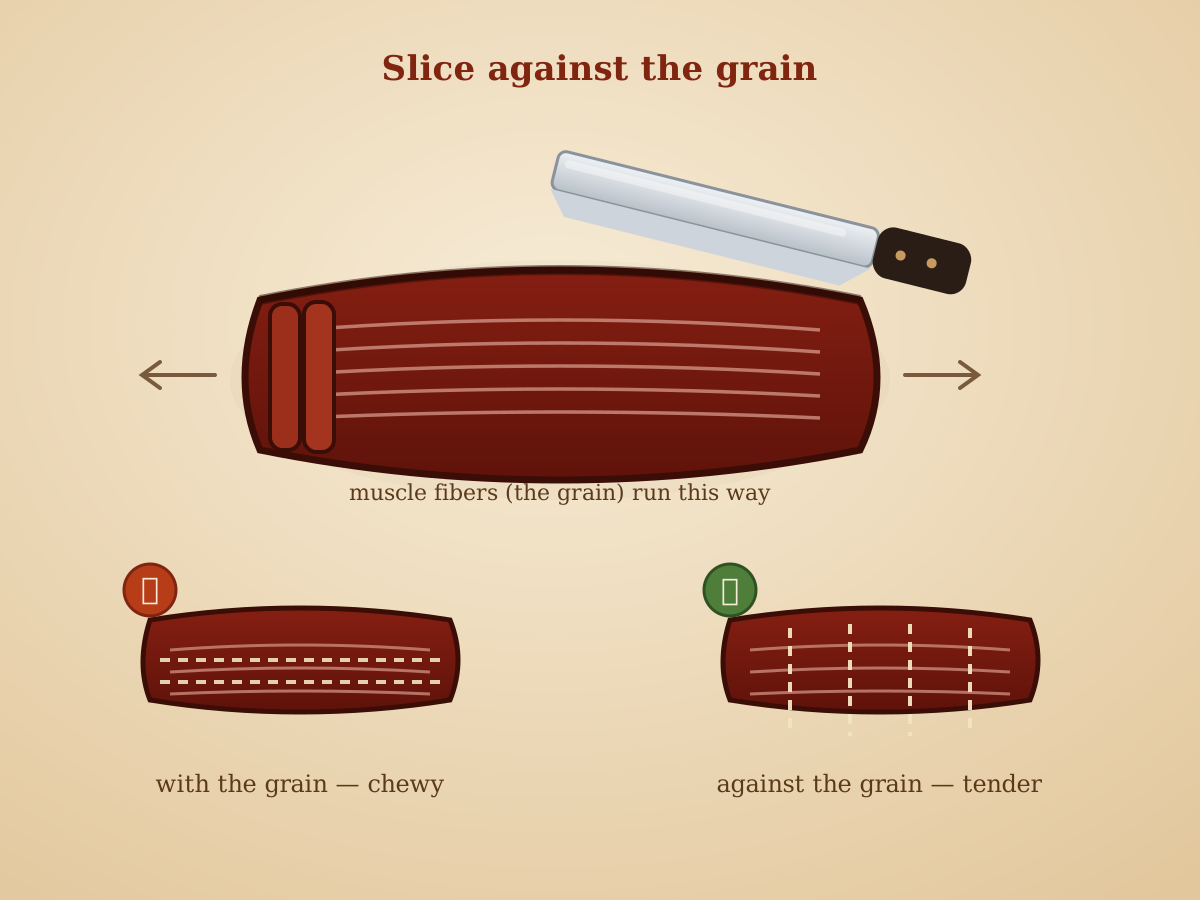
Every cut here is a thin, grainy muscle, which means slicing technique decides tenderness more than the label does. Cook the steak hot, rest it a few minutes, then find the direction the muscle fibers run and cut straight across them into thin strips. Slicing against the grain shortens those fibers so each bite gives way easily. Get that wrong on a premium skirt and it eats tough; get it right on a cheap sirloin and it eats far better than its price suggests.
The call: Whatever cut you buy, rest it and slice thin against the grain for tender fajita strips.
Recommended gear
Disclosure: As an Amazon Associate, FajitaRecipe.com earns from qualifying purchases. Recommendations are chosen to help you cook better fajitas; some Amazon links may earn a commission at no extra cost to you. See our selection methodology.
For slicing steak
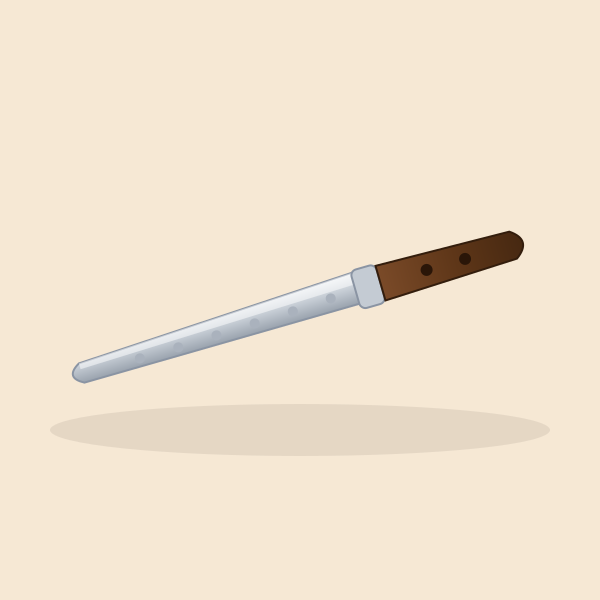 Victorinox
Model 5.4233.30 (Fibrox 12" Granton)
Thin, even slices across the grain are what make skirt and flank tender. A long granton slicer does it in one clean stroke instead of sawing.
Best for: Clean, thin, against-the-grain slices on skirt and flank steak.
John BoosModel RA03 (24 x 18 in)
A roomy board with a juice groove lets steak rest and be sliced in one place; pour the caught juices back over the strips before serving.
Best for: Resting and slicing steak with room to spare.
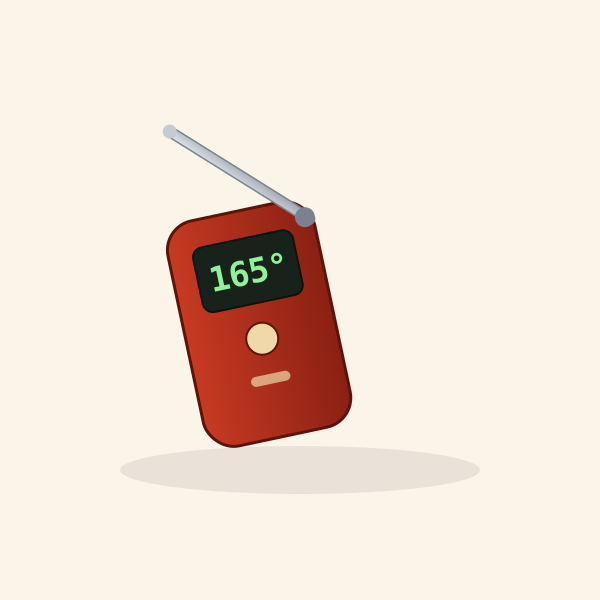 ThermoWorks
Model ThermoPop 2
You do not need a premium thermometer to cook safe chicken. The ThermoPop 2 is accurate and a few seconds slower — a great-value pick from the same maker.
Best for: A reliable read without the premium price.
Fajita steak cuts compared
Prices shift by region and season, but the pattern holds. Skirt used to be the cheap cut and has crept up as fajitas gained popularity, so it often costs more than flank now. Flap meat is the wild card: hard to find in some areas, a bargain in others, especially at butcher shops and Latin markets. If your store only carries one, flank is the safe default.
| Cut | Flavor | Tenderness | Typical price | Availability |
|---|---|---|---|---|
| Skirt steak | Richest, beefiest | Tender sliced thin across the grain | High | Common |
| Flank steak | Beefy, a little leaner | Tender across the grain; less forgiving | Medium | Very common |
| Flap meat (sirloin tip) | Close to skirt | Loose grain, very tender | Low to medium | Spotty — butchers and Latin markets |
| Top sirloin | Mildest | Tender but less juicy | Low | Very common |
| Flat iron | Rich, buttery | Naturally tender | Medium to high | Common |
Whichever you buy, slice against the grain — it matters more than the cut you started with.
Visual guide
See the technique
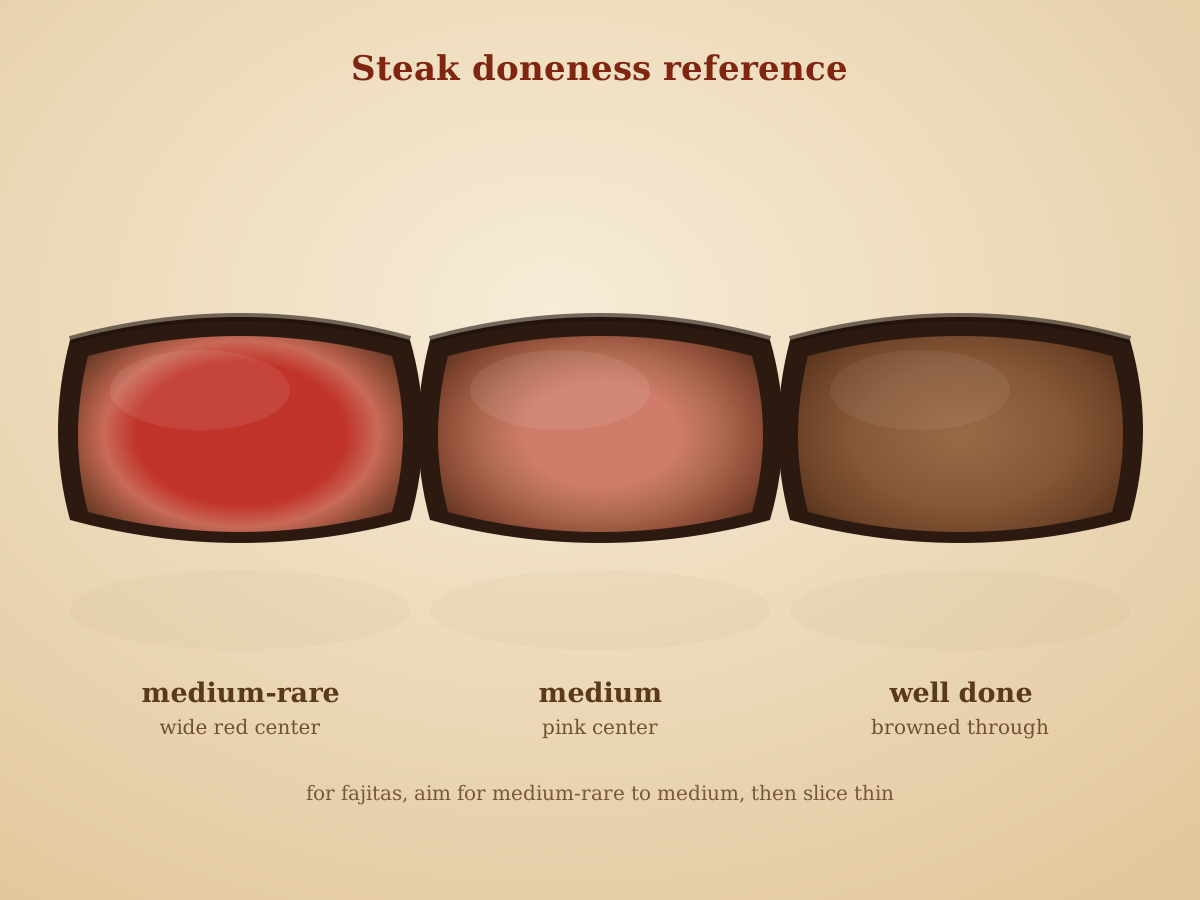
Frequently asked questions
+Is skirt or flank steak better for fajitas?
Skirt has more fat and a looser grain, so it delivers the richest, most classic fajita flavor and soaks up marinade well. Flank is leaner and easier to find. If your store carries both and price is similar, choose skirt; otherwise flank is an excellent stand-in.
+What is the cheapest steak that still makes good fajitas?
Top sirloin is usually the least expensive and most available option. It is leaner and firmer than skirt, so marinate it for at least 30 minutes, cook it hot and no further than medium, and slice it thin against the grain to keep it tender.
+Can I use ribeye or strip steak for fajitas?
You can, and they will be tender, but you are paying a premium for tenderness that thin slicing already provides. Their flavor is milder than skirt or flank. Save the pricier steaks for eating whole and use a grainy cut for fajitas.
Testing, sources & disclosure
Researched and reviewed by our editors. See our recommendation methodology.
- Author:
- FajitaRecipe Editorial
- Last reviewed:
- 2026-07-05
As an Amazon Associate, FajitaRecipe.com earns from qualifying purchases. We do not provide medical or dietary advice; follow USDA guidance for food safety.
Keep cooking
You might also like
 Pexels contributor · Pexels License
Skirt Steak Fajitas
37 min · moderate
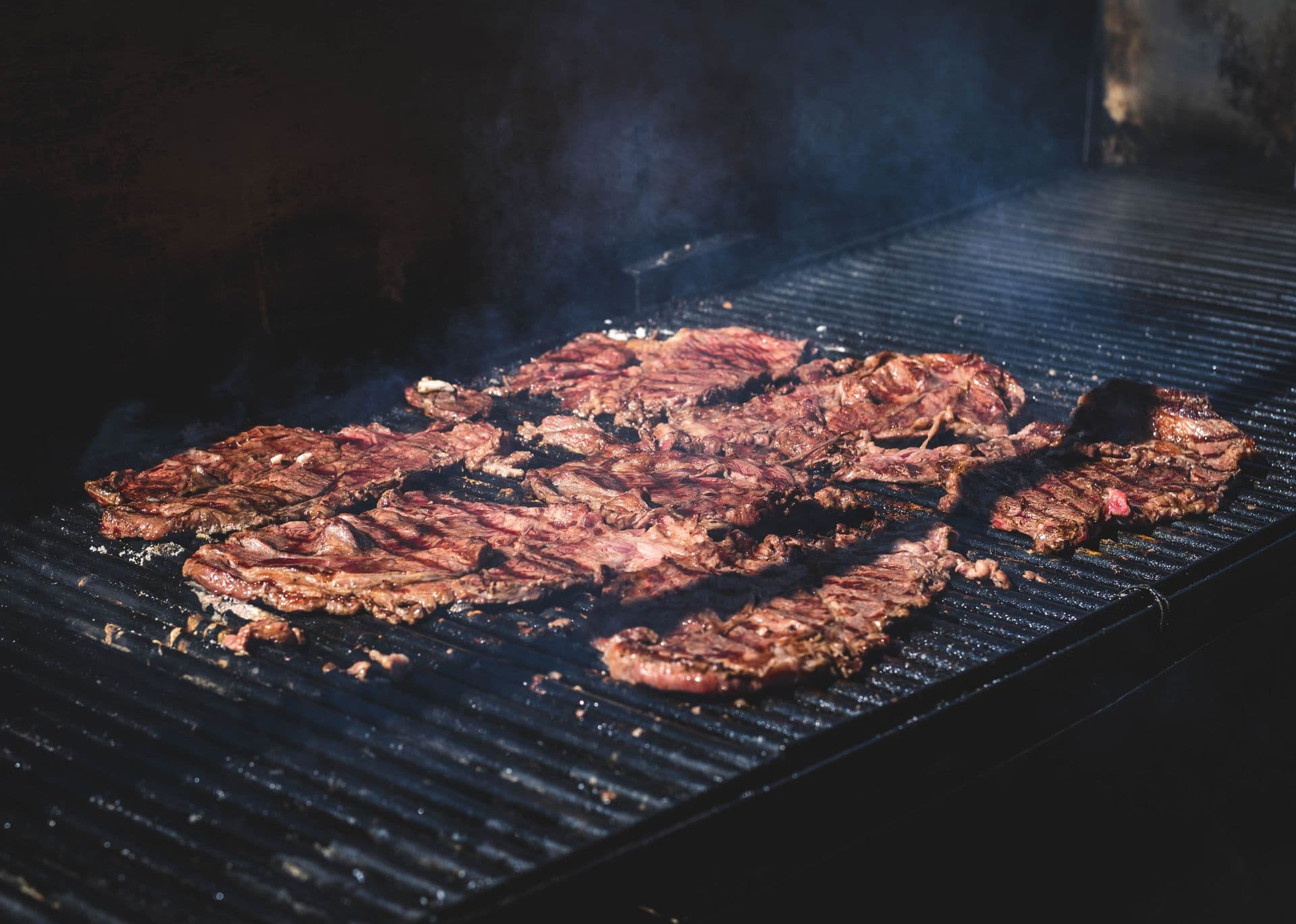
Skirt steak is the original fajita cut: a thin, loose-grained muscle with generous marbling that sears in about three minutes and drinks up a lime marinade. Get your cast iron ripping hot, cook the steak fast to medium-rare, rest it, then slice it thin straight across the grain. Char peppers and onions in the beefy drippings and serve in warm tortillas.
 Pexels contributor · Pexels License
Flank Steak Fajitas
44 min · moderate
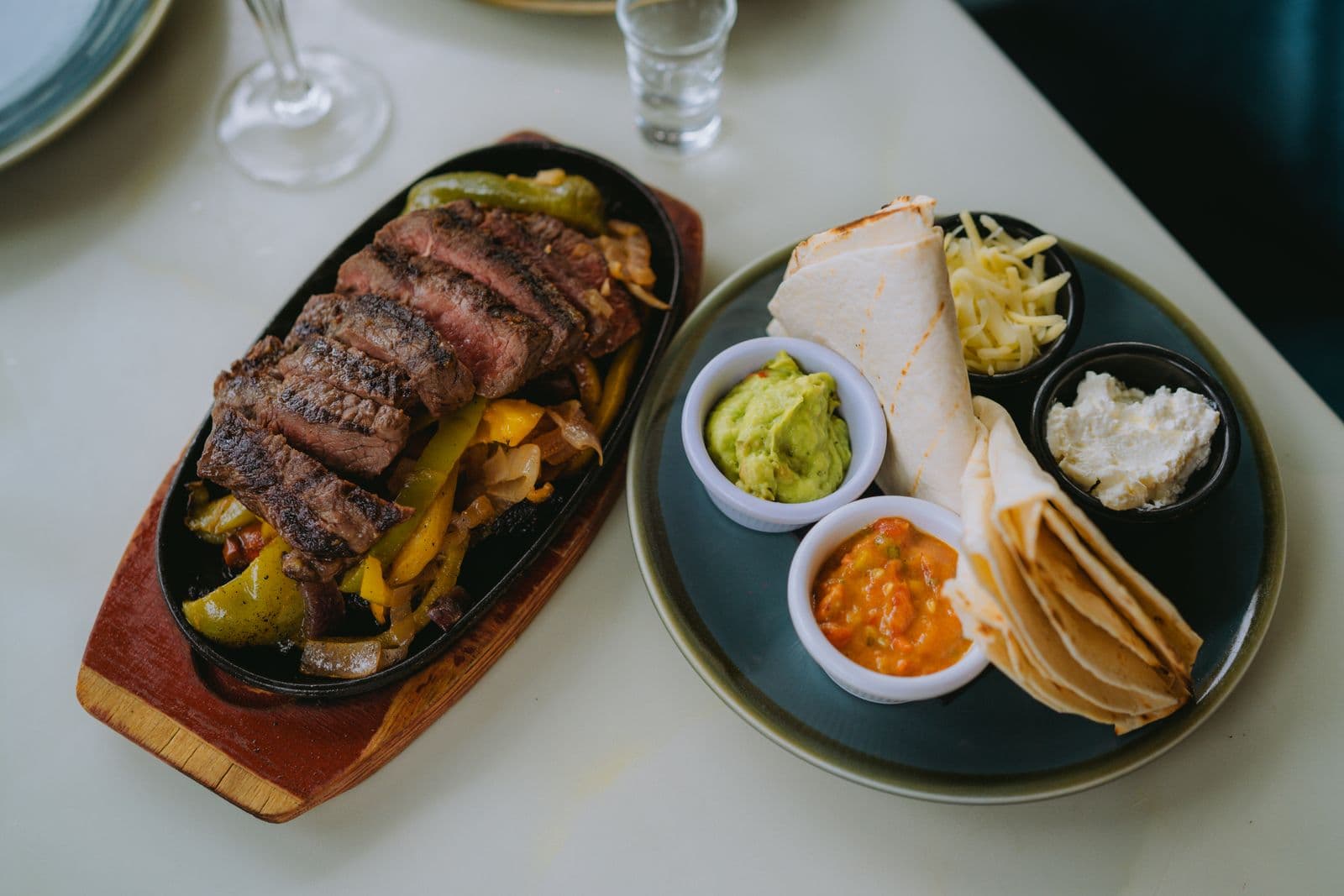
Flank steak makes lean, meaty fajitas from a widely available cut. It is thicker and less fatty than skirt, with a tighter grain, so it wants a slightly longer sear, a real rest, and a careful thin slice against the grain. Cook it to medium-rare in a hot cast-iron pan or over a live fire, then char peppers and onions and fold everything into warm tortillas.
How to Slice Fajita Meat Against the Grain
Slice fajita meat thin and across the grain after it rests. Look at the surface to find the direction the muscle fibers run, then cut straight across them at a slight angle into quarter-inch strips. Cutting against the grain shortens the fibers so each bite is tender. Always slice cooked, rested meat, not raw, and hold your knife low for wide, even pieces.
 Pexels contributor · Pexels License
Steak Fajitas
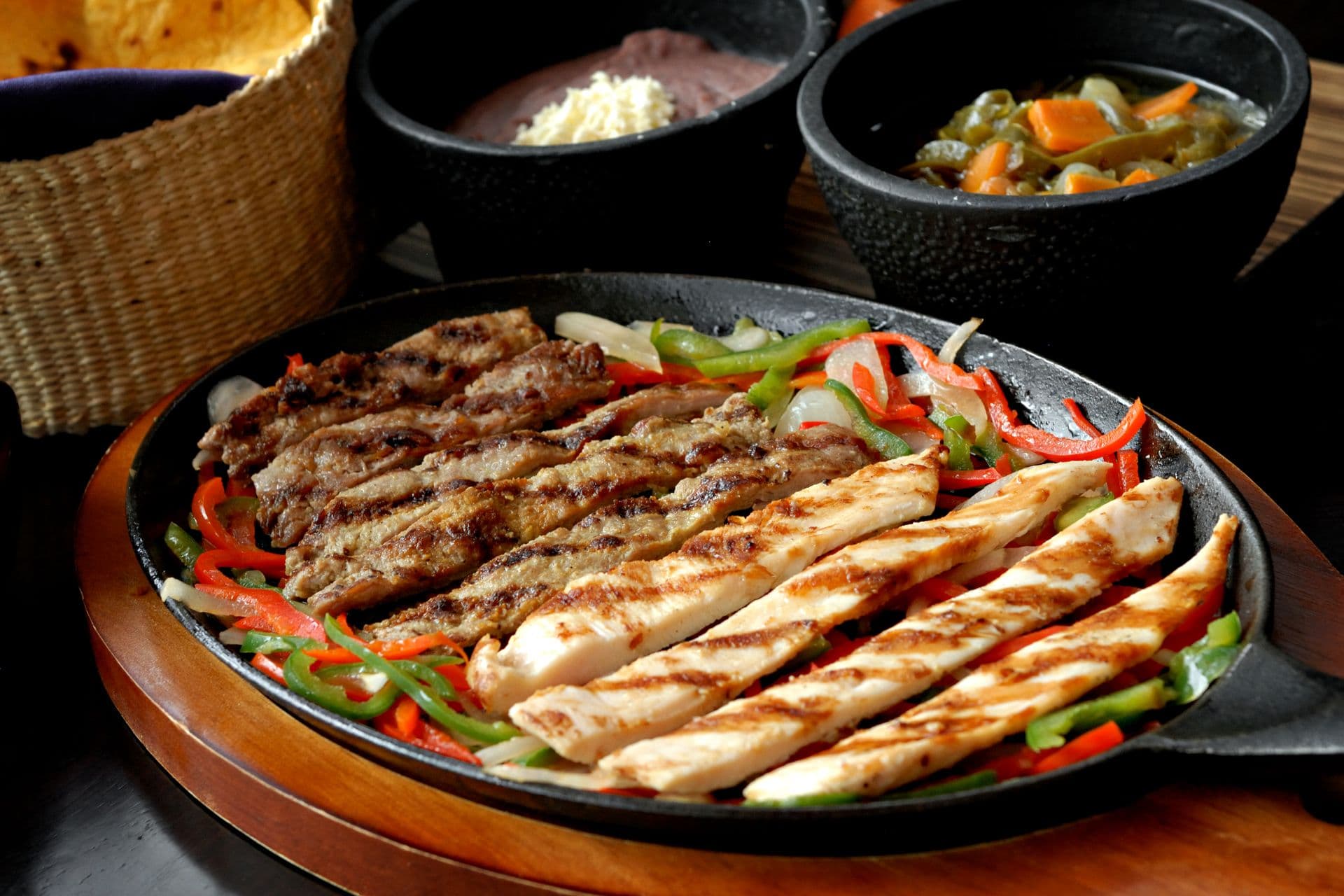
43 min · moderate
Steak fajitas start with a well-marbled cut like skirt or flank, a short lime-and-spice marinade, and a very hot skillet. Sear the steak fast, rest it, then char peppers and onions in the same pan. Slice thin against the grain and pile into warm tortillas. Most cooks pull the beef at 130–135°F for medium-rare, well below the 145°F whole-cut mark.