Cast-Iron Chicken Fajitas
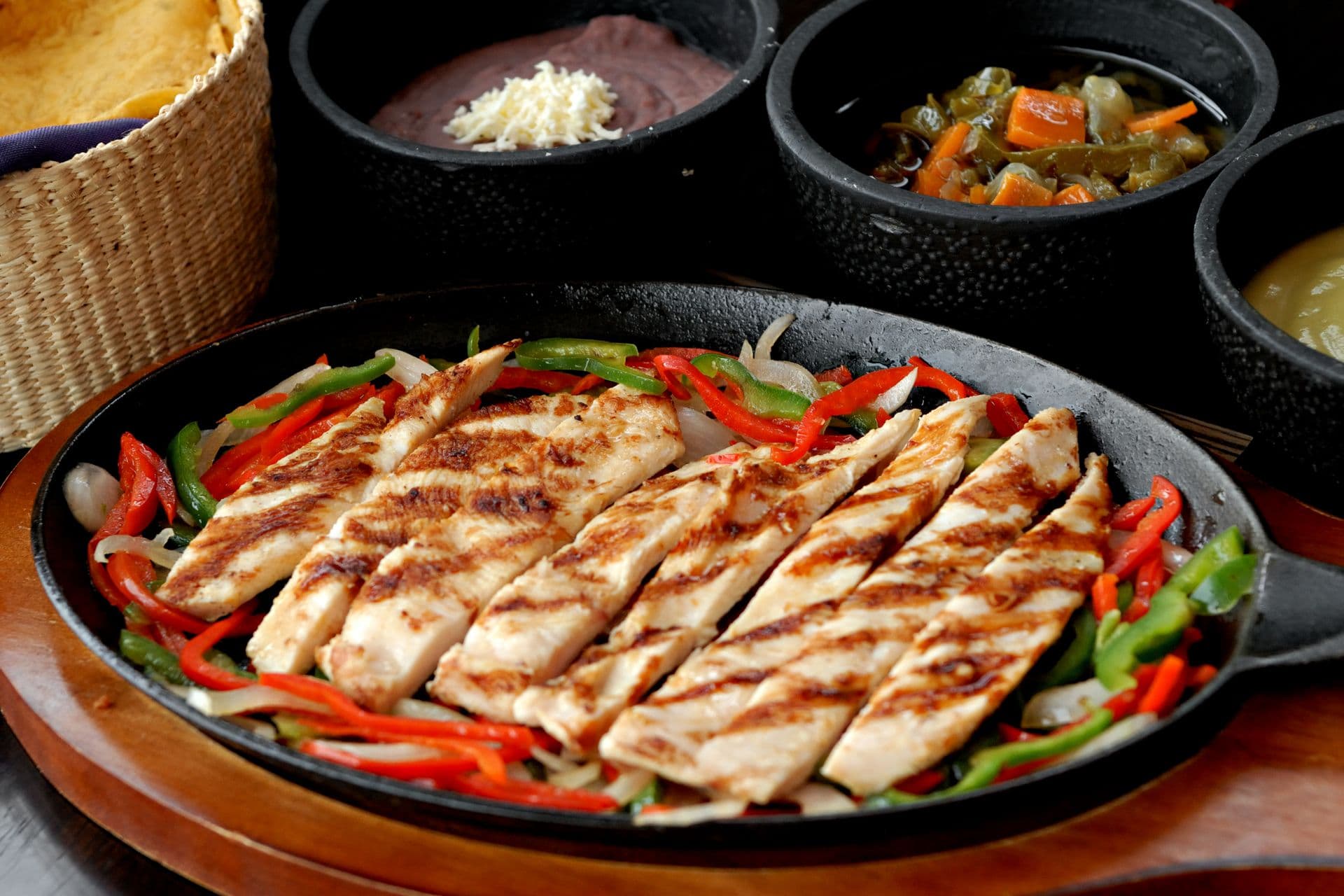
Cast-iron chicken fajitas trade convenience for a deep restaurant-style sear. A preheated cast-iron skillet holds so much heat that seasoned thigh strips brown hard without cooling the pan, and the peppers blister in batches rather than steaming. Work in stages, keep the pan roaring, and cook the chicken to 165°F. The payoff is charred edges and juicy meat you cannot get from a lighter pan.
- Prep
- 15m
- Cook
- 18m
- Total
- 33m
- Serves
- 4
- Level
- moderate
 Pexels contributor · Pexels License
A high-heat method for real char: preheat the cast iron until it is ripping hot, sear in batches without crowding, and keep the thighs juicy at 165°F.
Ingredients
Showing ingredients for 4 servings in US customary units.
Chicken
Vegetables
Finish
To serve
- 8Flour or corn tortillas, warmedShop
Cook times are not scaled with servings — adjust pan size and cook in batches as needed. Salt and “to taste” items are intentionally left for your judgment.
🛒 links open an Amazon search for that ingredient. Some links may earn FajitaRecipe.com a commission if you buy through Amazon, at no extra cost to you.
Step by step
How to make it
Preheat
Step 1. Set a 12-inch cast-iron skillet over medium-high heat and let it preheat for a full 5 minutes. Cast iron heats slowly and unevenly, so patience here is what gives you the searing surface the whole method depends on. A drop of water should skitter and vanish.
~5 min
Season
Step 2. While the pan heats, toss the very dry chicken strips with the fajita seasoning and 1 tablespoon of oil. Surface moisture is the enemy of a sear, so blot the strips again if they look wet.
~4 min
Sear the chicken
Step 3. Add half the chicken in a single, uncrowded layer and DO NOT move it for 2 minutes so a crust forms. Flip, finish to 165°F, and remove. Repeat with the second half. Crowding the pan collapses the heat and you lose the char.
~8 min165°F
Blister the vegetables
Step 4. Add the remaining oil, then the peppers and onion. Leave them mostly still, tossing only every minute or so, until the edges blacken in spots and they still have a little bite.
~5 min
Combine and finish
Step 5. Return the chicken and juices to the pan, toss for 30 seconds, then pull off the heat and squeeze over a lime wedge. Taste and adjust salt.
~1 min
Serve
Step 6. Serve straight from the hot skillet — bring it to the table on a trivet — with warm tortillas and toppings so everyone builds their own.
Doneness & safety
Chicken (all cuts)165°F / 74°C
Cook chicken to a minimum internal temperature of 165°F (74°C), measured at the thickest part with an instant-read thermometer.
Source: USDA Food Safety and Inspection Service · reviewed 2026-07-04
Leftover storage
Refrigerate cooked fajita fillings within 2 hours (1 hour if above 90°F ambient). Store at or below 40°F, use within 3–4 days, and reheat to 165°F.
Source: USDA Food Safety and Inspection Service · reviewed 2026-07-04
🛒 Shop this recipe
Pantry & spices
Fresh ingredients
Fresh items open an Amazon search — availability varies by location.
Recommendations are chosen to help you cook better fajitas; some Amazon links may earn a commission at no extra cost to you.
Fix it
Keeping thighs juicy at 165°F
People fear that cooking chicken all the way to a safe 165°F means dry meat, but thighs make that easy. Their fat and collagen keep them moist well past the point where breast would seize up, so you get a hard sear and a juicy interior at the same temperature. Pull each batch the moment a thermometer reads 165°F in the thickest strip; residual heat will carry it a few degrees higher off the pan.
The call: Use thighs and pull them right at 165°F so the sear does not come at the cost of dry meat.
Substitutions
| Instead of | Use | Adjust | Expect | Avoid when |
|---|---|---|---|---|
| Chicken thighs | Chicken breast | Use the same weight. Slice thinner, sear one side hard, and pull immediately at 165°F. | Leaner, but the margin for error shrinks — breast has no fat to buffer the high heat. | Not ideal for a hard cast-iron sear, where breast overcooks in seconds. |
| Avocado oil | Refined canola or grapeseed oil | Swap 1:1. | All hold up to cast-iron heat; avoid unrefined olive oil, which smokes and turns acrid. | — |
Technique
Searing in batches without crowding
Even a heavy skillet has limits. Pack it and the collective moisture from the meat floods the surface faster than it can evaporate, dropping you back into steaming. Searing half the chicken at a time keeps each strip in contact with dry, blazing metal so it browns in two minutes instead of graying over five. It feels slower, but the batches actually cook faster because the pan never has to recover from a stall.
The call: Sear the chicken in two batches so the pan stays hot enough to brown rather than steam.
Equipment for this recipe
Disclosure: As an Amazon Associate, FajitaRecipe.com earns from qualifying purchases. Recommendations are chosen to help you cook better fajitas; some Amazon links may earn a commission at no extra cost to you. See our selection methodology.
For cast-iron fajitas
 Lodge
LodgeModel L10SK3
A heavy 12-inch Lodge gives two servings of steak enough hot surface to brown without crowding. It is still too small for a six-person batch, which should be seared in rounds.
Best for: Everyday 2–4 serving skillet fajitas with a hard sear.
 Lodge
LodgeModel ASHH11
A cast-iron handle reaches the same temperature as the pan. A slip-on holder is the difference between confidently moving the skillet and dropping it.
Best for: Anyone using a blazing-hot cast-iron or carbon-steel handle.
 ThermoWorks
Model Thermapen ONE
Thin fajita chicken and steak swing past target in seconds. A one-second read lets you pull chicken at 165°F and steak at your chosen doneness before carryover overshoots.
Best for: A one-second, dependable read on thin proteins.
OXOModel Good Grips 12" Locking Tongs
Twelve-inch tongs keep your hand out of the smoke while you toss peppers and flip strips in a ripping-hot pan.
Best for: Tossing peppers and turning strips over high heat.
Gear & how it works
Why cast iron gives you the char
Cast iron is dense and thick, so it stores a large reservoir of heat energy. When cold chicken hits a lighter pan the surface temperature crashes and browning stalls; a properly preheated cast-iron skillet has enough banked heat to keep searing right through that thermal shock. That thermal mass is the whole reason a black skillet delivers the aggressive char people associate with sizzling-platter restaurant fajitas, provided you preheat it fully and do not overload it.
The call: Preheat cast iron for a full 5 minutes so it has the banked heat to sear through cold chicken hitting the pan.
Frequently asked questions
+How hot should the cast-iron skillet be for fajitas?
Hot enough that a bead of water skitters across the surface and evaporates in a second or two, usually after about 5 minutes over medium-high. If the chicken does not sizzle sharply the instant it lands, the pan is not ready.
+Why is my chicken sticking to the cast iron?
Chicken releases naturally once a crust forms. If it sticks, it is not seared yet — leave it alone another 30–60 seconds and it will lift cleanly. A well-seasoned pan and a dry surface on the meat both help.
+Can I use an enameled cast-iron pan?
Yes, but enamel tolerates slightly less extreme heat than bare cast iron, so keep it at medium-high rather than pushing it to smoking. You will still get good color, just a touch less aggressive char.
Testing, sources & disclosure
This recipe was developed and reviewed by our editors. We publish full kitchen-test notes here once a recipe has been cooked and verified in our kitchen.
- Author:
- FajitaRecipe Editorial
- Last reviewed:
- 2026-07-05
Sources
- Safe Minimum Internal Temperature Chart, USDA FSIS linkSupports: Poultry minimum internal temperature
As an Amazon Associate, FajitaRecipe.com earns from qualifying purchases. We do not provide medical or dietary advice; follow USDA guidance for food safety.
Keep cooking
You might also like
 Pexels contributor · Pexels License
Classic Chicken Fajitas
30 min · easy
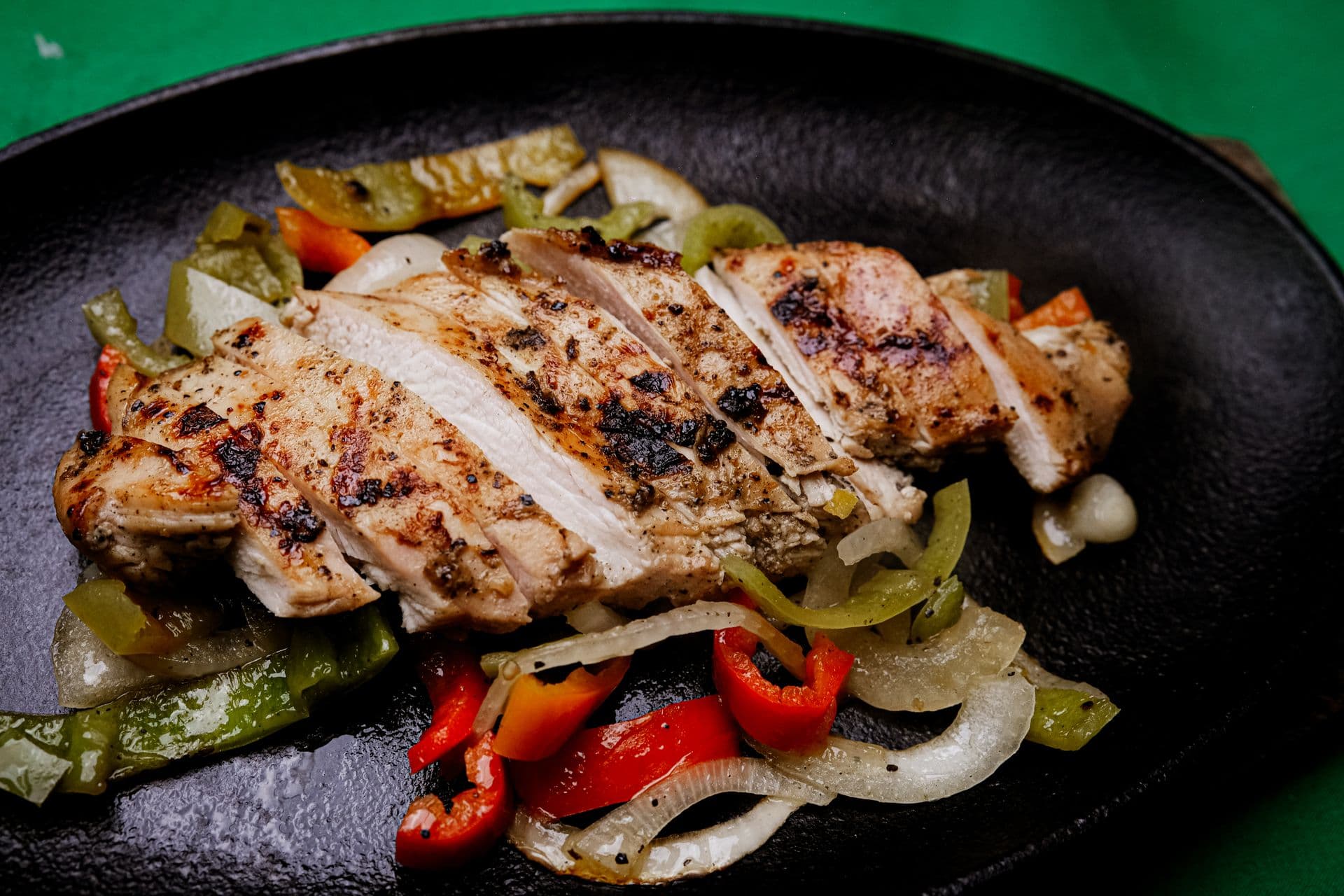
Classic chicken fajitas come together in one skillet in about half an hour. Sear seasoned strips of boneless skinless thigh over medium-high heat until browned, cook the peppers and onions in the same pan so they pick up the fond, then finish with a squeeze of lime. Cook the chicken to 165°F, pile it into warm tortillas, and add your toppings.
 Pexels contributor · Pexels License
Grilled Chicken Fajitas
40 min · moderate
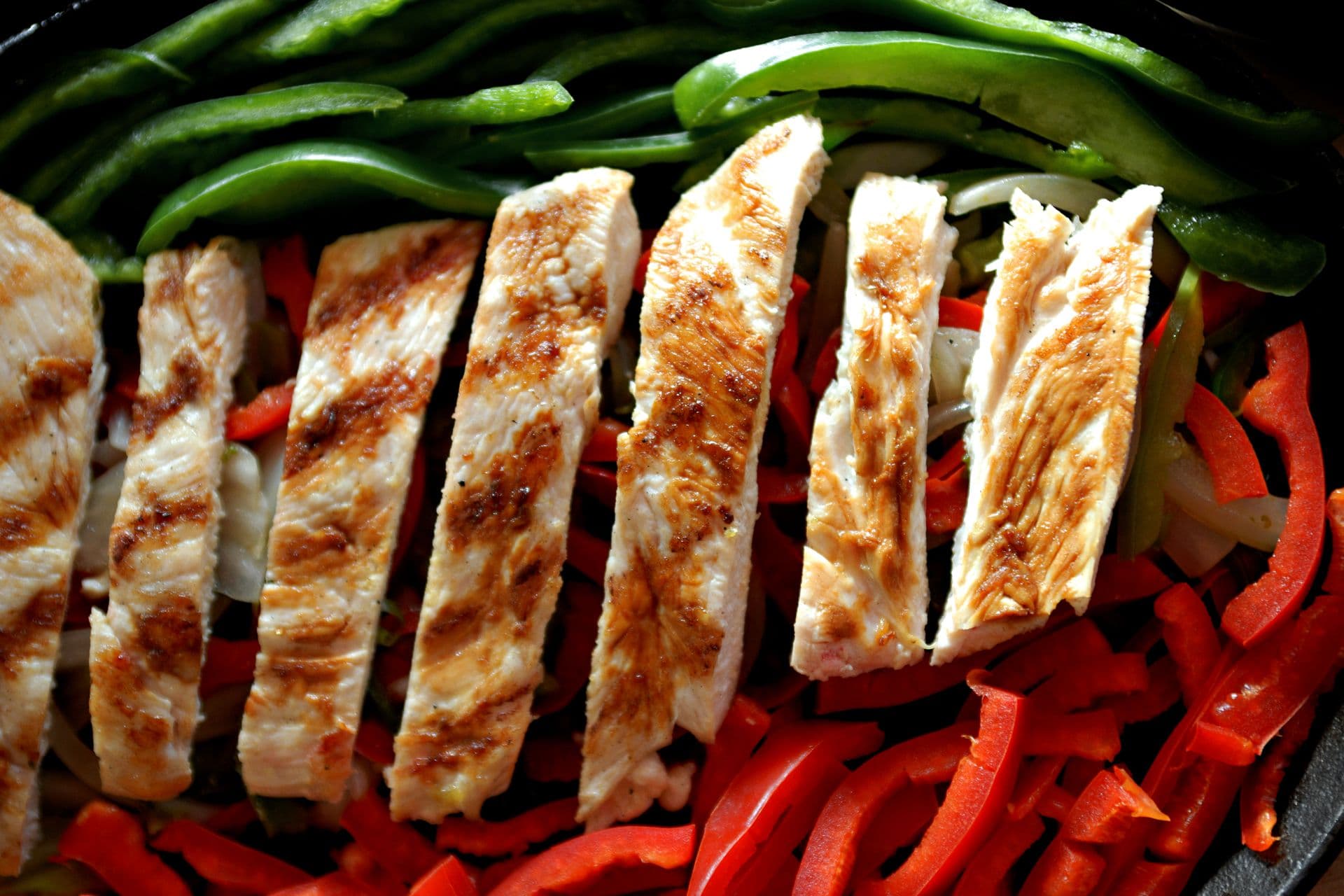
Grilled chicken fajitas cook over direct high heat so the fire adds smoke and char you cannot get indoors. Grill whole marinated thighs until they hit 165°F, then rest and slice them across the grain. A grill basket keeps the pepper and onion strips from falling through the grates. Marinate in the fridge first, and the result is smoky, juicy fajitas built for a crowd outdoors.

How to Get Restaurant-Style Fajita Char
That deep, blistered char on restaurant fajitas comes from screaming-hot metal and patience. Sizzling platters ride on cast iron or a flat-top held far hotter than a home burner usually reaches. Get there by preheating hard, drying the food, cooking in batches so the surface stays hot, using a high-smoke-point oil, and leaving each piece alone long enough to brown before you move it.