Best Cast Iron Skillet for Fajitas
For fajitas, the best cast-iron skillet is a heavy 12-inch pan with a helper handle: big enough to sear a batch without crowding, but still liftable. A 10-inch is fine for two people, while a 15-inch or a large flat griddle suits crowds if you can heft it. Nearly all modern cast iron comes pre-seasoned, so surface finish matters less than size and weight.
How to pick a cast-iron skillet for fajitas — size, weight, and seasoning explained, with options compared.
Compared
At a glance
Disclosure: As an Amazon Associate, FajitaRecipe.com earns from qualifying purchases. Recommendations are chosen to help you cook better fajitas; some Amazon links may earn a commission at no extra cost to you. See our selection methodology.
| Product | Best for | Key specs | Price | Link |
|---|---|---|---|---|
| Lodge Lodge 12-inch Cast Iron Skillet | Everyday 2–4 serving skillet fajitas with a hard sear. | Seasoned cast iron · 12 in dia, ~10.25 in cooking surface · 500°F-safe | $ | Amazon |
| Lodge Lodge 15-inch Cast Iron Skillet | Cooking for 4–6 in fewer rounds. | Seasoned cast iron · 15 in dia, ~12 in cooking surface · 500°F-safe | $$ | Amazon |
| Lodge Lodge 12-inch Seasoned Carbon Steel Skillet | Cast-iron searing with less weight and faster response. | Seasoned carbon steel · 12 in dia · 600°F-safe | $$ | Amazon |
Lodge Lodge 12-inch Cast Iron Skillet
$Best for: Everyday 2–4 serving skillet fajitas with a hard sear.
Seasoned cast iron · 12 in dia, ~10.25 in cooking surface · 500°F-safe
Find on AmazonLodge Lodge 15-inch Cast Iron Skillet
$$Best for: Cooking for 4–6 in fewer rounds.
Seasoned cast iron · 15 in dia, ~12 in cooking surface · 500°F-safe
Find on AmazonLodge Lodge 12-inch Seasoned Carbon Steel Skillet
$$Best for: Cast-iron searing with less weight and faster response.
Seasoned carbon steel · 12 in dia · 600°F-safe
Find on AmazonSubstitutions
| Instead of | Use | Adjust | Expect | Avoid when |
|---|---|---|---|---|
| Heavy 12-inch cast-iron skillet | 12-inch carbon-steel pan | — | Same high-heat searing with noticeably less weight, at the cost of a slightly less robust preseasoned surface. | Not the best pick if you also want a pan that doubles as a slow-cooling serving vessel, where cast iron holds heat longer. |
Recommended gear
Disclosure: As an Amazon Associate, FajitaRecipe.com earns from qualifying purchases. Recommendations are chosen to help you cook better fajitas; some Amazon links may earn a commission at no extra cost to you. See our selection methodology.
For cast-iron fajitas
LodgeModel L10SK3
A heavy 12-inch Lodge gives two servings of steak enough hot surface to brown without crowding. It is still too small for a six-person batch, which should be seared in rounds.
Best for: Everyday 2–4 serving skillet fajitas with a hard sear.
 Lodge
LodgeModel ASHH11
A cast-iron handle reaches the same temperature as the pan. A slip-on holder is the difference between confidently moving the skillet and dropping it.
Best for: Anyone using a blazing-hot cast-iron or carbon-steel handle.
 ThermoWorks
Model Thermapen ONE
Thin fajita chicken and steak swing past target in seconds. A one-second read lets you pull chicken at 165°F and steak at your chosen doneness before carryover overshoots.
Best for: A one-second, dependable read on thin proteins.
OXOModel Good Grips 12" Locking Tongs
Twelve-inch tongs keep your hand out of the smoke while you toss peppers and flip strips in a ripping-hot pan.
Best for: Tossing peppers and turning strips over high heat.
Gear & how it works
What specs matter for fajitas: size, weight, seasoning
Fajitas live and die on high heat and elbow room, and three specs govern both. Size is first: a 12-inch skillet gives roughly 40 percent more cooking surface than a 10-inch, which is the difference between searing a batch and steaming it. Weight is the trade-off — a 12-inch pan often runs five to seven pounds, and that thermal mass is exactly what holds temperature when cold food lands, but it also strains your wrist, so a second helper handle opposite the main one is worth seeking out. Seasoning matters least: virtually every modern pan ships pre-seasoned and only improves with use.
The call: Prioritize a 12-inch pan with a helper handle; treat pre-seasoning as a given, not a deciding factor.
Who each size is for
A 10-inch skillet suits one or two people and lighter hands; it heats fast and stores easily, but you will cook fajitas in two batches for four eaters. The 12-inch is the all-rounder that handles a family batch in one or two passes and is what most home cooks should buy. A 15-inch skillet or a large flat griddle is for entertaining and big-batch cooks who regularly feed six or more and do not mind the heft — these pans can top ten pounds loaded, so factor in your stove size and your ability to lift them safely. Carbon steel is a lighter alternative that sears the same, if weight is your main concern.
The call: Match pan size to how many people you usually cook for and how much weight you can comfortably lift.
When not to buy, and how we selected
If you already own any cast-iron or carbon-steel skillet 10 inches or larger, you likely do not need a new one — fajitas reward technique far more than a specific brand, and a well-preheated existing pan will serve you well. Skip the upgrade unless your current pan is too small for your household or too heavy to handle. For this guide we compared widely available skillets on size, weight, handle design, and pre-seasoning, focusing on what affects fajita searing. Recommendations were editorially researched and last checked 2026-07-05; they are not lab-tested, and we do not publish fabricated ratings or prices.
The call: Keep your current pan if it is 10 inches or larger and comfortable to lift; upgrade only for size or weight reasons.
Frequently asked questions
+What size cast iron skillet is best for fajitas?
A 12-inch skillet is the sweet spot for most households: enough surface to sear a family batch without crowding, while still liftable. Choose 10-inch for one or two people, or 15-inch and larger flat griddles for crowds if you can handle the weight.
+Do I need to season a new cast iron skillet before making fajitas?
Almost all new cast iron comes pre-seasoned and is ready to use out of the box. A quick wipe, a thin oil coat, and a hot preheat are enough; the surface only improves as you cook high-heat dishes like fajitas on it.
+Is carbon steel better than cast iron for fajitas?
Both take and hold the high heat fajitas need. Carbon steel is thinner and lighter and heats a touch faster, while cast iron holds heat longer and can double as a sizzling serving pan. Choose by weight preference; either sears well.
Testing, sources & disclosure
Researched and reviewed by our editors. See our recommendation methodology.
- Author:
- FajitaRecipe Editorial
- Last reviewed:
- 2026-07-05
As an Amazon Associate, FajitaRecipe.com earns from qualifying purchases. We do not provide medical or dietary advice; follow USDA guidance for food safety.
Keep cooking
You might also like
 Pexels contributor · Pexels License
Cast-Iron Steak Fajitas
40 min · moderate
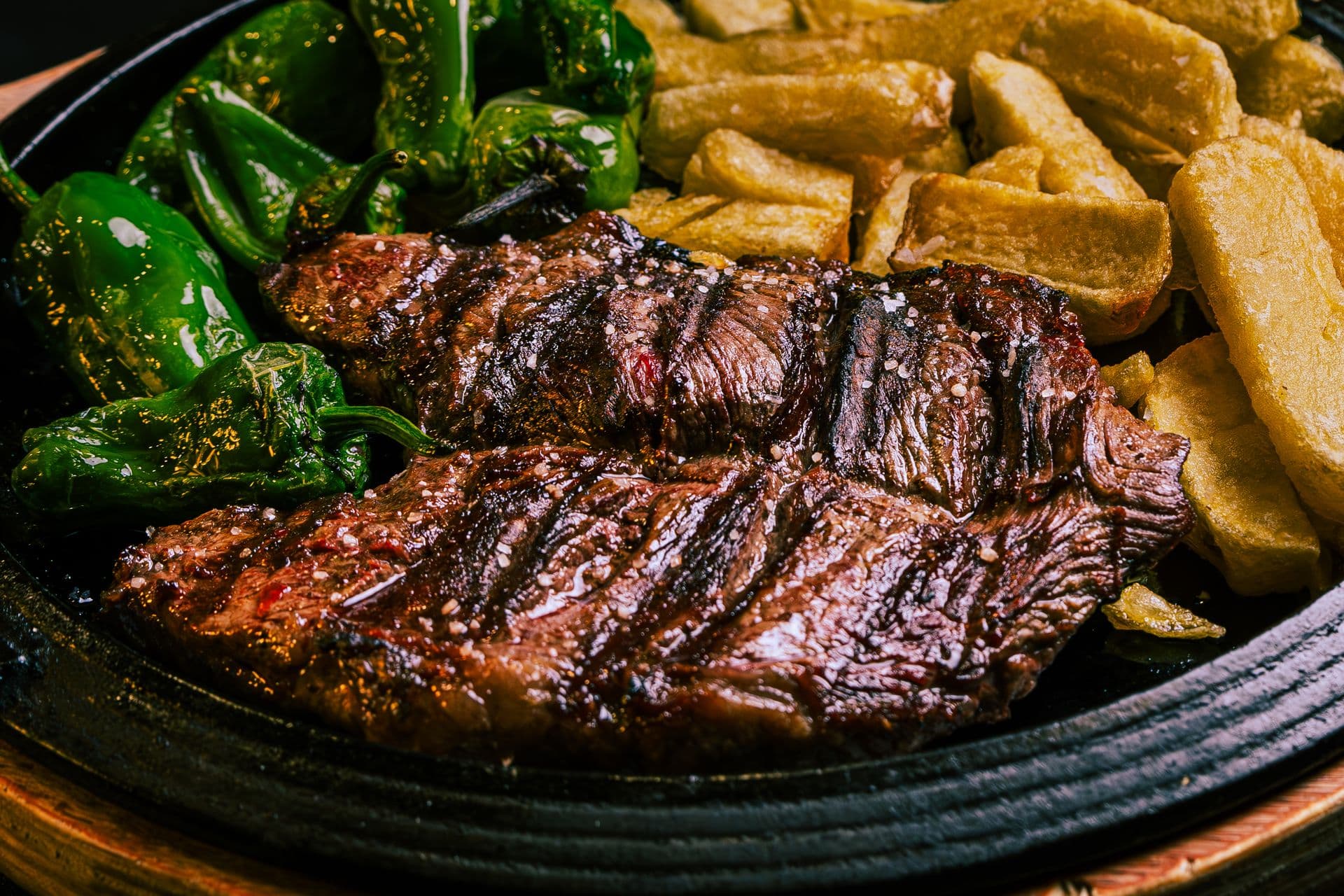
Cast-iron steak fajitas rely on a blazing-hot skillet to sear thin skirt or flank steak in under four minutes, then char peppers and onions in the rendered beef fat. Slice the rested steak against the grain, keep the pan crowd-free, and you get deep browning without steaming the meat gray. It is the closest a home stove comes to a restaurant flat-top.
How to Cook Fajitas Without Cast Iron
You do not need a cast-iron skillet to make great fajitas. A well-preheated stainless or carbon-steel pan sears beautifully, a sheet pan under a hot oven or broiler chars a big batch hands-off, and a grill delivers real smoke. The one pan to skip is nonstick, which cannot safely take the high heat fajitas want. Match the method to what you own and adjust your expectations for each.

How to Get Restaurant-Style Fajita Char
That deep, blistered char on restaurant fajitas comes from screaming-hot metal and patience. Sizzling platters ride on cast iron or a flat-top held far hotter than a home burner usually reaches. Get there by preheating hard, drying the food, cooking in batches so the surface stays hot, using a high-smoke-point oil, and leaving each piece alone long enough to brown before you move it.