Best Knife for Slicing Fajita Steak
The best knife for slicing fajita steak is a long, thin slicing knife — ideally 10 to 12 inches with a Granton (scalloped) edge that keeps thin slices from sticking. Its length lets you cut across the grain in one clean stroke, which is what makes skirt and flank tender. A sharp chef's knife works too if that is what you own, and either way a large, stable cutting board makes the job safe.
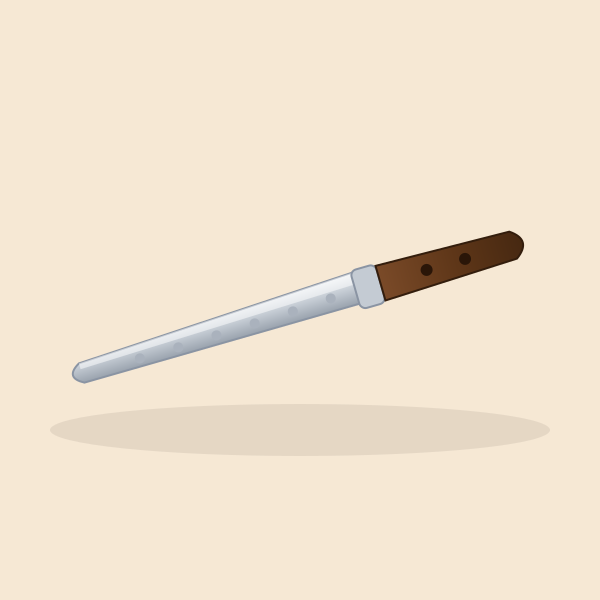
Slicing knife vs chef's knife for fajita steak — blade length, Granton edge, and the board that supports them.
Compared
At a glance
Disclosure: As an Amazon Associate, FajitaRecipe.com earns from qualifying purchases. Recommendations are chosen to help you cook better fajitas; some Amazon links may earn a commission at no extra cost to you. See our selection methodology.
| Product | Best for | Key specs | Price | Link |
|---|---|---|---|---|
| Victorinox Victorinox Fibrox 12-inch Granton Slicing Knife | Clean, thin, against-the-grain slices on skirt and flank steak. | Stainless, Granton (dimpled) edge, Fibrox handle · 12 in blade | $$ | Amazon |
| Victorinox Victorinox Fibrox Pro 8-inch Chef’s Knife | Slicing peppers and onions and general prep. | Stamped high-carbon stainless, Fibrox handle · 8 in blade | $$ | Amazon |
| John Boos John Boos Reversible Maple Cutting Board | Resting and slicing steak with room to spare. | Hard maple, reversible (juice groove one side) · 24 x 18 x 2.25 in | $$$ | Amazon |
Victorinox Victorinox Fibrox 12-inch Granton Slicing Knife
$$Best for: Clean, thin, against-the-grain slices on skirt and flank steak.
Stainless, Granton (dimpled) edge, Fibrox handle · 12 in blade
Find on AmazonVictorinox Victorinox Fibrox Pro 8-inch Chef’s Knife
$$Best for: Slicing peppers and onions and general prep.
Stamped high-carbon stainless, Fibrox handle · 8 in blade
Find on AmazonJohn Boos John Boos Reversible Maple Cutting Board
$$$Best for: Resting and slicing steak with room to spare.
Hard maple, reversible (juice groove one side) · 24 x 18 x 2.25 in
Find on AmazonSubstitutions
| Instead of | Use | Adjust | Expect | Avoid when |
|---|---|---|---|---|
| Dedicated slicing knife | Sharp 8-inch chef's knife | — | Cuts steak cleanly if kept sharp, though a wide cut may need two strokes rather than one. | Not ideal when slicing very wide cuts where a single long stroke gives the most even strips. |
Technique
Keep it sharp: honing versus sharpening
A dull edge is what actually ruins fajita slices: instead of parting the fibers, it presses and drags, tearing the muscle and squeezing out juice so the strips turn stringy and gray at the edges. Two different maintenance steps prevent that, and cooks often confuse them. Honing realigns an edge that has rolled slightly off-center from normal use; a few light passes on a honing steel before each session straighten the very tip of the edge and restore bite without removing much steel. Sharpening actually grinds a new edge on a whetstone, a pull-through, or with a professional service, and you only need it every few months, or when honing no longer brings the knife back. A quick check: draw the blade across a sheet of paper — a sharp edge catches and slices, a dull one folds and slips. For fajita steak the payoff is direct, since a keen edge lets the blade do the cutting, so you can slice thin, across the grain, in one clean stroke rather than sawing.
The call: Hone before every session and sharpen every few months so the edge slices instead of tears.
Recommended gear
Disclosure: As an Amazon Associate, FajitaRecipe.com earns from qualifying purchases. Recommendations are chosen to help you cook better fajitas; some Amazon links may earn a commission at no extra cost to you. See our selection methodology.
For slicing steak
VictorinoxModel 5.4233.30 (Fibrox 12" Granton)
Thin, even slices across the grain are what make skirt and flank tender. A long granton slicer does it in one clean stroke instead of sawing.
Best for: Clean, thin, against-the-grain slices on skirt and flank steak.
John BoosModel RA03 (24 x 18 in)
A roomy board with a juice groove lets steak rest and be sliced in one place; pour the caught juices back over the strips before serving.
Best for: Resting and slicing steak with room to spare.
 ThermoWorks
Model ThermoPop 2
You do not need a premium thermometer to cook safe chicken. The ThermoPop 2 is accurate and a few seconds slower — a great-value pick from the same maker.
Best for: A reliable read without the premium price.
Gear & how it works
What specs matter: length, edge, and sharpness
Tender fajita steak depends on thin slices cut across the grain, and the knife either helps or fights you. Blade length is the key spec: a 10- to 12-inch slicer spans a whole skirt or flank steak so you can draw one long, smooth cut instead of sawing, which tears the fibers and crushes juices out. A Granton edge — the row of oval scallops ground into the blade — creates tiny air pockets that break the suction between steel and meat, so thin slices release cleanly rather than clinging. Above all the edge must be genuinely sharp; a keen shorter knife beats a dull long one every time.
The call: Favor a long, sharp blade so you can slice thin and across the grain in a single pass.
Who each option is for
A dedicated slicing knife is for cooks who make steak fajitas often and want the cleanest, most even strips; the long, narrow blade is purpose-built for the task and doubles for roasts and brisket. A chef's knife, typically 8 inches with a taller blade, is the versatile choice for someone who does not want another single-use tool — it slices steak perfectly well as long as it is sharp, though you may need two strokes across a wide cut. Whichever blade you use, a large hardwood or end-grain cutting board with a stable footprint is non-negotiable: it holds the meat steady, spares your edge, and catches the juices you will want to spoon back over the fajitas.
The call: Buy a slicer if you cut steak often; otherwise a sharp chef's knife plus a big board covers it.
When not to buy, and how we selected
If you already own a sharp chef's knife and a solid board, you do not need to buy anything for fajitas — technique and a keen edge matter far more than a specialty slicer. Money is better spent on a honing steel or a sharpening service than on a second knife you rarely use. Consider a dedicated slicer only if you slice large cuts regularly or struggle to make even strips with what you have. For this guide we compared slicing and chef's knives and boards on blade length, edge style, and stability as they affect clean cross-grain cuts. Recommendations were editorially researched and last checked 2026-07-05; they are not lab-tested, and we do not publish fabricated ratings or prices.
The call: Sharpen the knife you own before buying a slicer; add a dedicated blade only if you cut large cuts often.
Gear & how it works
Slicer, chef's knife, or santoku: which type to pick
A long slicing knife, a chef's knife, and a santoku each cut steak differently, and the right pick depends on what you already own. The slicer wins on pure geometry: a narrow 10- to 12-inch blade drags through a whole flank in one pull, and its slight flex helps it track straight across the grain. A chef's knife trades that reach for versatility — its 8-inch curved belly rocks through onions and peppers too, so it earns its counter space, but on a wide skirt you will finish the cut with a second stroke. A santoku is the shortest of the three, usually 5 to 7 inches with a flat edge and a tall blade; many carry a Granton-style scalloped grind that releases thin slices well. Its flat profile favors straight push-cuts rather than rocking, which suits clean cross-grain strips, but the short blade means several passes on a full steak. For fajitas specifically, reach for the slicer if you have one, default to the chef's knife for everyday use, and treat the santoku as a capable stand-in when it is already sharp and closest to hand.
The call: Pick the slicer for reach, the chef's knife for everyday versatility, and the santoku only as a sharp stand-in.
Frequently asked questions
+Do I need a special knife to slice fajita steak?
No. A sharp chef's knife slices fajita steak well. A long slicing knife with a Granton edge makes cleaner, more even strips and releases thin slices without sticking, but sharpness and slicing across the grain matter far more than the specific knife.
+What is a Granton edge and does it help?
A Granton edge has scalloped hollows ground along the blade that create air pockets, reducing suction so thin slices fall away instead of clinging. It genuinely helps with delicate slicing like steak and salmon, though it is a convenience, not a requirement.
+How long should a fajita slicing knife be?
A 10- to 12-inch blade lets you cut across a whole skirt or flank steak in one smooth stroke, which keeps slices even and avoids the tearing that sawing causes. Shorter blades work but may need multiple passes on wide cuts.
+What kind of knife is best for slicing fajita meat?
A long, thin slicing knife of about 10 to 12 inches is ideal, because it cuts across a whole steak in one pull and its narrow blade tracks the grain cleanly. A sharp 8-inch chef's knife is a perfectly good substitute and more versatile. Whatever you use, keep it sharp and slice across the grain — that matters more than the knife itself.
Testing, sources & disclosure
Researched and reviewed by our editors. See our recommendation methodology.
- Author:
- FajitaRecipe Editorial
- Last reviewed:
- 2026-07-13
As an Amazon Associate, FajitaRecipe.com earns from qualifying purchases. We do not provide medical or dietary advice; follow USDA guidance for food safety.
Keep cooking
You might also like
How to Slice Fajita Meat Against the Grain
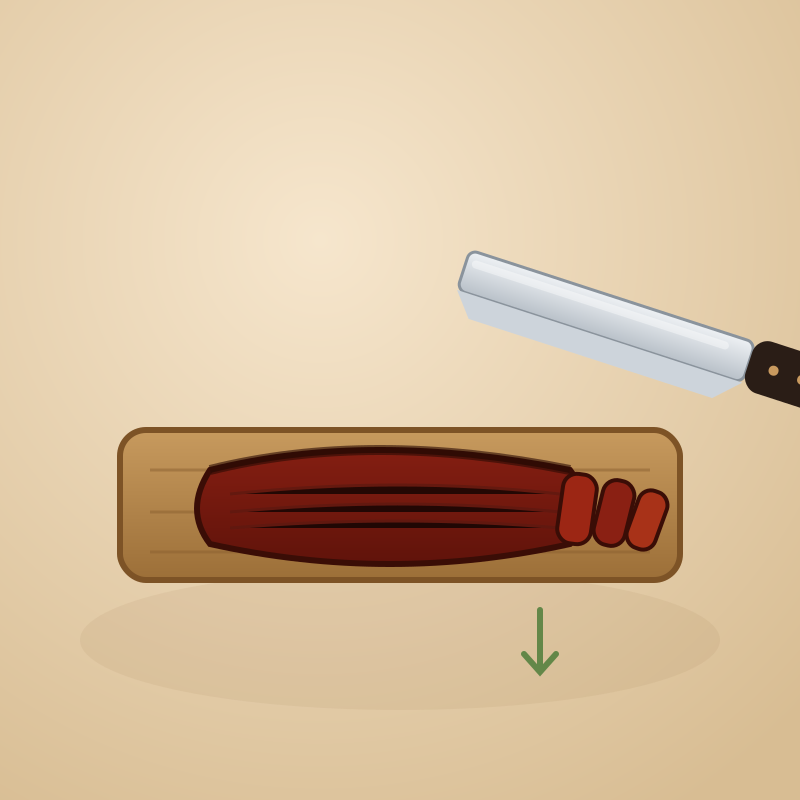
Slice fajita meat thin and across the grain after it rests. Look at the surface to find the direction the muscle fibers run, then cut straight across them at a slight angle into quarter-inch strips. Cutting against the grain shortens the fibers so each bite is tender. Always slice cooked, rested meat, not raw, and hold your knife low for wide, even pieces.
Why Is My Fajita Steak Tough?
Tough fajita steak usually traces to four fixable mistakes: the wrong cut, slicing with the grain instead of across it, overcooking, and skipping the rest. Skirt and flank are flavorful but coarse-grained, so they must be cooked no further than medium-rare and sliced thin against the grain. Do that, rest the meat a few minutes, and go easy on acidic marinades, and the same steak turns tender.
Best Steak for Fajitas: Skirt vs. Flank vs. Sirloin
Skirt steak is the best cut for fajitas: it is loosely grained, well marbled, and drinks up marinade, giving that classic beefy chew when sliced across the grain. Flank steak is the leaner, easier-to-find backup, and top sirloin or flap meat work when you want a budget cut. Whatever you buy, slice it thin against the grain.