Sheet-Pan Shrimp Fajitas
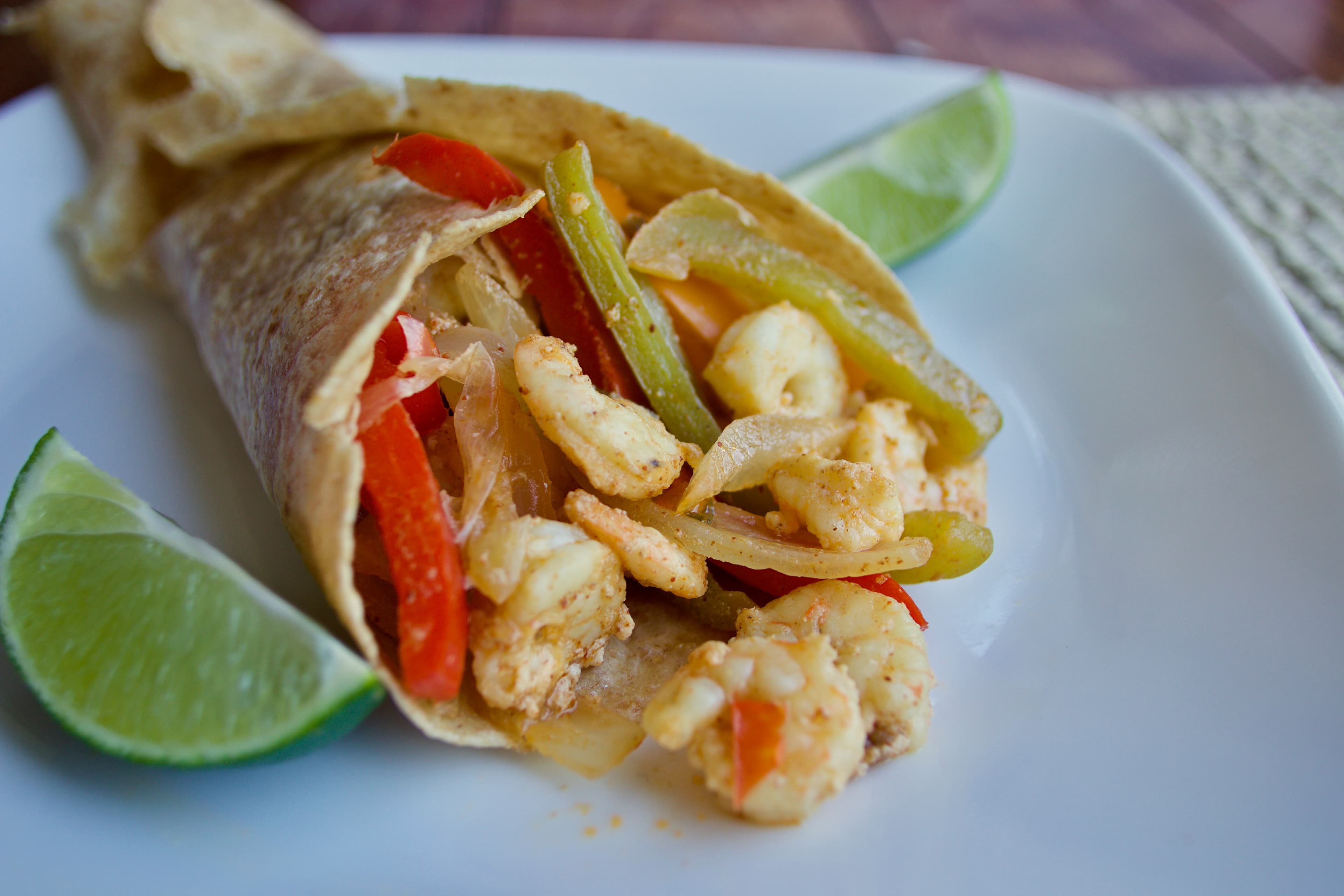
Sheet-pan shrimp fajitas roast the peppers and onion first at high heat, then add the shrimp to the same pan for the last few minutes, since shrimp cook in a fraction of the time vegetables need to char. Keeping everything in a single, uncrowded layer is what lets the oven brown the edges instead of steaming them. No skillet, no stovetop attention — just one pan and a hot oven.
- Prep
- 10m
- Cook
- 16m
- Total
- 26m
- Serves
- 4
- Level
- easy
 A Healthier Michigan · CC BY-SA 2.0
A one-pan oven method for shrimp fajitas: vegetables roast first, shrimp joins for the last few minutes.
Ingredients
Showing ingredients for 4 servings in US customary units.
Shrimp & seasoning
- 1½ lbLarge shrimp, peeled and deveined, tails offThaw fully and pat very dry if using frozen — a wet sheet pan steams instead of roasts.Search
- 3 tbspNeutral oilDivided between the vegetables and the shrimp.Shop
- 2 tspChili powderShop
- 1 tspGround cuminShop
- 2 clovesGarlic, mincedSearch
- To tasteKosher saltTo taste.Shop
Peppers & onions
Cook times are not scaled with servings — adjust pan size and cook in batches as needed. Salt and “to taste” items are intentionally left for your judgment.
🛒 links open an Amazon search for that ingredient. Some links may earn FajitaRecipe.com a commission if you buy through Amazon, at no extra cost to you.
Step by step
How to make it
Prep
Step 1. Preheat the oven to 425°F with a rack in the upper third.
~8 min
Roast vegetables
Step 2. Toss the peppers and onion with half the oil, half the chili powder and cumin, and salt. Spread in a single, uncrowded layer on a rimmed sheet pan.
~3 minStep 3. Roast 10–12 minutes, until the vegetables are just starting to char at the edges.
~11 min
Add shrimp
Step 4. Meanwhile, toss the shrimp with the remaining oil, chili powder, cumin, garlic, and salt.
~2 minStep 5. Push the vegetables to the edges of the pan and add the shrimp in a single layer in the center. Return to the oven (switching to broil if you want more color) for 5–6 minutes, until the shrimp are opaque throughout. Watch closely — shrimp overcook fast under a broiler.
~6 min
Serve
Step 6. Squeeze lime over everything and serve immediately with warm tortillas.
Doneness & safety
Shrimp
Cook shrimp until the flesh is opaque and firm (an internal temperature near 145°F / 63°C). Shrimp overcook quickly — pull them the moment they curl and turn opaque.
Source: USDA Food Safety and Inspection Service · reviewed 2026-07-04
Leftover storage
Refrigerate cooked fajita fillings within 2 hours (1 hour if above 90°F ambient). Store at or below 40°F, use within 3–4 days, and reheat to 165°F.
Source: USDA Food Safety and Inspection Service · reviewed 2026-07-04
🛒 Shop this recipe
Pantry & spices
Fresh ingredients
Fresh items open an Amazon search — availability varies by location.
Cookware & tools
- Nordic Ware Naturals Half Sheet · Naturals Baker’s Half Sheet 43100Find →
- Winco Blade Slotted Flexible Turner · TN719Find →
- ThermoWorks ThermoPop 2 · ThermoPop 2Find →
- Microwave Cloth Tortilla WarmerFind →
- Victoria Carbon Steel Comal · COM-113 (12 in)Find →
- Victorinox Fibrox Pro 8-inch Chef’s Knife · 5.2063.20 (Fibrox Pro 8")Find →
- OXO Good Grips 12-inch Tongs · Good Grips 12" Locking TongsFind →
Already own these? Use what you have — no need to buy.
Recommendations are chosen to help you cook better fajitas; some Amazon links may earn a commission at no extra cost to you.
Fix it
Why sheet-pan fajitas turn soggy
The usual causes are an overcrowded pan that traps steam, vegetables that release too much liquid (very juicy peppers or a pan that is too small), or an oven that has not fully preheated before the vegetables go in. Give the vegetables room to spread out, preheat fully, and resist covering the pan at any point.
Substitutions
| Instead of | Use | Adjust | Expect | Avoid when |
|---|---|---|---|---|
| Neutral oil | Avocado oil | — | Higher smoke point, which helps if you finish under the broiler. | — |
| Chili powder and cumin | Store-bought fajita seasoning | About 1.5 tablespoons total in place of the dry spices. | Comparable flavor with less control over salt. | — |
| Bell peppers | Poblano peppers | — | Deeper, slightly smoky flavor. | — |
Technique
Keep everything in a single layer
A crowded sheet pan traps steam under the food instead of letting it escape, so vegetables braise and soften instead of charring at the edges. Use a pan large enough to spread everything out with a little space between pieces — if your pan is too small, split the vegetables across two pans rather than piling them up.
The call: Spread vegetables and shrimp in a single layer; use a second pan rather than crowding one.
The science
Why the shrimp goes in later
Peppers and onion need 10–12 minutes at high heat to char and soften, while shrimp cook through in about 5–6. Roasting them together from the start would leave the shrimp badly overcooked and rubbery long before the vegetables were ready, so the shrimp joins the pan only for the back half of the cook, whether you finish under the same bake setting or switch to broil for more color.
The call: Add shrimp partway through, once the vegetables already have a head start.
Equipment for this recipe
Disclosure: As an Amazon Associate, FajitaRecipe.com earns from qualifying purchases. Recommendations are chosen to help you cook better fajitas; some Amazon links may earn a commission at no extra cost to you. See our selection methodology.
For sheet-pan fajitas
 Nordic Ware
Model Naturals Baker’s Half Sheet 43100
A sturdy rimmed half-sheet gives chicken and peppers room to roast in a single layer instead of steaming. Thin pans buckle at 425°F and pool juices in the warp.
Best for: Sheet-pan fajitas for 3–4 in a single layer.
 Winco
WincoModel TN719
A thin, flexible turner slides under roasted chicken and peppers that caught on the pan, so you flip them instead of shredding them.
Best for: Lifting and turning sheet-pan pieces without tearing.
 ThermoWorks
Model ThermoPop 2
You do not need a premium thermometer to cook safe chicken. The ThermoPop 2 is accurate and a few seconds slower — a great-value pick from the same maker.
Best for: A reliable read without the premium price.
For warm tortillas

A damp-cloth warmer steams a stack soft in the microwave and keeps them pliable through dinner — the difference between a taco that folds and one that cracks.
Best for: Warming a stack quickly and keeping them soft at the table.
VictoriaModel COM-113 (12 in)
A dry comal over medium-high blisters tortillas in seconds, giving them the toasty spots a microwave never will.
Best for: Charring tortillas directly and toasting them the traditional way.
For peppers & onions
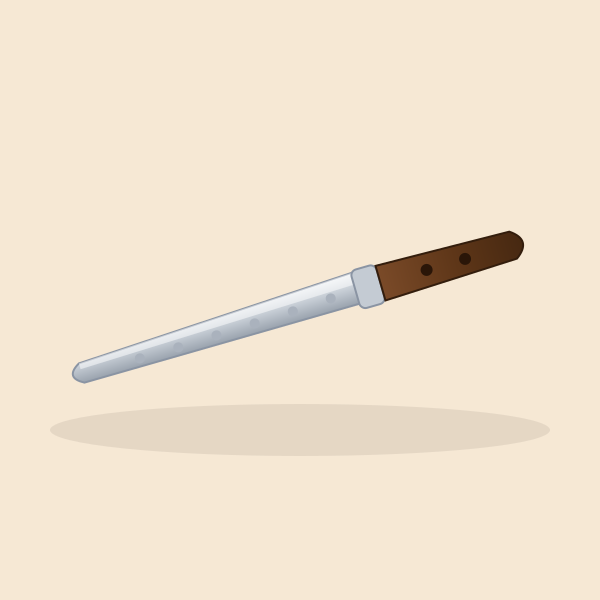 Victorinox
Model 5.2063.20 (Fibrox Pro 8")
A sharp 8-inch chef’s knife handles the pepper and onion prep fajitas live on. The Fibrox handle grips even when your hands are wet from vegetables.
Best for: Slicing peppers and onions and general prep.
OXOModel Good Grips 12" Locking Tongs
Twelve-inch tongs keep your hand out of the smoke while you toss peppers and flip strips in a ripping-hot pan.
Best for: Tossing peppers and turning strips over high heat.
Serving & storage
Storing and reheating
Refrigerate leftovers within two hours and use within 1–2 days, since cooked shrimp are more perishable than meat or poultry. Reheat briefly in a low oven or eat cold rather than running the shrimp through high heat a second time.
Frequently asked questions
+Can I use frozen shrimp for a sheet-pan fajita recipe?
Yes, but thaw them completely first and pat them very dry. Wet shrimp release water onto the pan, which steams the whole tray instead of letting it roast.
+Do I need to flip the shrimp halfway through?
Not usually — shrimp cook quickly enough in a hot oven that one side gets plenty of heat, especially if you finish under the broiler for the last minute or two.
+Is broiling or baking better for sheet-pan shrimp fajitas?
Baking at 425°F is more forgiving and even; broiling gets more char but needs closer attention since shrimp can go from opaque to rubbery within a minute under direct broiler heat.
+How do I keep the vegetables from turning soggy?
Spread them in a single, uncrowded layer on a fully preheated pan, and use a second sheet pan rather than piling everything onto one.
Testing, sources & disclosure
This recipe was developed and reviewed by our editors. We publish full kitchen-test notes here once a recipe has been cooked and verified in our kitchen.
- Author:
- FajitaRecipe Editorial
- Last reviewed:
- 2026-07-06
Sources
- Safe Minimum Internal Temperature Chart, USDA FSIS linkSupports: Shrimp doneness and safe handling
As an Amazon Associate, FajitaRecipe.com earns from qualifying purchases. We do not provide medical or dietary advice; follow USDA guidance for food safety.
Keep cooking
You might also like
 Pexels contributor · Pexels License
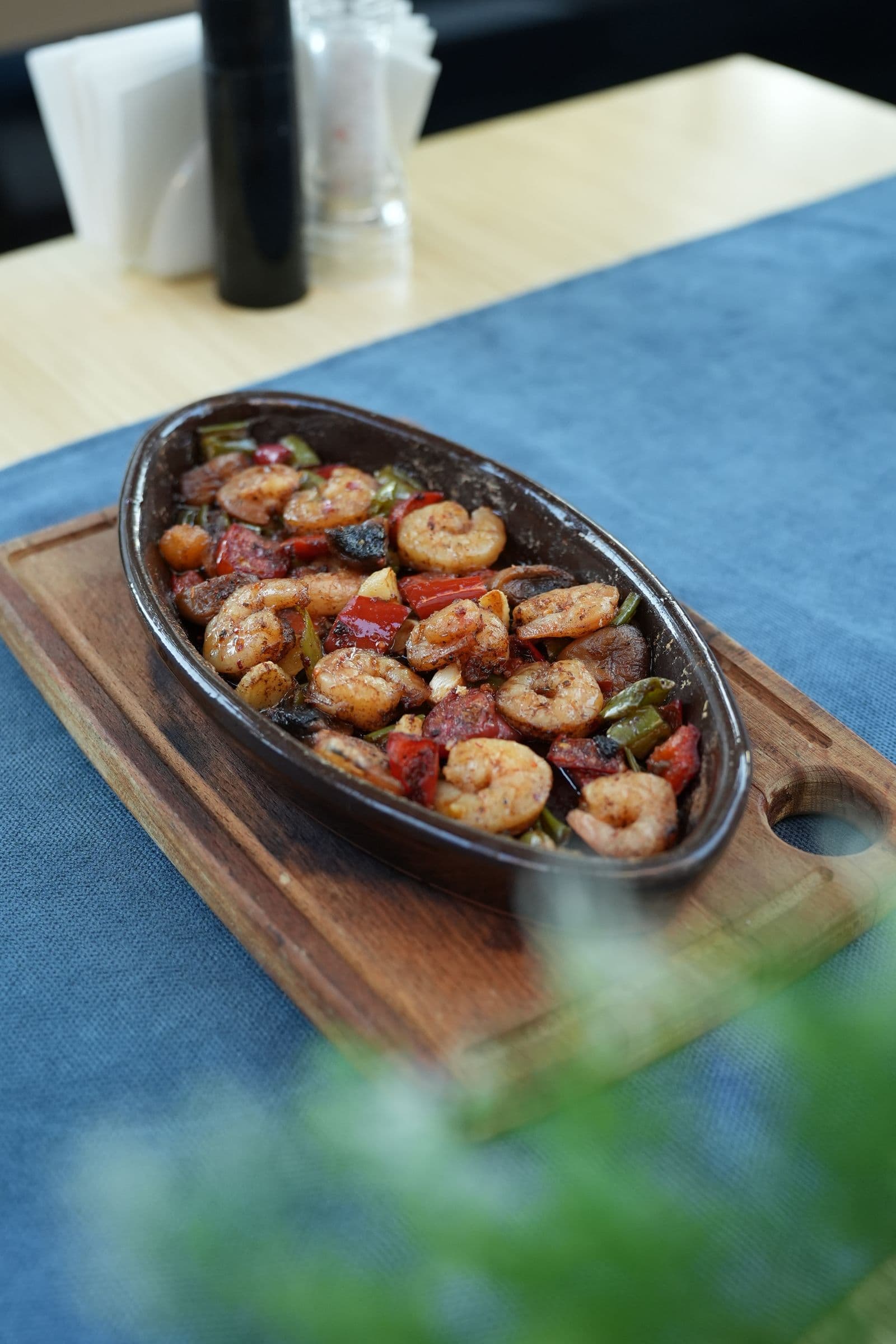
Shrimp Fajitas
25 min · easy
Shrimp fajitas come together in about fifteen minutes because shrimp cook in just two to three. Char the peppers and onions first, then sear the shrimp in a hot skillet only until they turn opaque and curl into a loose C. Skip the long marinade — citrus acid will start to firm and cloud raw shrimp on the counter. Toss with lime and pile into warm tortillas.
 Pexels contributor · Pexels License
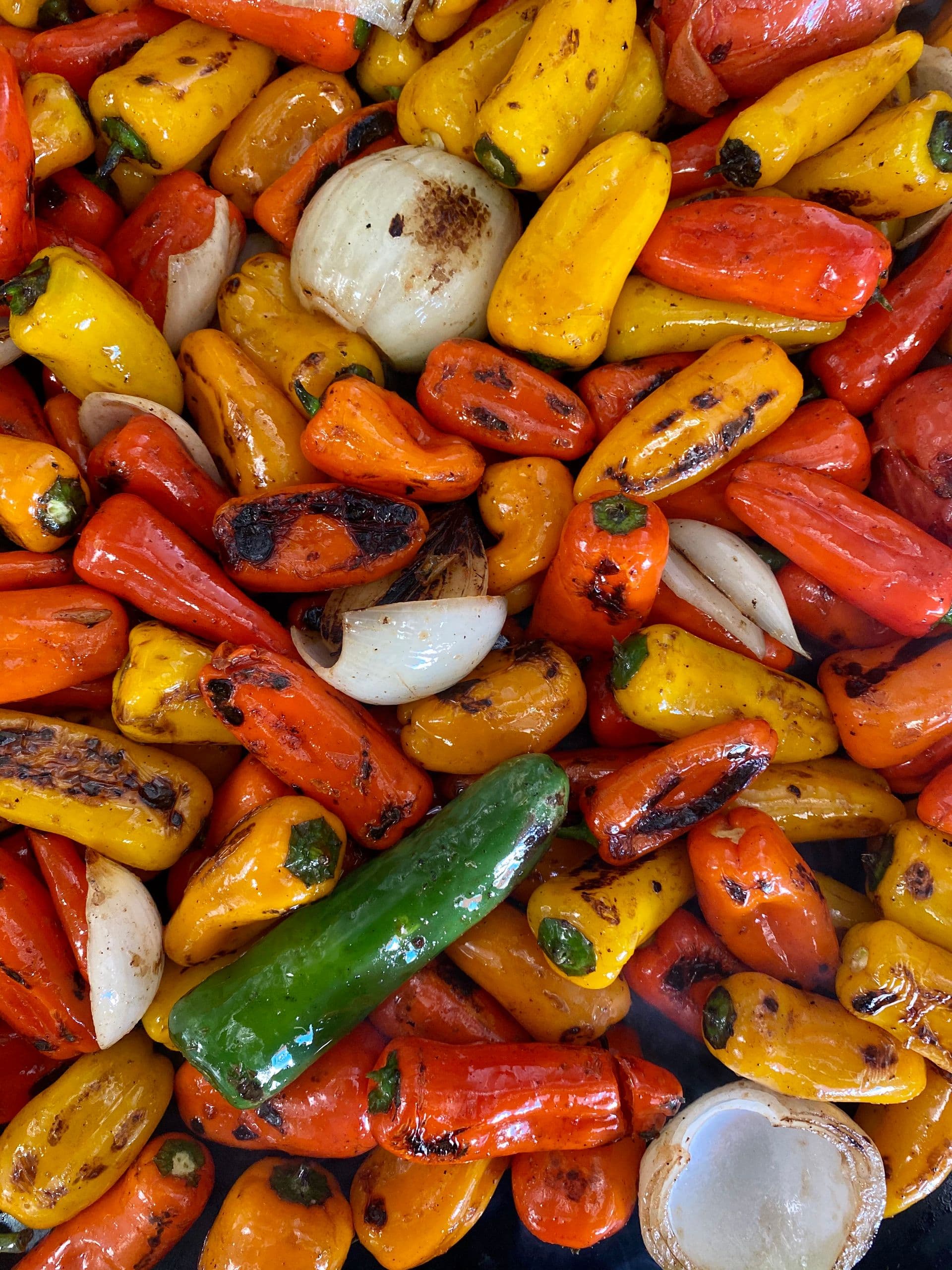
Vegetable Fajitas
40 min · easy
Vegetable fajitas load a sheet pan with portobello, zucchini, peppers, and onion, then roast them in a very hot oven so the edges char instead of steaming to mush. The trick is high heat, a single uncrowded layer, and roomy spacing so moisture evaporates. Meaty portobello gives the dish real heft. Finish with lime and fold into warm tortillas for a satisfying meatless meal.
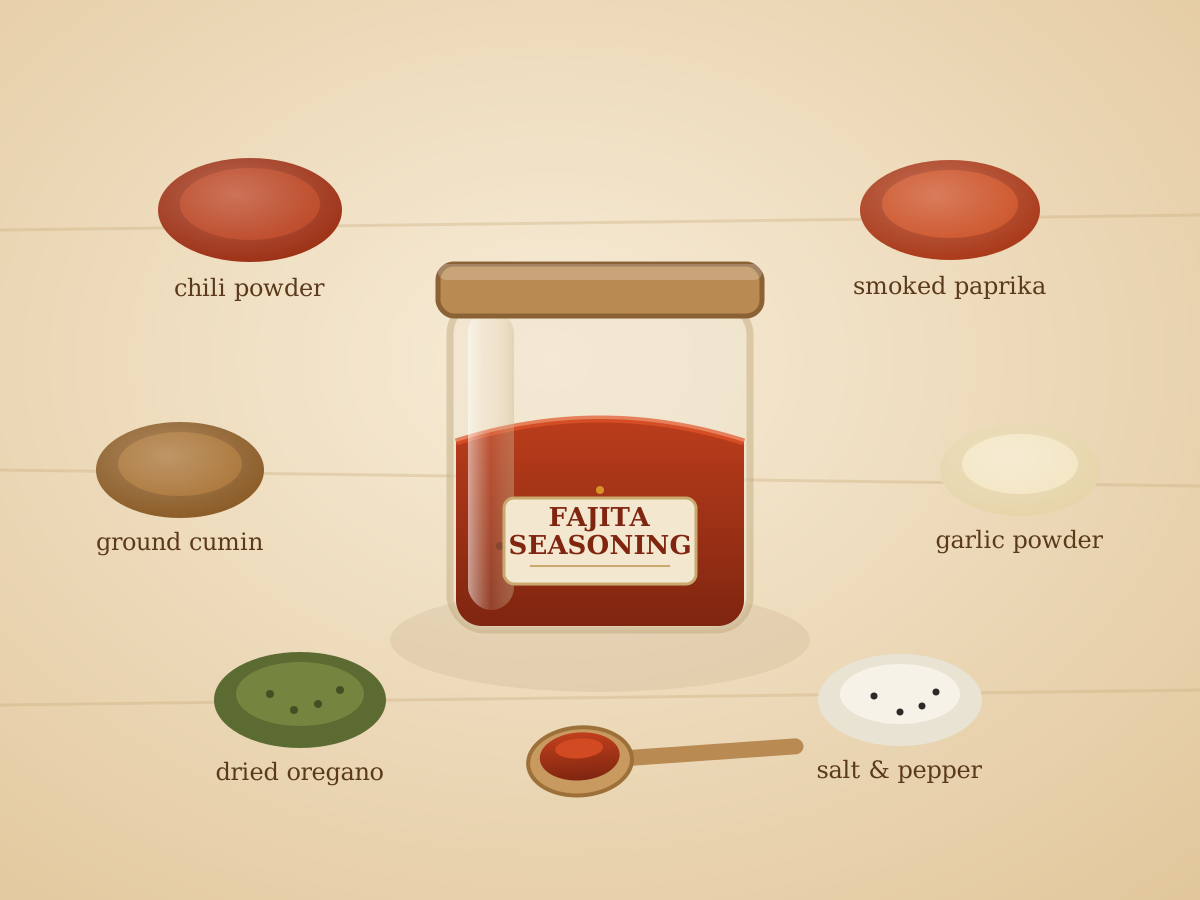
Homemade Fajita Seasoning
Homemade fajita seasoning is a chili-powder base rounded out with cumin, smoked paprika, garlic and onion powder, oregano, salt, cayenne, and black pepper. Mixing your own skips the anti-caking fillers packets rely on and lets you dial the salt and heat yourself. One batch whisks together in five minutes and keeps its punch for about six months in an airtight jar.