Ingredient guide
Guajillo Chiles
A slender, deep-red dried chile with a tangy, berry-like brightness, guajillo is often paired with ancho in fajita marinades to add acidity and backbone that ancho alone lacks.
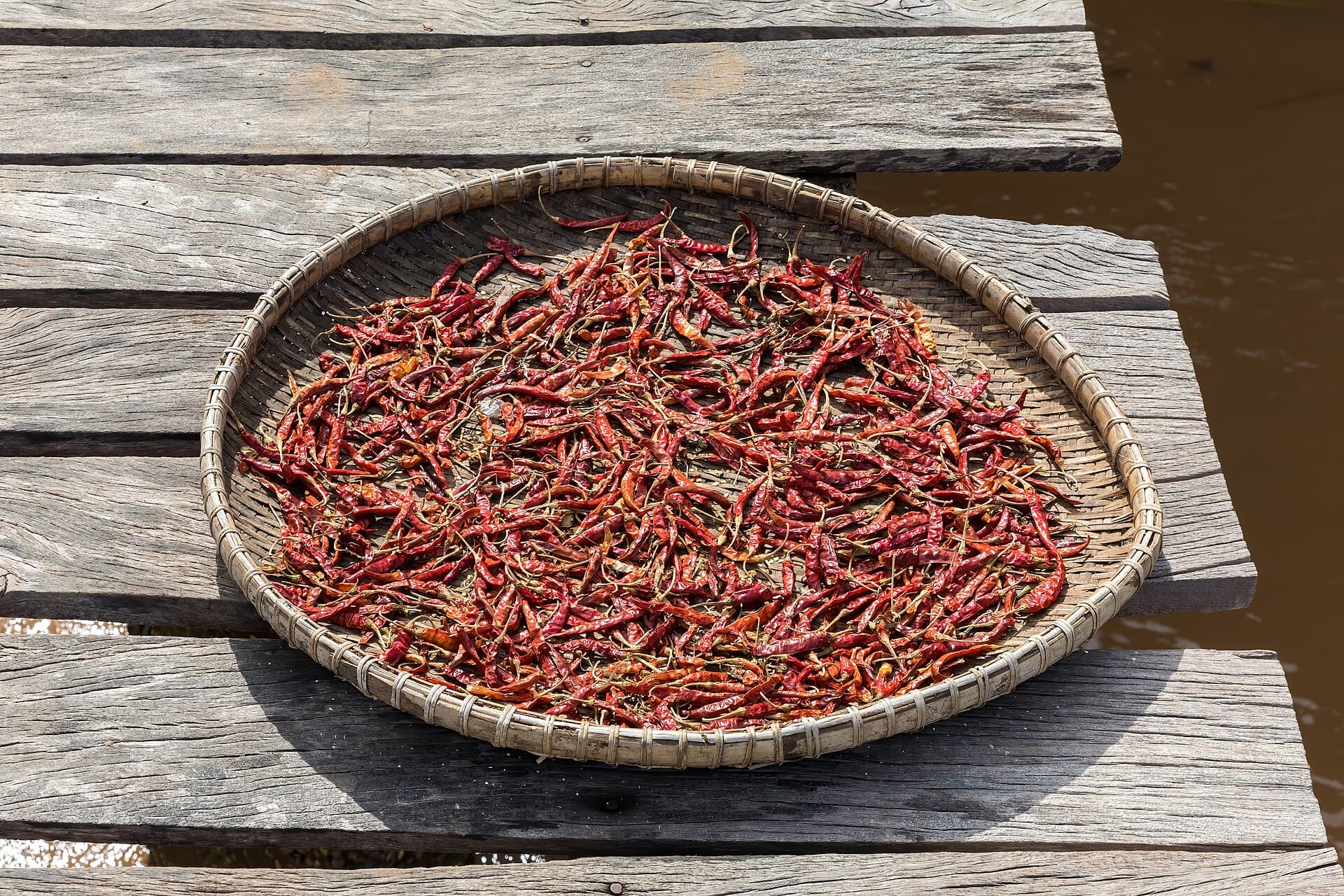 Basile Morin · CC BY-SA 4.0
- What it is
- Guajillo is the dried form of the mirasol chile, a long, narrow pepper with smooth, glossy, burgundy-to-brick-red skin, typically four to six inches long and much thinner-walled than an ancho. It is one of the most commonly used dried chiles in Mexican cooking, second in popularity mainly to ancho.
- Flavor
- Moderate heat, around 2,500-5,000 Scoville units — noticeably spicier than ancho — with a tangy, tea-like or berry-adjacent brightness and a slight green, vegetal edge. Where ancho reads sweet and raisiny, guajillo reads tart and sharp, closer to dried cranberry or hibiscus.
- In fajitas
- Guajillo brings acidity and a sharper chile bite that balances ancho's sweetness in a layered marinade, and its thin flesh purees into a smoother paste than ancho's thicker skin. Many Tex-Mex marinade recipes use guajillo alongside ancho specifically so the sauce has both roundness and tang, rather than relying on lime juice alone for brightness.
- How to choose
- Look for pods with taut, glossy skin and some flexibility — they should bend, not snap. Guajillo skins are naturally thin and can look papery even when fresh, so flexibility is a better test than appearance alone; a pod that crumbles when gently squeezed is stale.
- Storage
- Store whole pods in a sealed container out of direct light; they keep well for six to twelve months. Guajillo's thinner skin means it dries out and loses aromatic oil faster than thicker-walled anchos, so buy in smaller quantities you'll use within a season rather than stocking up.
- How much
- Two to three guajillo pods rehydrated and blended is typical for a marinade covering 1.5-2 lbs of steak or chicken, usually paired with one or two ancho pods.
- Fresh vs dried
- Guajillo is sold almost exclusively dried in the U.S.; its fresh counterpart, mirasol, is rarely available outside parts of Mexico. There is no practical fresh substitute — recipes calling for guajillo mean the dried pod.
Some links may earn FajitaRecipe.com a commission if you buy through Amazon, at no extra cost to you.
Substitutes: Ancho chile (sweeter, milder, less tangy); New Mexico red chile (similar heat, slightly earthier); Dried árbol chile in small amounts if more heat with less sweetness is wanted.
Getting a smooth guajillo paste
Guajillo's tough outer skin does not break down completely in a blender the way ancho's does, which is why many cooks strain the blended marinade through a fine mesh sieve to remove bits of skin before using it on meat. Skipping this step is fine for a rustic marinade, but if you want the glossy, restaurant-style red sauce often associated with guajillo-based dishes, straining after blending makes a real difference in mouthfeel.
Toasting for aroma, not char
Like other dried chiles, guajillo benefits from a quick dry-skillet toast before soaking — but because its flesh is thinner than ancho's, it scorches faster. Fifteen seconds per side over medium heat is usually enough; if the pod blackens or you smell acrid smoke rather than a warm, toasted aroma, start over with a fresh pod, since burnt guajillo turns bitter in a way that's hard to mask.
A staple beyond fajitas
Guajillo is the primary chile in birria, many red enchilada sauces, and adobo marinades across central and northern Mexico, prized for the balance of moderate heat and tang it brings without the smokiness of chipotle or the sweetness of ancho. That versatility is why it's stocked in nearly every Mexican grocery store and increasingly in mainstream supermarket international aisles.
Sources & further reading
- Chile Peppers — New Mexico State University Chile Pepper Institute. Reference on guajillo/mirasol chile characteristics and heat level.
- Dried Chile Varieties Guide — University of California Cooperative Extension. Comparative overview of dried chile types including guajillo.