Ingredient guide
Flank Steak
A leaner, more widely available alternative to skirt steak, flank steak has become the more common choice for home fajita cooking thanks to its size, consistent thickness, and easier availability.
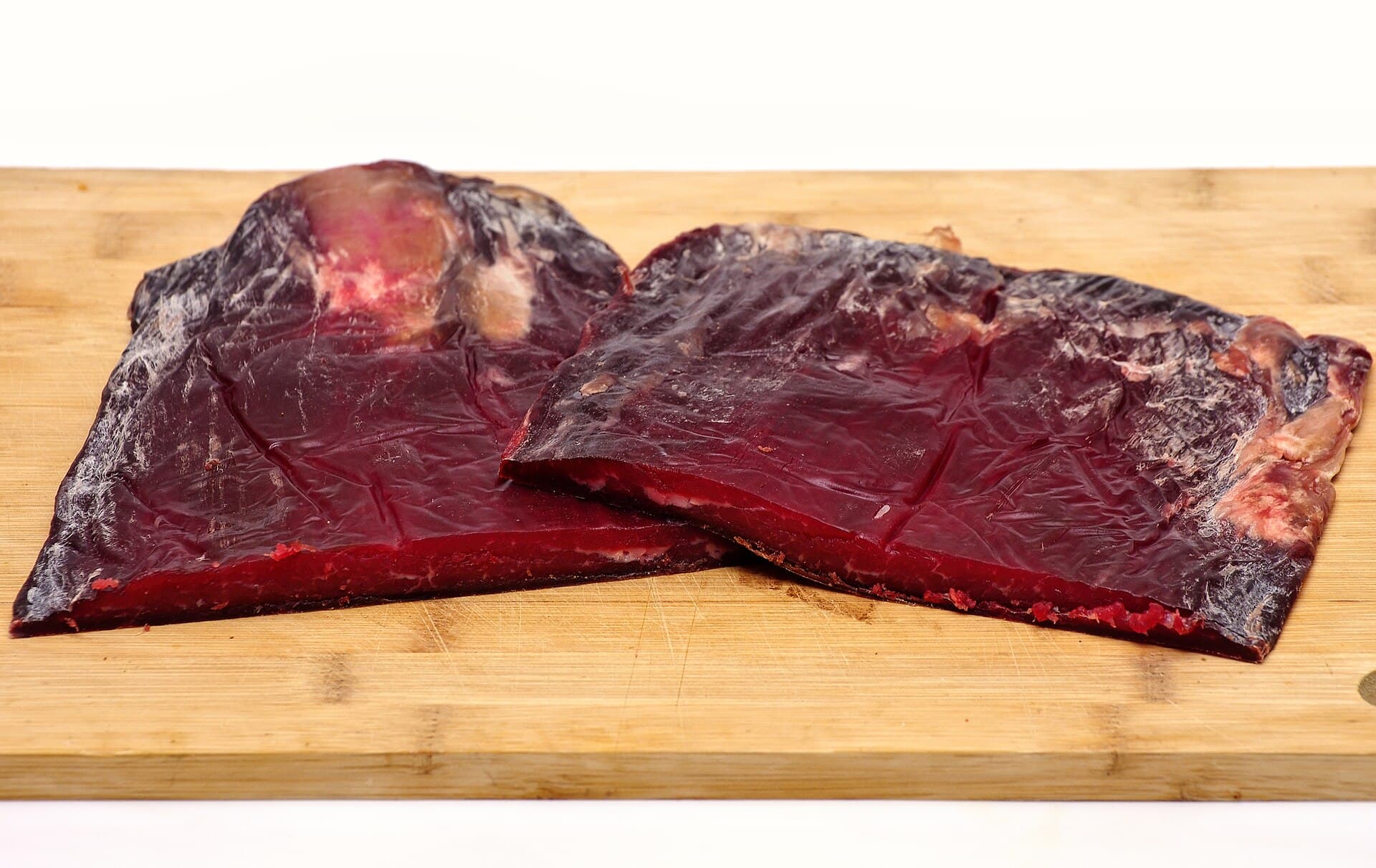 Pannet · CC BY-SA 4.0
- What it is
- Flank steak comes from the abdominal muscles of the cow, just below the loin, distinct from skirt steak's diaphragm origin despite the two being frequently confused or used interchangeably. It's typically sold as a single wide, flat, rectangular steak, thicker and more uniform than skirt steak, which makes it easier to portion and cook evenly.
- Flavor
- Robustly beefy but leaner than skirt steak, with less visible fat marbling and a firmer, more uniform texture. It has a pronounced, long-fiber grain similar to skirt steak, meaning correct slicing technique matters just as much.
- In fajitas
- Flank steak has become the more common supermarket substitute for skirt steak in fajita recipes because it's more consistently stocked, more uniformly shaped for even cooking, and generally a bit more affordable per pound in some markets. It takes marinade well, though its leaner profile benefits from slightly more oil in the marinade than a fattier cut like skirt would need.
- How to choose
- Look for a steak with even thickness throughout (rather than one end much thinner than the other, which cooks unevenly) and a deep red color. Flank steak has less marbling than skirt steak by nature, so don't expect the same visible fat streaking — deep color and firm texture are better indicators of quality here than fat content.
- Storage
- Refrigerate raw flank steak and use within three to five days, or freeze well-wrapped for up to six to twelve months. Its thicker, more uniform shape means it takes slightly longer to marinate through than thin skirt steak, so err toward the longer end of a marinade's recommended time range.
- How much
- About 1/3 to 1/2 lb of raw flank steak per person is standard for a fajita dinner, the same general guideline used for skirt steak.
Some links may earn FajitaRecipe.com a commission if you buy through Amazon, at no extra cost to you.
Substitutes: Skirt steak (fattier, more traditional, slightly more prone to overcooking due to thinness); Flap steak/sirloin flap (similar leanness, sometimes more tender); Hanger steak for a richer, fattier alternative if available.
Flank versus skirt: what actually differs
Though frequently used interchangeably in fajita recipes and sometimes mislabeled at the meat counter, flank and skirt come from different parts of the animal — flank from the abdominal wall, skirt from the diaphragm — and the practical differences show up in the kitchen: flank is thicker and leaner with a more uniform shape, while skirt is thinner, fattier, and more irregular. Flank steak's greater thickness means it can handle marinating longer without turning mushy, and it's more forgiving of a slightly imprecise cook time since there's more mass to buffer against overcooking.
Scoring to help marinade penetration
Because flank steak is thicker than skirt and leaner, lightly scoring the surface in a shallow crosshatch pattern before marinating (cutting about an eighth of an inch deep, not through the meat) increases surface area and helps marinade flavor and acid penetrate deeper into the cut in the same amount of time. This step is optional but especially useful for flank steak's denser structure compared to skirt.
Slicing thin, against the grain, no exceptions
Flank steak's grain runs the length of the steak in one clear, consistent direction, which actually makes it easier to identify and slice correctly than skirt steak's sometimes more irregular fiber pattern — look at the visible lines running across the raw steak and cut perpendicular to them, in thin slices. Skipping this step, or slicing at a shallow angle instead of a true perpendicular cut, is the most common reason home cooks find flank steak fajitas chewier than the restaurant version.
Sources & further reading
- Beef Cuts — USDA Agricultural Marketing Service, Beef Grading and Certification. Reference distinguishing flank steak's anatomical origin from skirt steak.
- Meat Science and Muscle Biology — Texas A&M University Department of Animal Science. Background on muscle fiber orientation and its effect on cut tenderness across beef primal cuts.