Ingredient guide
Skirt Steak
The original fajita cut, skirt steak is a long, thin, deeply beefy piece of meat from the diaphragm that rewards fast, hot cooking and careful slicing against the grain.
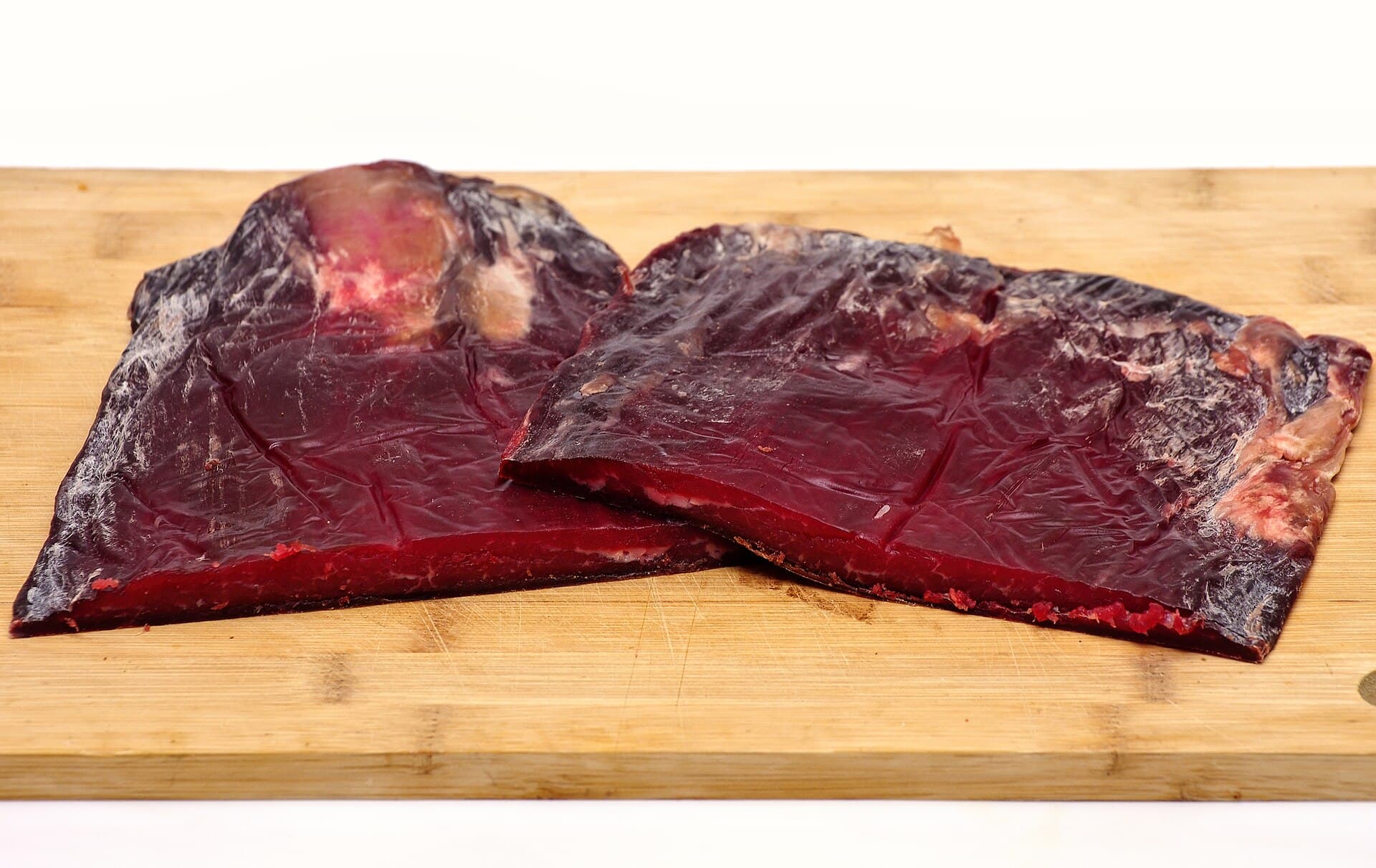 Pannet · CC BY-SA 4.0
- What it is
- Skirt steak comes from the diaphragm muscle of the cow, spanning the plate section beneath the ribs. It's sold as "inside" skirt (from the flank area, slightly wider and more tender) or "outside" skirt (from the plate, more prized by chefs for its beefier flavor but less widely available at retail). The name comes from the Spanish "faja" (belt/strip) — it's literally the cut fajitas are named after.
- Flavor
- Intensely beefy, well-marbled, and rich — often described as one of the most flavorful cuts on the animal — with a loose, long muscle-fiber grain that makes correct slicing especially important. The fat marbling running through the meat contributes to both its flavor and its tendency to stay juicy when cooked quickly over high heat.
- In fajitas
- Skirt steak is the historically and culturally original fajita meat — the dish is literally named for this cut — prized for its high fat content and beef flavor, and its thinness makes it ideal for the quick, high-heat grilling or searing fajitas require. It takes marinade exceptionally well due to its loose grain and large surface area relative to thickness.
- How to choose
- Look for deep red color with visible white marbling running through the meat, and a relatively uniform thickness. Outside skirt (if labeled and available) is generally considered more tender and flavorful than inside skirt, though inside skirt is more commonly stocked at regular grocery stores.
- Storage
- Refrigerate raw skirt steak and use within three to five days, or freeze for up to six to twelve months, well-wrapped to prevent freezer burn. Because it's thin, it also marinates and thaws faster than a thick roast, which is convenient for weeknight cooking.
- How much
- About 1/3 to 1/2 lb of raw skirt steak per person is typical for a fajita dinner, accounting for the fact that it shrinks somewhat during high-heat cooking.
Some links may earn FajitaRecipe.com a commission if you buy through Amazon, at no extra cost to you.
Substitutes: Flank steak (similar loose grain, slightly leaner and less fatty); Flap steak/sirloin flap (comparably beefy, sometimes labeled "steak tips"); Hanger steak for a similarly rich, well-marbled option, though pricier and less widely stocked.
Why the grain direction matters so much
Skirt steak's muscle fibers run in long, visible, parallel lines the length of the cut, and because the fibers are longer and tougher than in more tender cuts, slicing with the grain rather than against it produces noticeably chewy, stringy meat regardless of how well it was cooked or marinated. Cutting thin slices perpendicular to those visible fiber lines — usually meaning short slices across a long steak rather than lengthwise strips — shortens the muscle fibers in each bite and is the single biggest factor in whether skirt steak fajitas turn out tender or tough.
High heat, short time
Because skirt steak is thin (often under half an inch), it cooks through in just a few minutes per side over high heat, and the goal is a well-charred exterior with a still-pink, medium-rare-to-medium interior rather than cooking it through slowly. Overcooking is the most common mistake with this cut — its looser grain and higher fat content make it more forgiving than a lean cut like chicken breast, but pushing it past medium dries it out and toughens it despite the marbling.
Inside versus outside skirt at the meat counter
Grocery stores overwhelmingly stock inside skirt steak, which is wider, slightly less tender, and more affordable; outside skirt, favored by many steakhouses and butchers for fajitas specifically, is thicker, more uniformly tender, and usually needs to be requested from a butcher counter or specialty meat market rather than found pre-packaged. Asking a butcher directly whether skirt steak in stock is inside or outside cut is worth doing if a recipe or preference calls for one specifically.
Related on Amazon
Some links may earn FajitaRecipe.com a commission if you buy through Amazon, at no extra cost to you.
Sources & further reading
- Beef Cuts — USDA Agricultural Marketing Service, Beef Grading and Certification. Reference on skirt steak's anatomical origin and cut classification.
- Fajitas — Texas State Historical Association, Handbook of Texas. Historical background connecting skirt steak to the origin of fajitas.