Why Is My Fajita Steak Tough?
Tough fajita steak usually traces to four fixable mistakes: the wrong cut, slicing with the grain instead of across it, overcooking, and skipping the rest. Skirt and flank are flavorful but coarse-grained, so they must be cooked no further than medium-rare and sliced thin against the grain. Do that, rest the meat a few minutes, and go easy on acidic marinades, and the same steak turns tender.
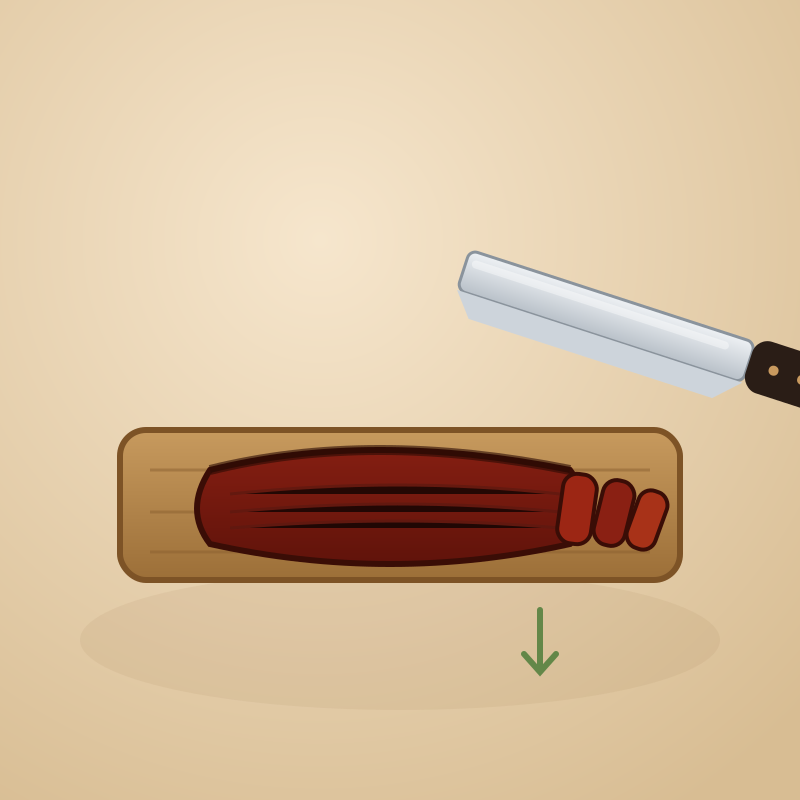
The cut, the cook, and the cut of the knife — why fajita steak turns out chewy and how to fix each cause.
Fix it
Wrong cut, overcooking, and no rest
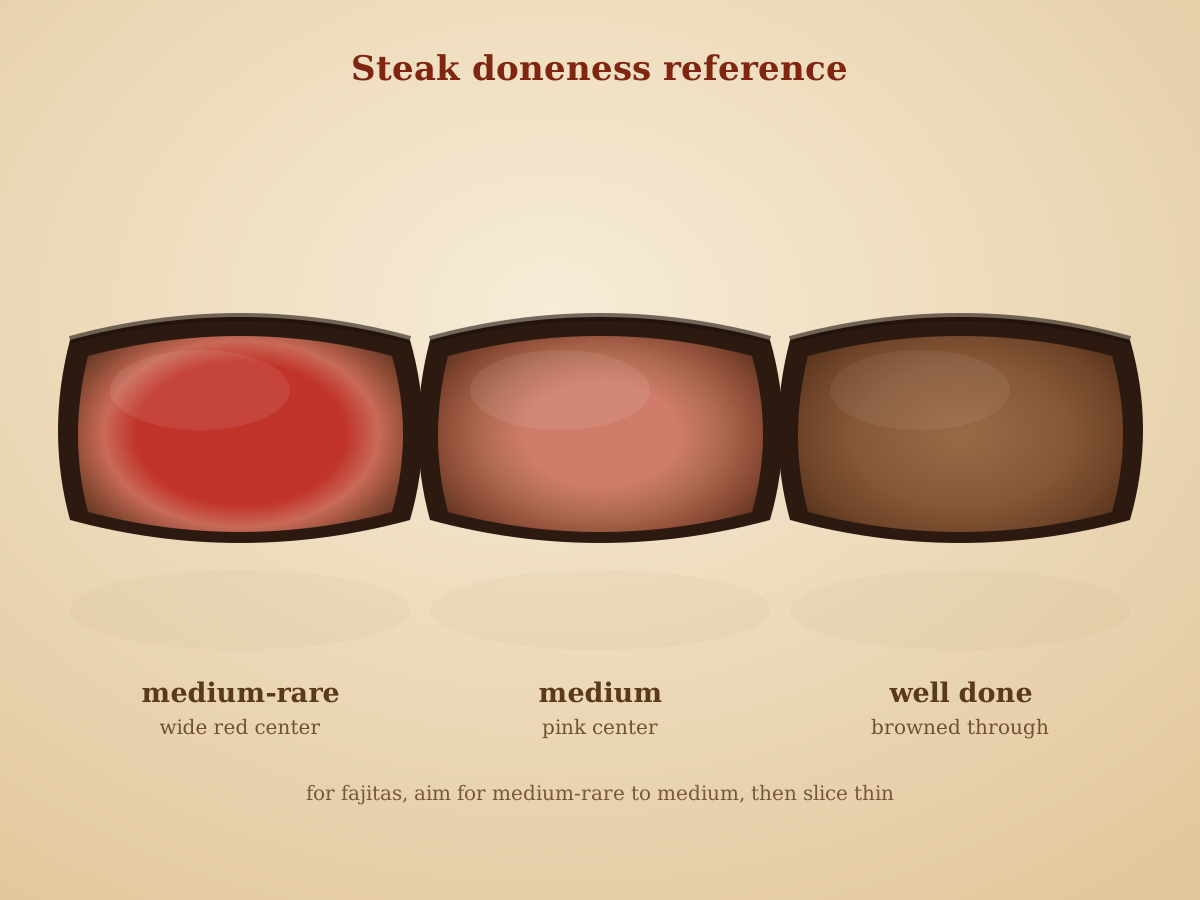
Even perfect slicing cannot save the wrong approach. Lean, coarse cuts like skirt and flank are built for fast, hot cooking to medium-rare, around 130 to 135°F before resting; push them to well-done and the fibers seize and squeeze out moisture, turning leathery. Tender cuts pulled too far do the same. Then there is resting: cut a steak straight off the heat and the juices, still driven outward by residual heat, spill onto the board instead of redistributing. A few minutes of rest lets them settle back into the meat so each slice stays moist.
The call: Cook skirt or flank to medium-rare, then rest it 5 minutes before slicing.
Fix it
Diagnose which mistake made your steak tough
Tough steak leaves three main tells, and each points to a different fix. If the meat is uniformly chewy and gray-brown all the way through, you overcooked it: the fibers tightened and wrung out their moisture on the heat. Pull thin cuts sooner next time and judge by feel, since medium-rare still springs back softly instead of firming up hard. If the outside looks well-seared but the inside is dry and stringy rather than evenly cooked, the cut may be the problem, like a thick roast-style piece treated as a quick-sear steak so it never cooked through evenly. Match coarse, thin cuts such as skirt and flank to fast, hot heat. And if the steak looks properly pink and juicy yet each bite is a long, tough rope, you sliced the wrong way, with the grain instead of across it. That last one is the most common and the easiest to fix, because it happens entirely at the board after the cooking is done. Work through the three in order: the color through the middle, the cut you started with, and the direction you sliced. Usually one symptom stands out, so you can correct just that step rather than overhaul your whole method.
The call: Match the symptom — gray throughout, dry and stringy, or long and ropey — to overcooking, wrong cut, or cutting with the grain.
Substitutions
| Instead of | Use | Adjust | Expect | Avoid when |
|---|---|---|---|---|
| Overcooked well-done steak approach | Sear hot and fast to medium-rare | High heat, brief cook, pull at 130–135°F and rest. | Fibers stay relaxed and juicy instead of seizing and drying out. | Not recommended when a diner requires well-done meat — then choose a more forgiving braise instead. |
The science
Slicing across the grain is the biggest lever
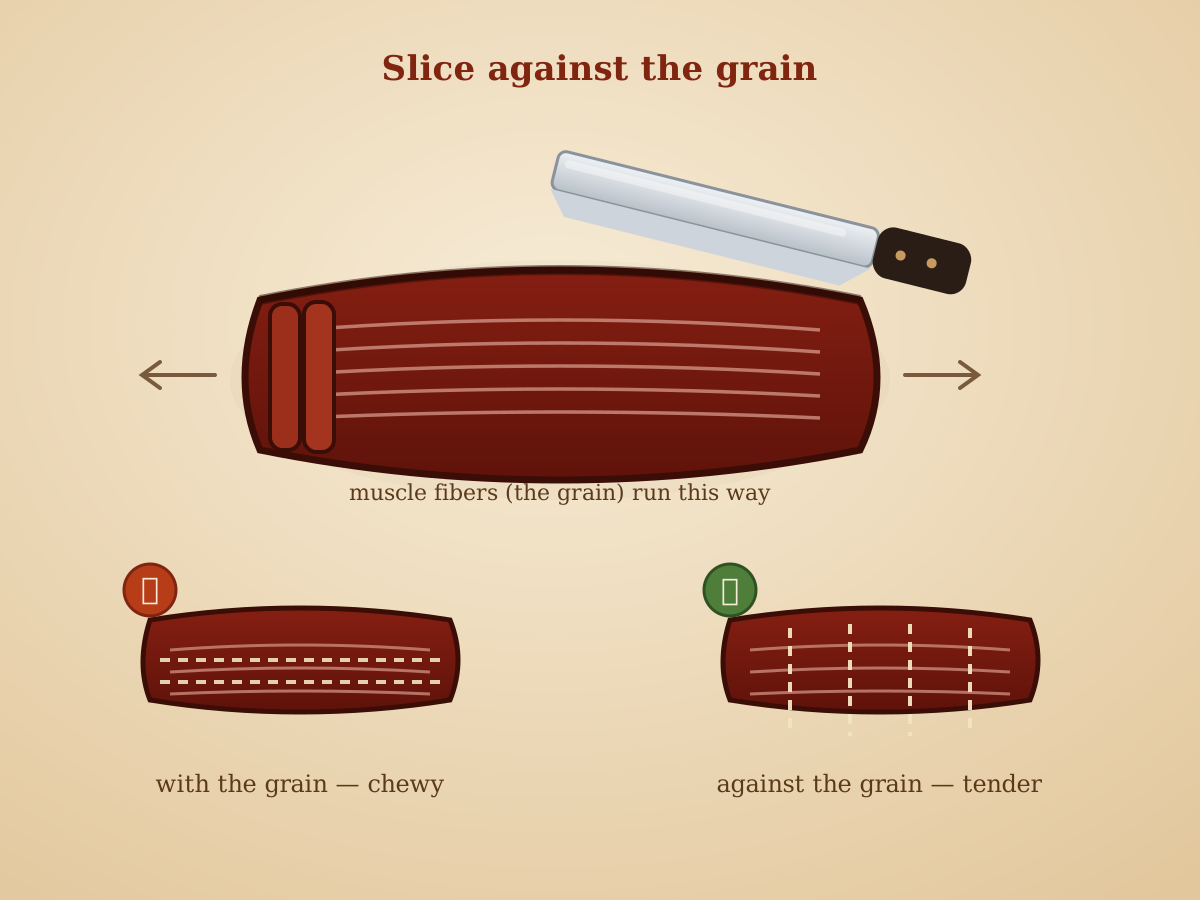
Skirt and flank steak have long, visible muscle fibers running in one direction. Those fibers are what your teeth fight, and their length is fully in your control at the cutting board. Slice with the grain — parallel to the fibers — and every bite is a bundle of long, chewy strands. Slice across the grain, perpendicular to those lines, and you shorten each fiber to a few millimeters, so the meat gives way easily. On skirt steak the grain is often surprisingly tight and runs the short way across the strip, so look closely before you cut and rotate the steak if needed.
The call: Find the direction of the muscle fibers and cut perpendicular to them, in thin slices.
Technique
Do not over-marinate in acid
Lime juice and vinegar make a marinade taste bright, but acid only works on the surface of a whole cut — it does not deeply tenderize the interior. Left too long, that acid actually denatures the outer proteins into a mushy, then oddly firm, layer while the inside stays untouched. For skirt or flank, 30 minutes to a few hours of an acidic marinade is plenty; overnight in straight citrus does more harm than good. If you want a longer soak, cut the acid with oil and aromatics and keep the meat in the fridge the whole time.
The call: Keep acidic marinades to a few hours; if marinating longer, lower the acid and refrigerate.
Technique
Cut thin and on a bias for the most tender slices
Direction is half the job; thickness and angle finish it. Once you know which way the grain runs, make the slices genuinely thin, about a quarter inch or less. Thick slices still contain long stretches of fiber even when cut across the grain, so they read as chewy, while thin ones leave almost no fiber length for your teeth to work through. Hold the knife at a low angle to the board, roughly 45 degrees, and slice on the bias rather than straight down. That angled cut does two things: it widens each slice so it looks generous off a thin steak, and it shears the fibers at a slant, shortening them further and softening the edge. A long, sharp blade matters here, since a dull or short knife tears and saws, crushing the fibers instead of parting them, and it tempts you into thicker slices. Let the meat rest first so it firms slightly and cuts cleanly instead of squashing. Draw the blade through in one smooth pull per slice rather than sawing back and forth. On skirt steak, which is thin to begin with, the bias angle is what lets you get wide, tender pieces without carving matchsticks.
The call: Slice a quarter inch thin, hold the knife near 45 degrees, and cut on the bias in one smooth stroke.
Recommended gear
Disclosure: As an Amazon Associate, FajitaRecipe.com earns from qualifying purchases. Recommendations are chosen to help you cook better fajitas; some Amazon links may earn a commission at no extra cost to you. See our selection methodology.
For cast-iron fajitas
 Lodge
LodgeModel L10SK3
A heavy 12-inch Lodge gives two servings of steak enough hot surface to brown without crowding. It is still too small for a six-person batch, which should be seared in rounds.
Best for: Everyday 2–4 serving skillet fajitas with a hard sear.
 Lodge
LodgeModel ASHH11
A cast-iron handle reaches the same temperature as the pan. A slip-on holder is the difference between confidently moving the skillet and dropping it.
Best for: Anyone using a blazing-hot cast-iron or carbon-steel handle.
 ThermoWorks
Model Thermapen ONE
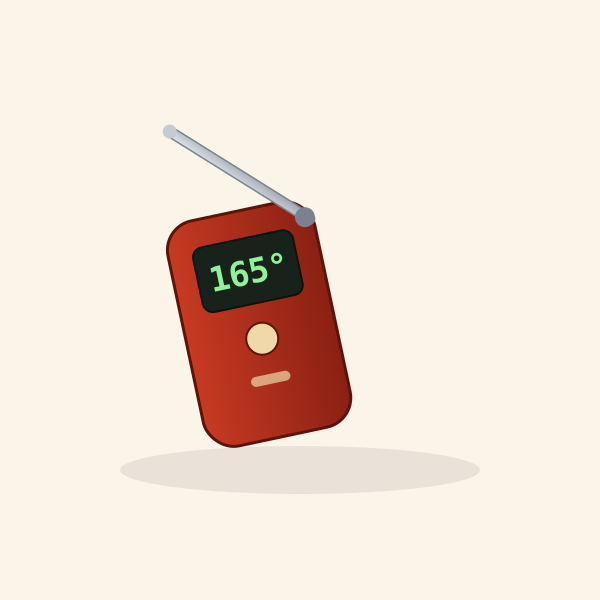
Thin fajita chicken and steak swing past target in seconds. A one-second read lets you pull chicken at 165°F and steak at your chosen doneness before carryover overshoots.
Best for: A one-second, dependable read on thin proteins.
OXOModel Good Grips 12" Locking Tongs
Twelve-inch tongs keep your hand out of the smoke while you toss peppers and flip strips in a ripping-hot pan.
Best for: Tossing peppers and turning strips over high heat.
For slicing steak
 Victorinox
Model 5.4233.30 (Fibrox 12" Granton)
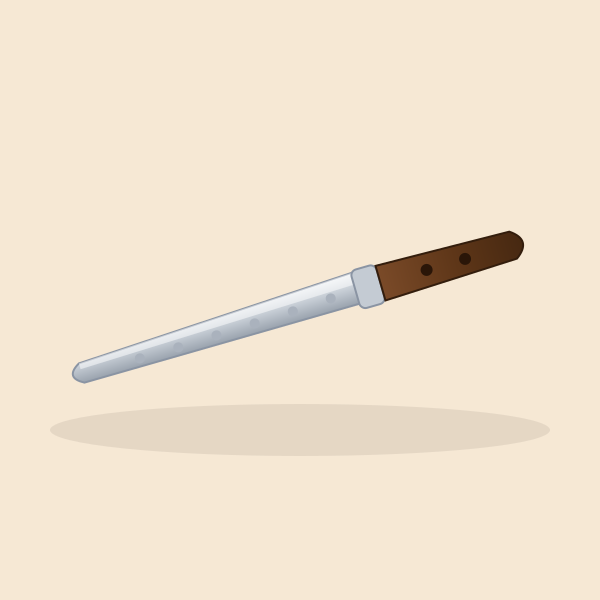
Thin, even slices across the grain are what make skirt and flank tender. A long granton slicer does it in one clean stroke instead of sawing.
Best for: Clean, thin, against-the-grain slices on skirt and flank steak.
John BoosModel RA03 (24 x 18 in)
A roomy board with a juice groove lets steak rest and be sliced in one place; pour the caught juices back over the strips before serving.
Best for: Resting and slicing steak with room to spare.
ThermoWorksModel ThermoPop 2
You do not need a premium thermometer to cook safe chicken. The ThermoPop 2 is accurate and a few seconds slower — a great-value pick from the same maker.
Best for: A reliable read without the premium price.
Visual guide
See the technique
Frequently asked questions
+How do I find the grain on skirt steak?
Look for the parallel lines of muscle fiber running along the surface. On skirt steak they usually run the short way across the strip. Cut perpendicular to those lines in thin slices, rotating the steak if the grain changes direction.
+Does marinating make fajita steak tender?
Marinades add flavor and lightly affect the surface, but acid does not deeply tenderize a whole cut. Tenderness comes mostly from choosing skirt or flank, cooking to medium-rare, resting, and slicing thin against the grain.
+What internal temperature should fajita steak reach?
USDA lists 145°F with a rest as the safe minimum for whole beef steaks. Many cooks pull skirt and flank a little earlier, around 130 to 135°F for medium-rare, and rest it; do so at your own discretion for doneness.
+How thin should I slice fajita steak, and at what angle?
Aim for slices about a quarter inch thick or less, always across the grain. Hold the knife at a low angle, around 45 degrees, and slice on the bias rather than straight down. Thin, angled cuts shorten the muscle fibers further and widen each piece, so even a thin skirt steak gives tender, generous slices. Let the meat rest first so it slices cleanly instead of squashing under the blade.
Testing, sources & disclosure
Researched and reviewed by our editors. See our recommendation methodology.
- Author:
- FajitaRecipe Editorial
- Last reviewed:
- 2026-07-13
Sources
- Safe Minimum Internal Temperature Chart, USDA FSIS linkSupports: USDA lists 145°F with rest as the safe minimum internal temperature for whole beef steaks.
As an Amazon Associate, FajitaRecipe.com earns from qualifying purchases. We do not provide medical or dietary advice; follow USDA guidance for food safety.
Keep cooking
You might also like
Best Steak for Fajitas: Skirt vs. Flank vs. Sirloin
Skirt steak is the best cut for fajitas: it is loosely grained, well marbled, and drinks up marinade, giving that classic beefy chew when sliced across the grain. Flank steak is the leaner, easier-to-find backup, and top sirloin or flap meat work when you want a budget cut. Whatever you buy, slice it thin against the grain.
How to Slice Fajita Meat Against the Grain
Slice fajita meat thin and across the grain after it rests. Look at the surface to find the direction the muscle fibers run, then cut straight across them at a slight angle into quarter-inch strips. Cutting against the grain shortens the fibers so each bite is tender. Always slice cooked, rested meat, not raw, and hold your knife low for wide, even pieces.
London Broil Fajitas: Making a Lean Cut Tender
London broil is a lean, budget top-round cut that makes good fajitas only if you treat its toughness: marinate it several hours with an acidic, salty blend, sear it hot and fast to no more than medium-rare, rest it, and slice it very thin against the grain. Skip those steps and it turns chewy. Done right, it is an affordable stand-in for skirt or flank with a clean, beefy flavor.
Skirt Steak vs Flank Steak for Fajitas: Which to Buy
Skirt steak is the traditional fajita cut: thin, richly marbled, deeply beefy, and fast to sear, but it needs a hot pan and a sharp cross-grain slice or it turns chewy. Flank steak is leaner, thicker, and more forgiving, with a milder flavor and a lower price. For classic, restaurant-style fajitas choose skirt; for an easier, leaner cut that feeds more, choose flank. Both must be sliced thin against the grain.