Best Instant-Read Thermometer for Fajitas
The best instant-read thermometer for fajitas reads fast and reads accurately, because fajita proteins are thin and cook in a flash. A premium thermocouple registers in two to three seconds, so you catch chicken at 165°F or steak at your target before it overcooks; a good budget model is a couple of seconds slower but still far better than guessing. Look for a thin tip, tight accuracy, and easy one-hand use.
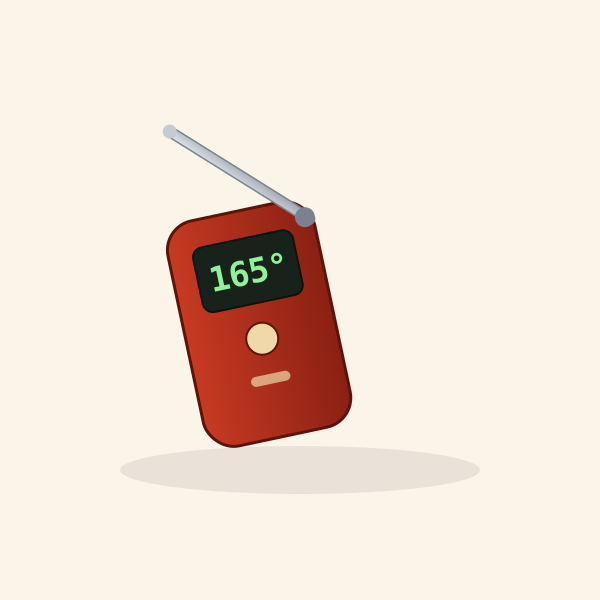
Why fajitas need a fast instant-read thermometer, and how premium and budget models compare.
Compared
At a glance
Disclosure: As an Amazon Associate, FajitaRecipe.com earns from qualifying purchases. Recommendations are chosen to help you cook better fajitas; some Amazon links may earn a commission at no extra cost to you. See our selection methodology.
| Product | Best for | Key specs | Price | Link |
|---|---|---|---|---|
| ThermoWorks ThermoWorks Thermapen ONE | A one-second, dependable read on thin proteins. | — | $$$ | Amazon |
| ThermoWorks ThermoWorks ThermoPop 2 | A reliable read without the premium price. | — | $$ | Amazon |
ThermoWorks ThermoWorks Thermapen ONE
$$$Best for: A one-second, dependable read on thin proteins.
—
Find on AmazonThermoWorks ThermoWorks ThermoPop 2
$$Best for: A reliable read without the premium price.
—
Find on AmazonSubstitutions
| Instead of | Use | Adjust | Expect | Avoid when |
|---|---|---|---|---|
| Fast premium thermocouple thermometer | Quality budget thermistor thermometer | — | A few seconds slower to read and fewer features, but still an accurate, reliable safety check. | Not ideal when you frequently check many pieces at once in a hot pan and want the quickest possible read. |
Technique
How to use one well: where to probe and reading the surface
A thermometer only helps if you probe in the right spot. Aim for the center of the thickest strip, not a thin tapered edge, and slide the tip in from the side so it sits in the middle of the meat rather than passing straight through into the hot pan, which throws the reading high. With chicken, take the safe 165°F from that thickest piece, since if the fattest strip is done the slimmer ones already are. Check two or three strips rather than trusting one, because a crowded pan cooks unevenly. Thin pieces gain heat quickly, so read early and pull right at your target instead of letting the number coast upward. If you are using an infrared thermometer for the surface, hold it a few inches above the dry metal and read before adding oil or meat, aiming for a sear-range skillet so the strips brown instead of steaming. Wipe the probe tip between checks to keep marinade and char off the sensor, and let the reading fully settle before you trust it. Recalibrate now and then in ice water, where an accurate unit reads at or near freezing, so you know the numbers you are acting on are real.
The call: Probe the thickest strip from the side, read chicken at 165°F, and use infrared on the dry pan before searing.
Recommended gear
Disclosure: As an Amazon Associate, FajitaRecipe.com earns from qualifying purchases. Recommendations are chosen to help you cook better fajitas; some Amazon links may earn a commission at no extra cost to you. See our selection methodology.
For slicing steak
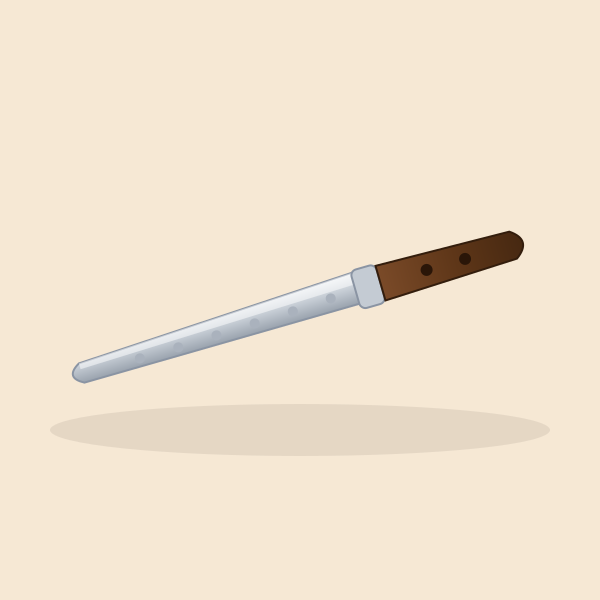 Victorinox
Model 5.4233.30 (Fibrox 12" Granton)
Thin, even slices across the grain are what make skirt and flank tender. A long granton slicer does it in one clean stroke instead of sawing.
Best for: Clean, thin, against-the-grain slices on skirt and flank steak.
John BoosModel RA03 (24 x 18 in)
A roomy board with a juice groove lets steak rest and be sliced in one place; pour the caught juices back over the strips before serving.
Best for: Resting and slicing steak with room to spare.
ThermoWorksModel ThermoPop 2
You do not need a premium thermometer to cook safe chicken. The ThermoPop 2 is accurate and a few seconds slower — a great-value pick from the same maker.
Best for: A reliable read without the premium price.
Gear & how it works
What specs matter: speed, accuracy, tip size
Fajita proteins are thin and hot, so the window between done and overdone is measured in seconds — which makes read speed the spec that matters most. A thermocouple-based instant-read settles in roughly two to three seconds; slower thermistor models can take eight to ten, long enough for a thin cutlet to climb past your target while you wait. Accuracy is next: look for a stated tolerance around ±0.5 to ±1°F so you can trust the number at a food-safety threshold. Finally, a thin probe tip matters more than usual here, because a fat tip in a slim piece of chicken or steak struggles to reach the true center.
The call: Prioritize a fast read and a thin tip so you can catch thin proteins before they overcook.
Premium versus budget: who each is for
A premium thermocouple thermometer is for cooks who value the fastest, most consistent reads and the convenience of features like a rotating display, backlight, and auto-wake. The speed genuinely helps with fajitas, where you may be checking several strips in a crowded, smoking pan. A quality budget thermistor model is the right call for most home cooks: it reads a few seconds slower and skips the extras, but it still tells you when chicken has reached 165°F far more reliably than the finger test or cutting into the meat. Either beats guesswork; spend up only if you cook often and want the speed.
The call: Choose premium for the fastest reads if you cook often; a budget model is plenty for occasional fajitas.
When not to buy, and how we selected
If you already own any working instant-read thermometer, you do not need another one for fajitas — even a slower model beats cutting into the meat and losing juices. Do not bother with a leave-in probe thermometer here; those are built for roasts and low-and-slow cooking, not fast-searing thin strips, and the dangling cable is awkward over a hot skillet. Buy only to replace a broken or wildly inaccurate unit, or to gain real speed. For this guide we compared instant-reads on read time, stated accuracy, and probe design as they affect thin proteins. Recommendations were editorially researched and last checked 2026-07-05; they are not lab-tested, and we do not publish fabricated ratings or prices.
The call: Keep a working thermometer you own; upgrade only for speed or to replace an inaccurate unit.
Gear & how it works
Instant-read, leave-in probe, or infrared: which suits fajitas
Three thermometer types show up in a fajita kitchen, and they answer different questions. An instant-read probe, ideally a thermocouple, is the workhorse: you touch the tip to the center of a strip and get a doneness number in a few seconds, which is exactly what thin chicken and steak demand. A leave-in probe thermometer stays parked in the meat and alarms at a set temperature, but it suits a whole roast or a low-and-slow cook, not strips that flip and finish in minutes; the trailing cable also fights you over a screaming-hot pan. An infrared surface thermometer answers a separate question entirely: how hot is the cooking surface. Pointed at a cast-iron skillet or a griddle, it reads the metal without contact, so you can confirm the pan sits in a proper searing range before the first strip lands. For most cooks, one good instant-read covers the essentials. An infrared unit is a useful second tool if you sear on a griddle or a heavy skillet and want to stop starting cold. A leave-in probe adds little here, since fajita proteins simply do not stay in the pan long enough to justify it.
The call: Reach for an instant-read for doneness, add infrared to check a hot searing surface, and skip the leave-in probe.
Frequently asked questions
+Why do I need a thermometer for fajitas?
Fajita proteins are thin and cook fast, so they overshoot easily and are hard to judge by eye. A thermometer confirms chicken has reached the safe 165°F and lets you pull steak at your target doneness before it turns tough, without cutting into it and losing juices.
+What temperature should fajita chicken reach?
USDA lists 165°F as the safe minimum internal temperature for poultry. Check the thickest strip at its center, and remember thin pieces climb quickly, so pull them right as they hit the mark rather than letting them coast well past it.
+Is an expensive thermometer worth it for fajitas?
A premium model reads faster and adds convenience features, which helps when you are checking several strips in a hot, smoking pan. A good budget instant-read is accurate too, just a little slower. Either is a big upgrade over guessing; spend up only for the speed.
+Do I need a thermometer to make fajitas?
You can make fajitas without one, but a thermometer removes the guesswork on the part that matters most: chicken, which must reach a safe 165°F and is easy to overcook when thin. Steak you can often judge by feel, so a thermometer is more of a convenience there. If you cook chicken fajitas at all, an inexpensive instant-read earns its place.
Testing, sources & disclosure
Researched and reviewed by our editors. See our recommendation methodology.
- Author:
- FajitaRecipe Editorial
- Last reviewed:
- 2026-07-13
Sources
- Safe Minimum Internal Temperature Chart, USDA FSIS linkSupports: USDA lists 165°F as the safe minimum internal temperature for poultry.
As an Amazon Associate, FajitaRecipe.com earns from qualifying purchases. We do not provide medical or dietary advice; follow USDA guidance for food safety.
Keep cooking
You might also like
 Pexels contributor · Pexels License
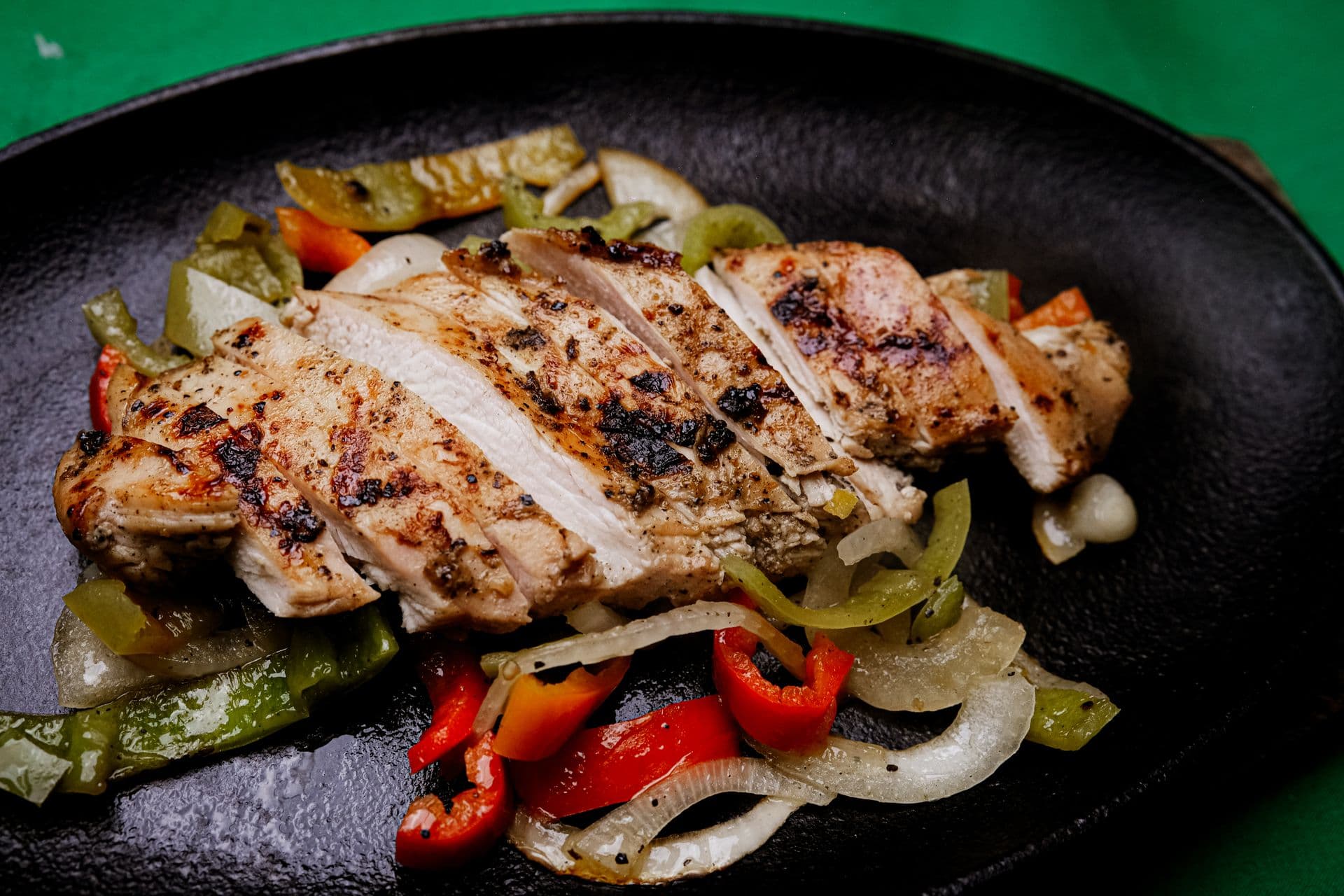
Classic Chicken Fajitas
30 min · easy
Classic chicken fajitas come together in one skillet in about half an hour. Sear seasoned strips of boneless skinless thigh over medium-high heat until browned, cook the peppers and onions in the same pan so they pick up the fond, then finish with a squeeze of lime. Cook the chicken to 165°F, pile it into warm tortillas, and add your toppings.
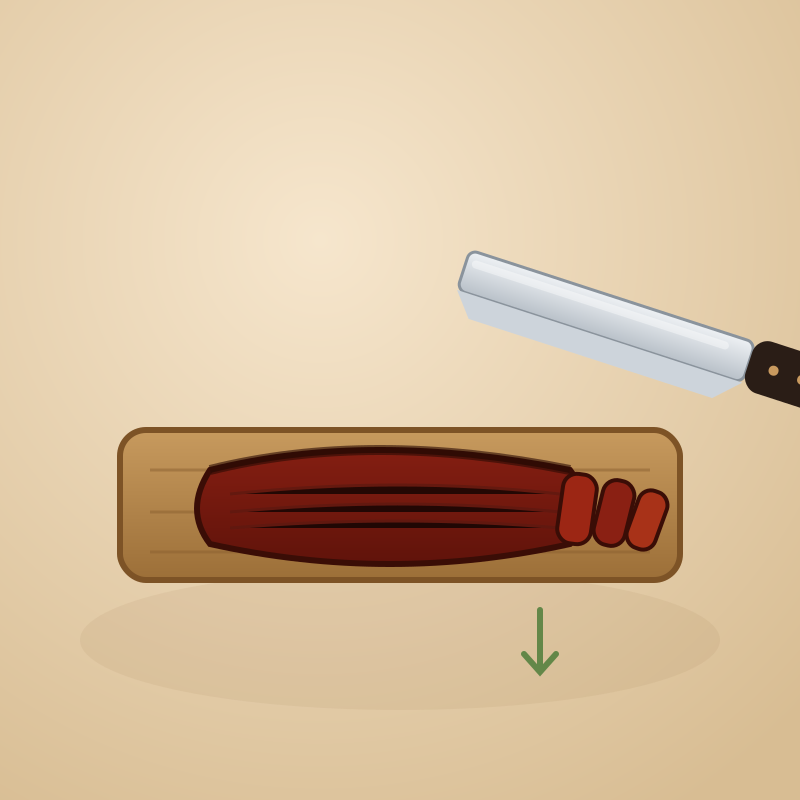
Why Is My Fajita Steak Tough?
Tough fajita steak usually traces to four fixable mistakes: the wrong cut, slicing with the grain instead of across it, overcooking, and skipping the rest. Skirt and flank are flavorful but coarse-grained, so they must be cooked no further than medium-rare and sliced thin against the grain. Do that, rest the meat a few minutes, and go easy on acidic marinades, and the same steak turns tender.
Best Steak for Fajitas: Skirt vs. Flank vs. Sirloin
Skirt steak is the best cut for fajitas: it is loosely grained, well marbled, and drinks up marinade, giving that classic beefy chew when sliced across the grain. Flank steak is the leaner, easier-to-find backup, and top sirloin or flap meat work when you want a budget cut. Whatever you buy, slice it thin against the grain.