Culture & history
Arrachera and the Northern Mexican Grilling Tradition
Across the border from Texas, northern Mexican states developed their own grilled-skirt-steak tradition, arrachera, out of the same ranching economy that produced Tex-Mex fajitas — related dishes with distinct histories, not one dish under two names.
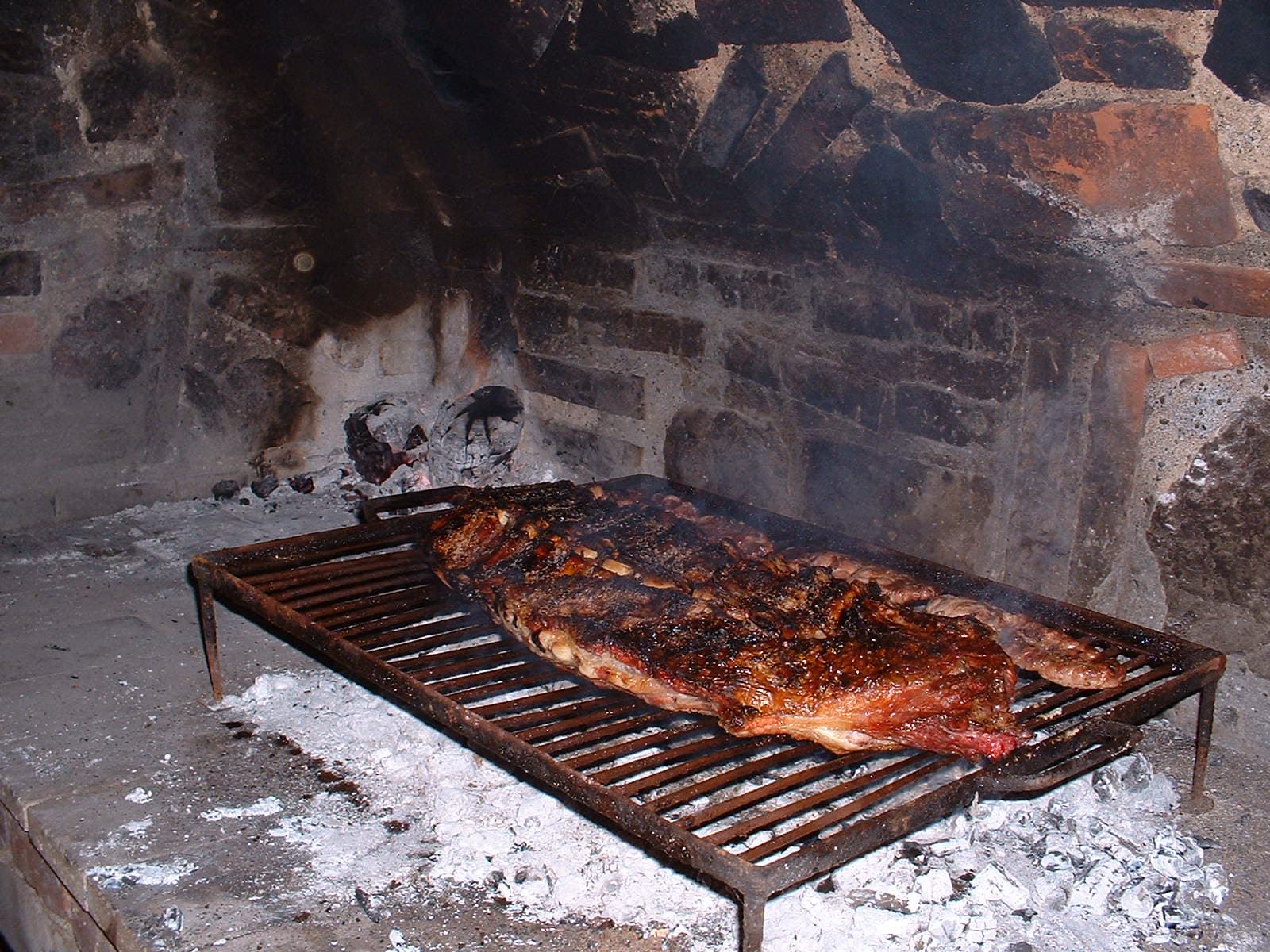 Hadriann at English Wikipedia · Public domain
A shared cut, a shared ranching world
Northern Mexican states, particularly Nuevo León, Coahuila, Chihuahua, and Tamaulipas, share the same cattle-ranching heritage as South Texas: large livestock operations, a beef-heavy diet, and a long tradition of grilling over live fire, often called asado or carne asada in this region. Skirt steak — called arrachera in much of Mexico — was, as in Texas, historically a lower-cost cut, and northern Mexican ranch cooks developed their own methods of tenderizing and grilling it well before it became a prized item on restaurant menus on either side of the border.
Food historians studying northern Mexican cuisine describe this as a parallel development rather than a simple export from one country to the other: the same cattle economy that spanned the Rio Grande produced related but independently evolved cooking traditions on both banks.
How arrachera differs from Tex-Mex fajitas
Arrachera and Tex-Mex fajitas share a cut of meat and a grilling method, but they diverge in preparation and serving convention. Arrachera is traditionally marinated with citrus (often sour orange or lime), garlic, and salt, then grilled and served as part of a carne asada spread alongside grilled onions, salsas, and corn or flour tortillas for building tacos at the table — the dish is typically presented as the steak itself, for diners to assemble, rather than as a sizzling platter of steak already mixed with peppers and onions.
Tex-Mex fajitas, by contrast, developed within American restaurant culture into a dish where sliced steak, grilled bell peppers, and onions are frequently served together on a single sizzling platter — a presentation more closely tied to Texas restaurant history than to northern Mexican home or restaurant tradition.
Arrachera and fajitas grew from the same cut of meat into two distinct culinary customs.
Terminology that resists easy translation
In much of Mexico, "fajita" is not the common word for this cut or dish; "arrachera" is. Meanwhile, in parts of Texas and the Rio Grande Valley, some Spanish-speaking communities use "fajita" much as English speakers do. This terminology split reflects the countries' separate culinary histories rather than a single dish that simply goes by two names — Mexican culinary reference works and Texas food historians alike treat arrachera and fajitas as related regional specialties, not synonyms.
Cross-border exchange, not one-way borrowing
Because the US-Mexico border runs through a historically connected ranching region, ingredients, techniques, and family recipes have moved in both directions for generations. Some Tex-Mex restaurant menus in Texas today list both "fajitas" and "arrachera" as related but distinct preparations, a small but telling sign that cooks and diners on the ground have long understood these as cousins rather than as one dish under two names.
Sources & further reading
- Tex-Mex, Cal-Mex, New Mex, or Whose Mex? Notes on the Historical Geography of Southwestern Cuisine — Journal of the Southwest, University of Arizona. Describes northern Mexican (norteño) cuisine's wheat-flour tortillas and beef-heavy diet as distinct from central and southern Mexican cooking.
- Vaquero — Texas State Historical Association, Handbook of Texas. History of the shared Hispanic ranching tradition across the Texas-Mexico borderlands.
- Taco USA: How Mexican Food Conquered America — Gustavo Arellano, Scribner. Cultural history of Mexican regional cuisines in the United States, including northern Mexican grilling traditions.