Culture & history
Fajitas in American Restaurants: From Houston Storefront to National Chain
In under two decades, fajitas went from a dish served at a ten-table Houston restaurant to a fixture on casual-dining menus across the United States, a spread driven as much by chain marketing as by the food itself.
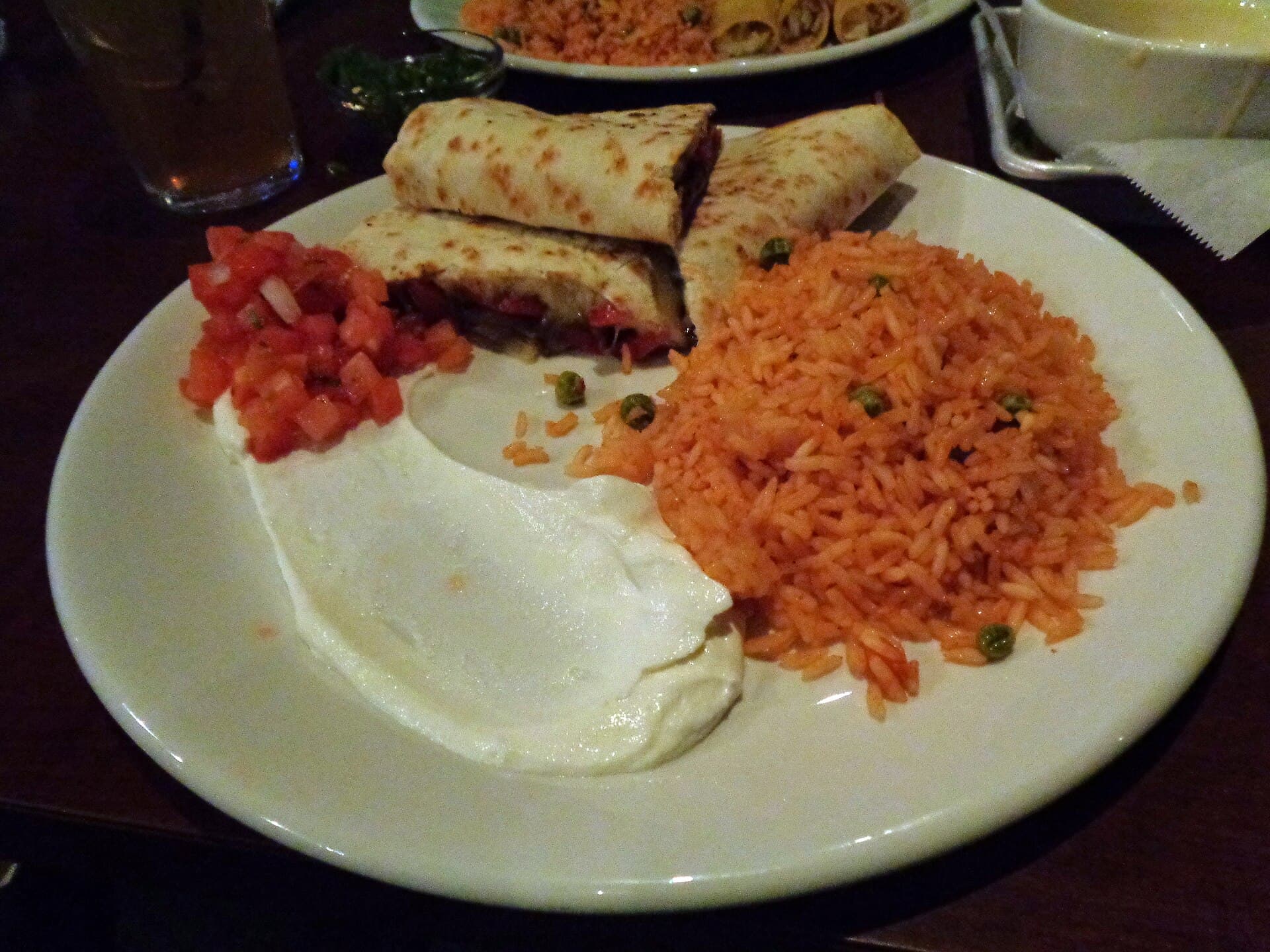 Michael Rivera · CC BY-SA 4.0
A Houston beginning
In 1973, Ninfa Laurenzo opened a small restaurant, Ninfa's, at her family's struggling tortilla factory in Houston's East End. Facing financial hardship after her husband's death, she began serving grilled, chopped skirt steak rolled into handmade flour tortillas — tacos al carbón — and reportedly sold 250 of them on her first day. The dish caught on quickly across Houston through the mid-1970s, and Ninfa's expanded to a second, larger location within two years.
Ninfa's is one of the most thoroughly documented early restaurant successes built around this style of grilled skirt steak, and the Texas State Historical Association credits "Mama Ninfa," as she became known, with popularizing the dish widely enough that, decades later, nearly every Tex-Mex restaurant in Houston served some version of it.
Parallel claims from Austin
Houston was not the only city with a claim to early fajita restaurant history. Around the same period, a Hyatt Regency hotel restaurant in Austin also began serving fajitas, and food writers who have dug into the dish's restaurant-era origins describe the Austin and Houston stories as running in parallel rather than one clearly following or copying the other. As with the ranch-kitchen history that came before it, the restaurant-era history of fajitas resists a single origin point — multiple South Texas and Austin-area establishments each played a documented role.
By the time fajitas went national, Texas already couldn't agree on who served them first.
Chili's and the "Summer of Fajita Madness"
The clearest, best-documented turning point for the dish's move beyond Texas came from the casual-dining chain Chili's. The company tested fajitas in roughly two dozen locations in 1984, then rolled the dish out across its restaurants nationally in 1985 under then-chief executive Norman Brinker. The response was significant enough that Chili's produced shirts commemorating what it called the "Summer of Fajita Madness," and its advertising deliberately foregrounded the audible sizzle as the dish's selling point.
Food writers have been careful to note that Chili's never claimed to have invented fajitas — its role was scale and marketing, introducing a dish with deep South Texas roots to a national customer base that had largely never encountered it. That distinction matters: Chili's popularized the fajita nationally, but the dish itself, and its sizzling presentation, were already established in Texas restaurants years earlier.
Broadening beyond the original cut
As other casual-dining chains added fajitas through the late 1980s and 1990s, the word itself broadened well past its original meaning. Chicken fajitas, shrimp fajitas, and vegetable fajitas became common menu items, marketed less as a specific skirt-steak dish and more as a style of tableside-sizzled, tortilla-wrapped entrée. Food historian Gustavo Arellano's research into Mexican food's spread across the United States situates this expansion within a broader pattern: dishes with specific regional origins are frequently generalized and adapted as they scale into national restaurant chains, gaining reach while losing some of their original specificity in the process.
That broadening is worth naming plainly rather than treating as a decline: fajitas today mean different things in different kitchens, from a Houston restaurant's grilled skirt steak to a national chain's sizzling chicken platter, and both are legitimate, if quite different, descendants of the same South Texas dish.
Timeline
- 1973
Ninfa's opens in Houston
Ninfa Laurenzo begins serving grilled, chopped skirt steak in handmade flour tortillas at her East End restaurant.
- Early-to-mid 1970sContested
Austin's parallel claim
A Hyatt Regency hotel restaurant in Austin also begins serving fajitas around this period; historians treat the Houston and Austin stories as running in parallel.
- 1977
The sizzling platter, Valley-style
McAllen restaurateur Otilia Garza introduces a sizzling cast-iron fajita presentation at her restaurant, Tila's.
- 1984–1985
Chili's goes national
Chili's tests fajitas in roughly two dozen locations in 1984, then rolls the dish out nationally in 1985 under Norman Brinker, driving major consumer demand.
- Late 1980s–1990s
The word broadens
Chain restaurants extend "fajitas" to chicken, shrimp, and vegetables, well beyond the original skirt-steak dish.
Sources & further reading
- Ninfa's Mexican Restaurants — Texas State Historical Association, Handbook of Texas. Documents Ninfa Laurenzo's 1973 founding of Ninfa's and her role in popularizing grilled skirt steak tacos.
- No, Chili's, You Did Not Invent the Fajita — Dallas Observer. Reporting on Chili's 1984-85 national rollout and its relationship to earlier Texas restaurant claims.
- Low Steaks — Texas Monthly. Traces the fajita's path from South Texas ranch cooking through competing restaurant claims to national demand.
- Taco USA: How Mexican Food Conquered America — Gustavo Arellano, Scribner. Cultural history of how Mexican and Tex-Mex dishes, including fajitas, were adapted and generalized as they spread through American chain restaurants.