Steak Fajita Bowls
All the flavor of steak fajitas, served over rice and black beans instead of tortillas. Sear the steak in cast iron, char the peppers and onions in the same pan, and warm the beans separately so they stay distinct instead of turning the rice soggy. Assemble bowls just before eating with lime, cilantro, and cheese, and you have a naturally larger-portion, tortilla-free version of the classic.
- Prep
- 20m
- Cook
- 17m
- Rest
- 5m
- Total
- 42m
- Serves
- 4
- Level
- easy
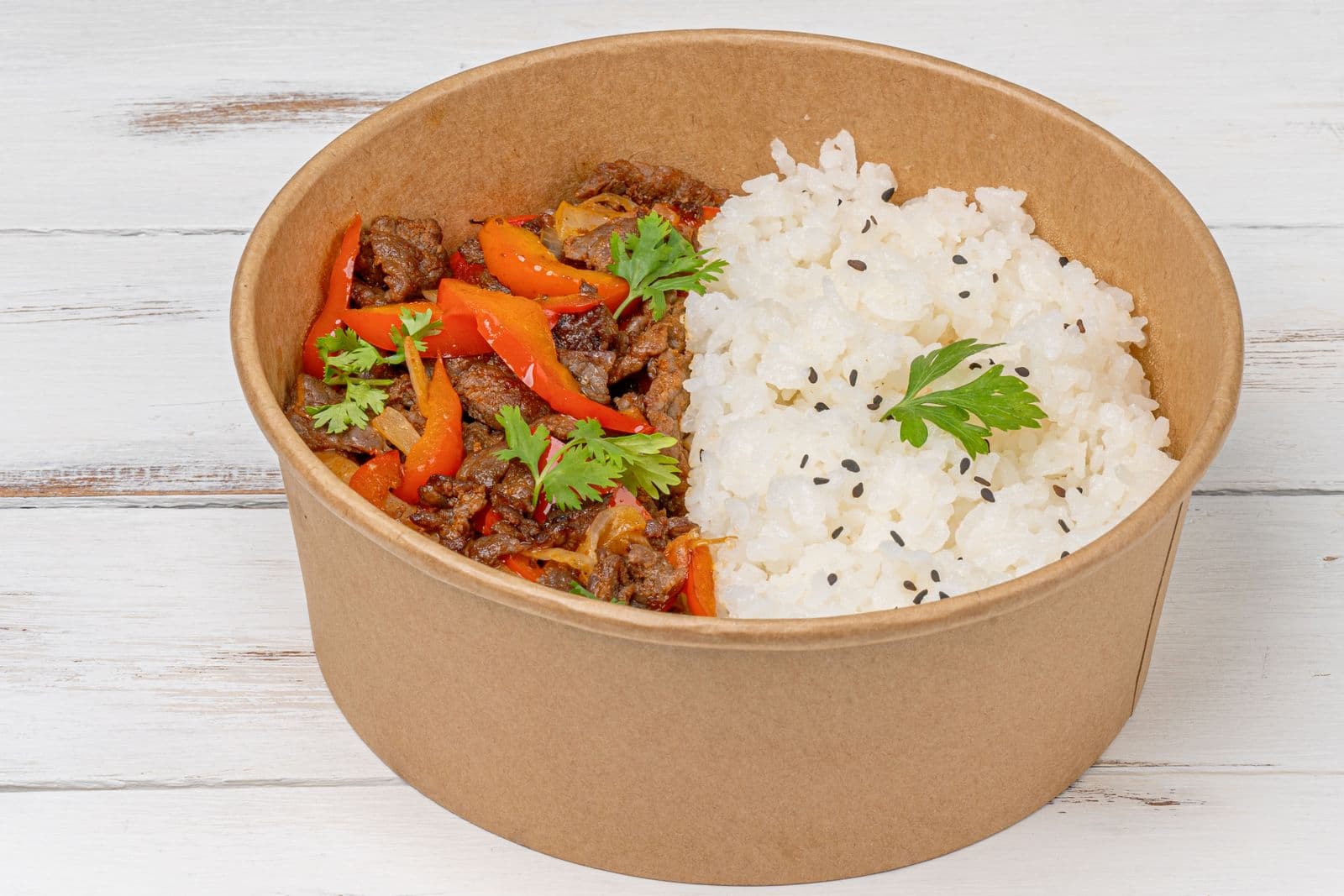 Pexels contributor · Pexels License
A rice-and-bean bowl version of steak fajitas, built for meal prep and gluten-free eating.
Ingredients
Showing ingredients for 4 servings in US customary units.
Steak & seasoning
Peppers & onions
Bowl base
To finish
Cook times are not scaled with servings — adjust pan size and cook in batches as needed. Salt and “to taste” items are intentionally left for your judgment.
🛒 links open an Amazon search for that ingredient. Some links may earn FajitaRecipe.com a commission if you buy through Amazon, at no extra cost to you.
Step by step
How to make it
Cook rice
Step 1. Cook the rice according to package directions while you prep everything else. Fluff with a fork when done and keep covered.
~20 min
Season steak
Step 2. Pat the steak dry and rub with 1 tablespoon oil, the chili powder, cumin, and salt.
~5 min
Sear steak
Step 3. Heat a 12-inch cast-iron skillet over high until it lightly smokes. Sear the steak 3–4 minutes per side to 130–135°F for medium-rare.
~7 min135°F
Rest
Step 4. Rest the steak on a board for 5 minutes.
~5 min
Char vegetables
Step 5. In the same pan, char the onion and peppers over high heat, tossing every minute or so, 5–7 minutes.
~6 min
Warm beans
Step 6. Warm the black beans in a small pot with a splash of water and a pinch of cumin, just until heated through.
~4 min
Assemble
Step 7. Slice the steak thin against the grain. Divide the rice among bowls, then top with beans, peppers and onions, and sliced steak. Finish with lime, cilantro, and cheese.
Doneness & safety
Beef steak (whole cuts)145°F / 63°C
Cook whole-muscle beef (skirt, flank, sirloin) to a minimum internal temperature of 145°F (63°C), then rest 3 minutes. Many cooks pull skirt/flank medium-rare to medium for tenderness; 145°F is the published minimum for whole cuts.
Source: USDA Food Safety and Inspection Service · reviewed 2026-07-04
Leftover storage
Refrigerate cooked fajita fillings within 2 hours (1 hour if above 90°F ambient). Store at or below 40°F, use within 3–4 days, and reheat to 165°F.
Source: USDA Food Safety and Inspection Service · reviewed 2026-07-04
🛒 Shop this recipe
Pantry & spices
Fresh ingredients
Fresh items open an Amazon search — availability varies by location.
Cookware & tools
- Lodge 12-inch Cast Iron Skillet · L10SK3Find →
- Lodge Silicone Hot Handle Holder · ASHH11Find →
- ThermoWorks Thermapen ONE · Thermapen ONEFind →
- OXO Good Grips 12-inch Tongs · Good Grips 12" Locking TongsFind →
- Victorinox Fibrox 12-inch Granton Slicing Knife · 5.4233.30 (Fibrox 12" Granton)Find →
- John Boos Reversible Maple Cutting Board · RA03 (24 x 18 in)Find →
- ThermoWorks ThermoPop 2 · ThermoPop 2Find →
- Victorinox Fibrox Pro 8-inch Chef’s Knife · 5.2063.20 (Fibrox Pro 8")Find →
Already own these? Use what you have — no need to buy.
Recommendations are chosen to help you cook better fajitas; some Amazon links may earn a commission at no extra cost to you.
Fix it
Fixing soggy bowls
Soggy bowls are almost always a liquid problem: beans that were not drained well, or peppers and onions that steamed instead of charred and released water into the rice. Drain and rinse canned beans thoroughly, cook the vegetables over genuinely high heat so they blister rather than stew, and assemble the bowls close to serving time rather than letting them sit fully built.
The call: Drain beans well and char vegetables hot and dry to avoid excess liquid pooling in the rice.
Substitutions
| Instead of | Use | Adjust | Expect | Avoid when |
|---|---|---|---|---|
| White rice | Cauliflower rice | Sauté briefly in a dry pan instead of boiling, just until warmed and any excess moisture cooks off. | A lower-carb base with a lighter texture; add extra seasoning since cauliflower is blander than rice. | — |
| Black beans | Pinto beans | Use the same amount. | A creamier texture and milder flavor. | — |
| Flank steak | Top sirloin steak | Use the same weight. | A leaner, more budget-friendly bowl; watch closely near the end of searing. | — |
Technique
Building a bowl instead of a tortilla
Without a tortilla to hold everything together, layering order matters more than it does in a taco. Put rice down first as a warm, absorbent base, then add the beans and vegetables, which release some liquid as they sit — the rice can handle that moisture, but it will turn beans and peppers mushy if they sit stacked together too long before serving. Slice the steak last and add it just before eating, since resting is still important but a warm bowl underneath does not need it lingering there.
The call: Layer rice first, then beans and vegetables, and add sliced steak right before serving.
The science
Why the steak still needs to rest, even over rice
It is tempting to skip resting when everything is going into one warm bowl, but the physics of a seared steak do not change: the muscle fibers are still contracted from the heat and still need a few minutes to relax and reabsorb their juices. Skipping the rest here just means those juices run out onto the cutting board instead of into the bowl, leaving both the steak and the rice underneath drier than they should be.
The call: Rest the steak fully before slicing, even though it is going over hot rice.
Equipment for this recipe
Disclosure: As an Amazon Associate, FajitaRecipe.com earns from qualifying purchases. Recommendations are chosen to help you cook better fajitas; some Amazon links may earn a commission at no extra cost to you. See our selection methodology.
For cast-iron fajitas
 Lodge
LodgeModel L10SK3
A heavy 12-inch Lodge gives two servings of steak enough hot surface to brown without crowding. It is still too small for a six-person batch, which should be seared in rounds.
Best for: Everyday 2–4 serving skillet fajitas with a hard sear.
 Lodge
LodgeModel ASHH11
A cast-iron handle reaches the same temperature as the pan. A slip-on holder is the difference between confidently moving the skillet and dropping it.
Best for: Anyone using a blazing-hot cast-iron or carbon-steel handle.
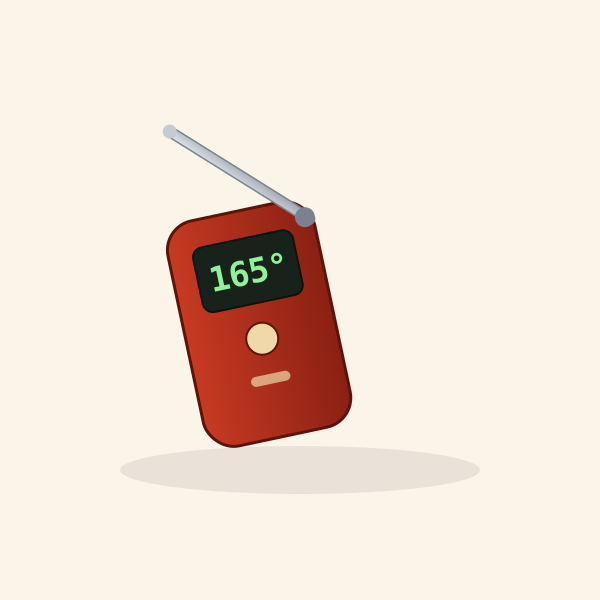 ThermoWorks
Model Thermapen ONE
Thin fajita chicken and steak swing past target in seconds. A one-second read lets you pull chicken at 165°F and steak at your chosen doneness before carryover overshoots.
Best for: A one-second, dependable read on thin proteins.
OXOModel Good Grips 12" Locking Tongs
Twelve-inch tongs keep your hand out of the smoke while you toss peppers and flip strips in a ripping-hot pan.
Best for: Tossing peppers and turning strips over high heat.
For slicing steak
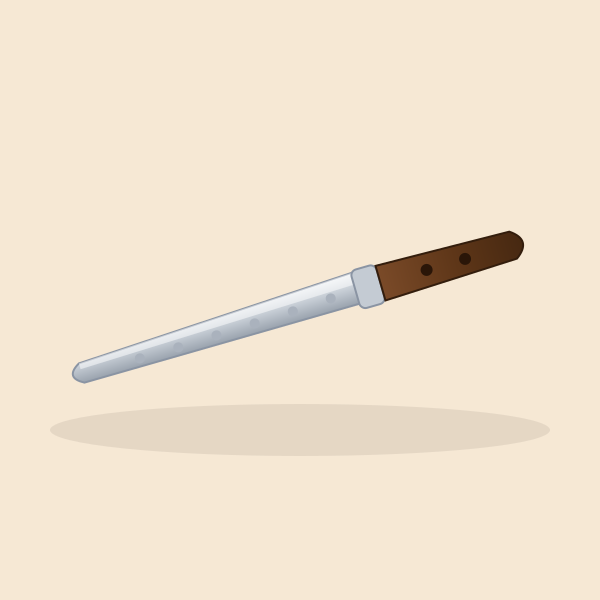 Victorinox
Model 5.4233.30 (Fibrox 12" Granton)
Thin, even slices across the grain are what make skirt and flank tender. A long granton slicer does it in one clean stroke instead of sawing.
Best for: Clean, thin, against-the-grain slices on skirt and flank steak.
John BoosModel RA03 (24 x 18 in)
A roomy board with a juice groove lets steak rest and be sliced in one place; pour the caught juices back over the strips before serving.
Best for: Resting and slicing steak with room to spare.
ThermoWorksModel ThermoPop 2
You do not need a premium thermometer to cook safe chicken. The ThermoPop 2 is accurate and a few seconds slower — a great-value pick from the same maker.
Best for: A reliable read without the premium price.
For peppers & onions
VictorinoxModel 5.2063.20 (Fibrox Pro 8")
A sharp 8-inch chef’s knife handles the pepper and onion prep fajitas live on. The Fibrox handle grips even when your hands are wet from vegetables.
Best for: Slicing peppers and onions and general prep.
OXOModel Good Grips 12" Locking Tongs
Twelve-inch tongs keep your hand out of the smoke while you toss peppers and flip strips in a ripping-hot pan.
Best for: Tossing peppers and turning strips over high heat.
Serving & storage
Meal-prepping these bowls
Store the rice, beans, vegetables, and steak in separate containers in the refrigerator for up to 4 days rather than fully assembled — this keeps the rice from soaking up moisture and turning gummy. Reheat the components separately and assemble just before eating, adding fresh lime and cilantro at the end to keep them bright.
Frequently asked questions
+Can I meal prep these bowls ahead of time?
Yes, but store the rice, beans, vegetables, and steak in separate containers rather than fully assembled, so the rice does not turn gummy from sitting in released moisture. Combine and reheat just before eating.
+What can I use instead of rice?
Cauliflower rice works well for a lower-carb bowl — sauté it briefly instead of boiling so excess moisture cooks off before it goes in the bowl.
+Do I still need to rest the steak for a bowl?
Yes. Resting lets the muscle fibers reabsorb their juices regardless of what the steak is served over; skipping it dries out both the steak and the rice underneath.
+How do I keep the bowls from getting soggy?
Drain canned beans thoroughly, char the peppers and onions over genuinely high heat so they blister instead of steam, and assemble the bowls close to serving time.
Testing, sources & disclosure
This recipe was developed and reviewed by our editors. We publish full kitchen-test notes here once a recipe has been cooked and verified in our kitchen.
- Author:
- FajitaRecipe Editorial
- Last reviewed:
- 2026-07-06
Sources
- Safe Minimum Internal Temperature Chart, USDA FSIS linkSupports: Beef steak minimum internal temperature
As an Amazon Associate, FajitaRecipe.com earns from qualifying purchases. We do not provide medical or dietary advice; follow USDA guidance for food safety.
Keep cooking
You might also like
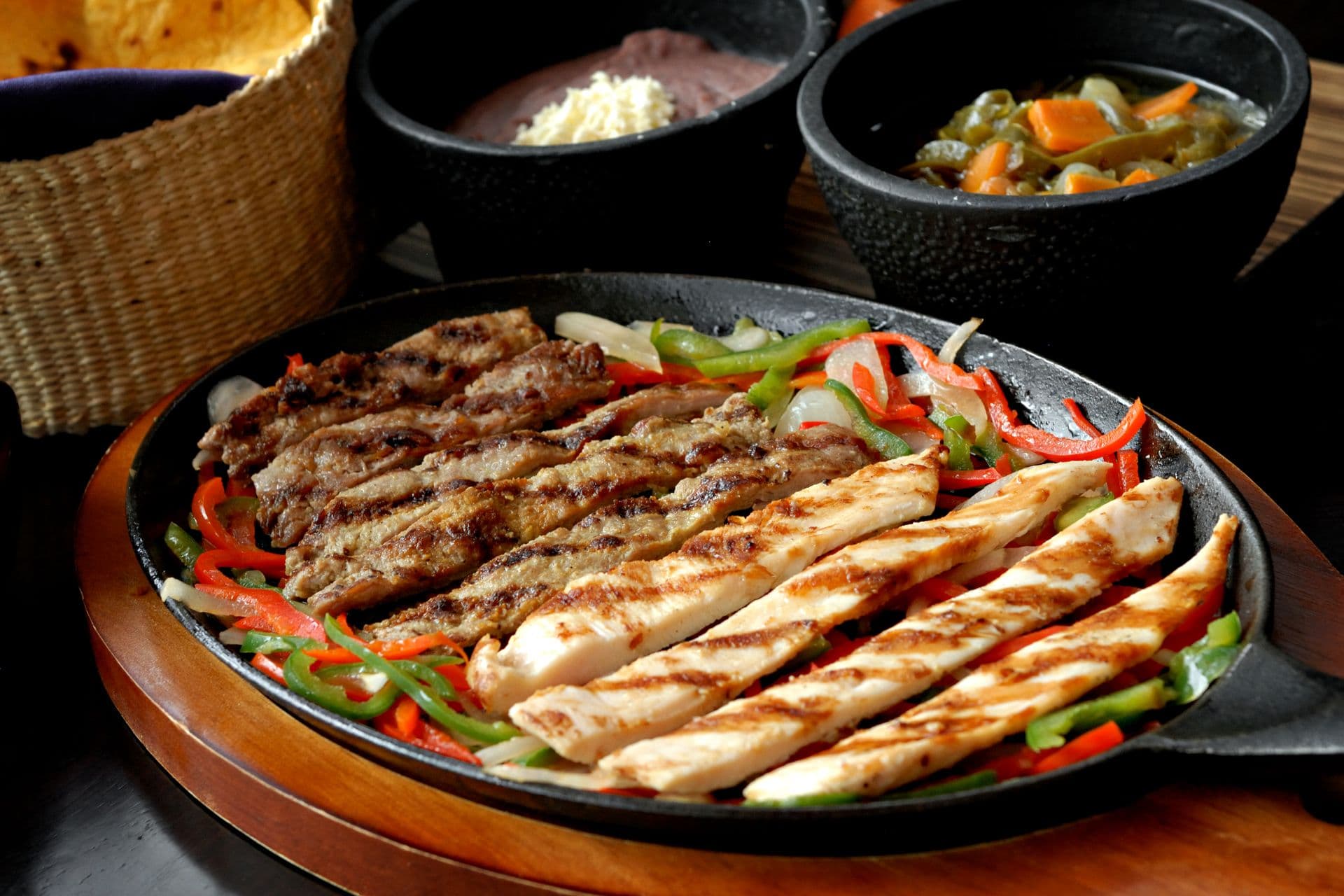 Pexels contributor · Pexels License
Steak Fajitas
43 min · moderate
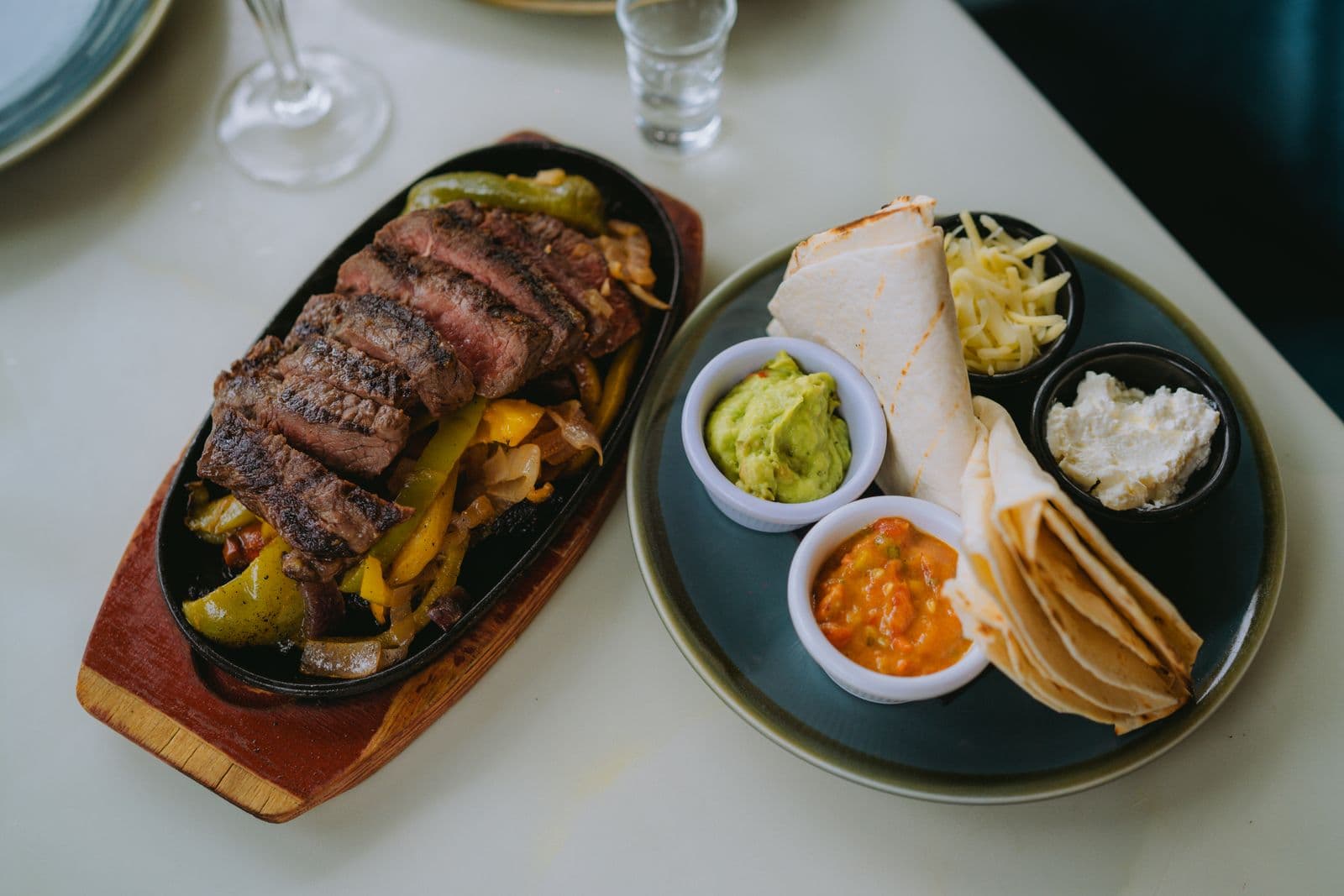
Steak fajitas start with a well-marbled cut like skirt or flank, a short lime-and-spice marinade, and a very hot skillet. Sear the steak fast, rest it, then char peppers and onions in the same pan. Slice thin against the grain and pile into warm tortillas. Most cooks pull the beef at 130–135°F for medium-rare, well below the 145°F whole-cut mark.
 Pexels contributor · Pexels License
Flank Steak Fajitas
44 min · moderate
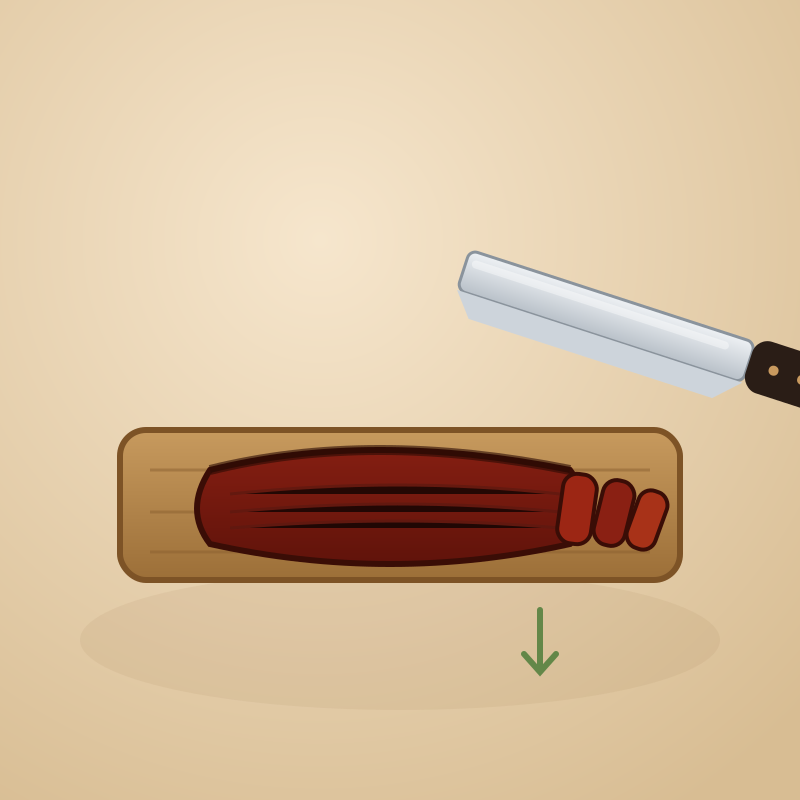
Flank steak makes lean, meaty fajitas from a widely available cut. It is thicker and less fatty than skirt, with a tighter grain, so it wants a slightly longer sear, a real rest, and a careful thin slice against the grain. Cook it to medium-rare in a hot cast-iron pan or over a live fire, then char peppers and onions and fold everything into warm tortillas.
Best Steak for Fajitas: Skirt vs. Flank vs. Sirloin
Skirt steak is the best cut for fajitas: it is loosely grained, well marbled, and drinks up marinade, giving that classic beefy chew when sliced across the grain. Flank steak is the leaner, easier-to-find backup, and top sirloin or flap meat work when you want a budget cut. Whatever you buy, slice it thin against the grain.