Sheet-Pan Steak Fajitas
This hands-off method roasts flank steak and vegetables together on a preheated sheet pan, then finishes under the broiler for the char a skillet would normally give. Preheating the pan itself is the key move — it lets the underside brown on contact instead of steaming. No standing over a hot stove: season, roast, broil, rest, and slice.
- Prep
- 15m
- Cook
- 14m
- Rest
- 5m
- Total
- 34m
- Serves
- 4
- Level
- easy
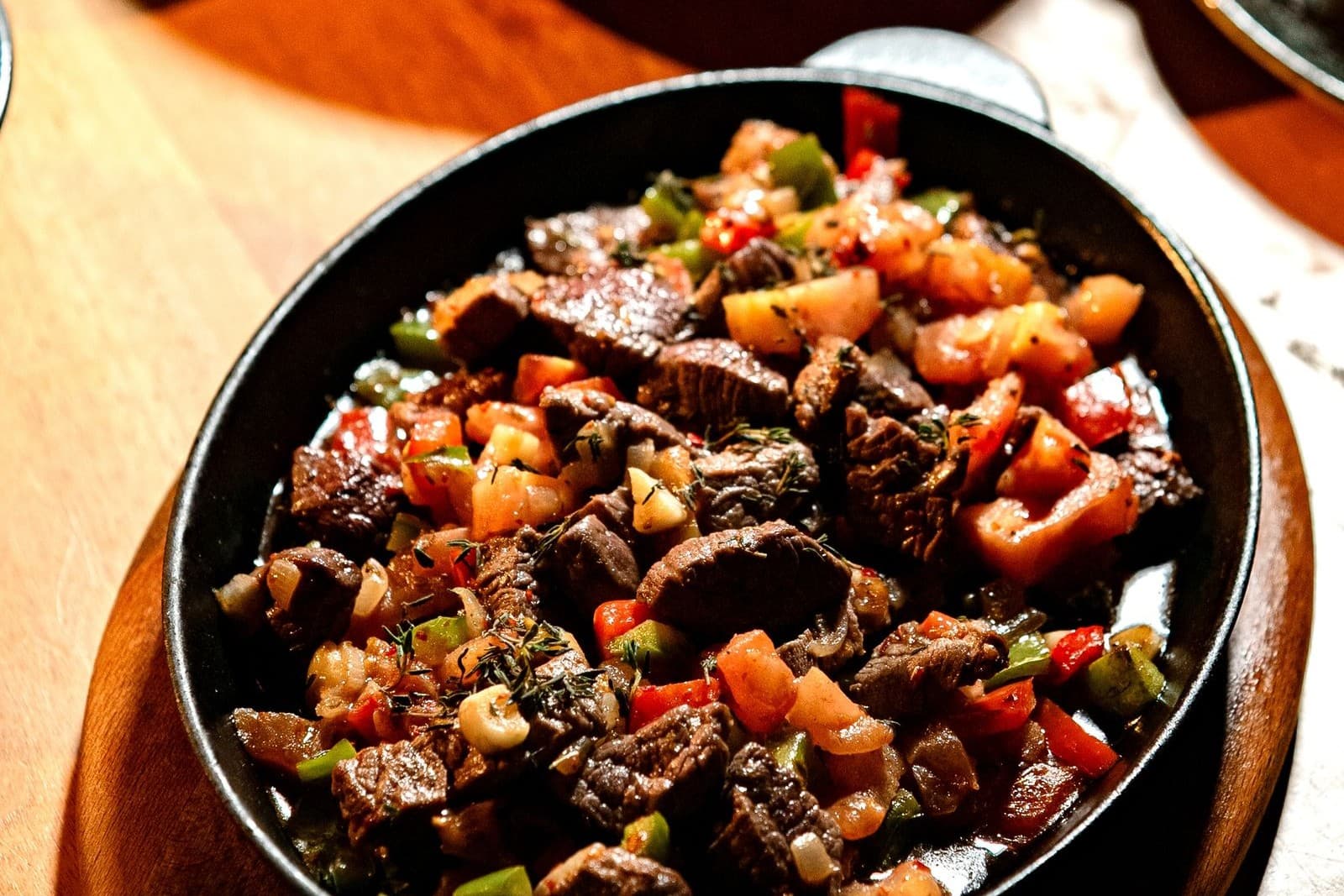 Pexels contributor · Pexels License
A hands-off, oven-only fajita method using a preheated sheet pan and a broiler finish for char.
Ingredients
Showing ingredients for 4 servings in US customary units.
Steak & seasoning
Peppers & onions
To serve
- 8Flour tortillas, warmedShop
Cook times are not scaled with servings — adjust pan size and cook in batches as needed. Salt and “to taste” items are intentionally left for your judgment.
🛒 links open an Amazon search for that ingredient. Some links may earn FajitaRecipe.com a commission if you buy through Amazon, at no extra cost to you.
Step by step
How to make it
Preheat
Step 1. Set a rimmed sheet pan on a rack in the oven and heat to 450°F, letting the pan preheat along with the oven. A hot pan promotes char instead of steam the moment food touches it.
~10 min450°F
Season
Step 2. Toss the peppers and onion with 2 tablespoons oil, half the chili powder and cumin, and salt. Rub the steak with the remaining oil, spices, garlic, and salt.
~5 min
Roast
Step 3. Carefully pull out the hot pan and spread the vegetables in a single layer, then nestle the steak among them. Roast 10–12 minutes, until the steak reaches about 120°F.
~11 min450°F
Broil
Step 4. Switch the oven to broil and cook 2–4 minutes more, watching closely, until the vegetable edges blister and the steak reaches 130–135°F for medium-rare.
~3 min135°F
Rest
Step 5. Move the steak to a cutting board and rest 5 minutes.
~5 min
Slice & serve
Step 6. Slice the steak thin against the grain, toss with the roasted vegetables and pan juices, and serve with warm tortillas.
Doneness & safety
Beef steak (whole cuts)145°F / 63°C
Cook whole-muscle beef (skirt, flank, sirloin) to a minimum internal temperature of 145°F (63°C), then rest 3 minutes. Many cooks pull skirt/flank medium-rare to medium for tenderness; 145°F is the published minimum for whole cuts.
Source: USDA Food Safety and Inspection Service · reviewed 2026-07-04
Leftover storage
Refrigerate cooked fajita fillings within 2 hours (1 hour if above 90°F ambient). Store at or below 40°F, use within 3–4 days, and reheat to 165°F.
Source: USDA Food Safety and Inspection Service · reviewed 2026-07-04
🛒 Shop this recipe
Pantry & spices
Fresh ingredients
Fresh items open an Amazon search — availability varies by location.
Cookware & tools
- Nordic Ware Naturals Half Sheet · Naturals Baker’s Half Sheet 43100Find →
- Winco Blade Slotted Flexible Turner · TN719Find →
- ThermoWorks ThermoPop 2 · ThermoPop 2Find →
- Victorinox Fibrox 12-inch Granton Slicing Knife · 5.4233.30 (Fibrox 12" Granton)Find →
- John Boos Reversible Maple Cutting Board · RA03 (24 x 18 in)Find →
- Victorinox Fibrox Pro 8-inch Chef’s Knife · 5.2063.20 (Fibrox Pro 8")Find →
- OXO Good Grips 12-inch Tongs · Good Grips 12" Locking TongsFind →
Already own these? Use what you have — no need to buy.
Recommendations are chosen to help you cook better fajitas; some Amazon links may earn a commission at no extra cost to you.
Fix it
Why sheet-pan fajitas can turn watery
The most common failure is a crowded pan: vegetables piled two layers deep release steam that has nowhere to escape, and everything ends up simmering in its own liquid instead of browning. Spread everything in a genuinely single layer, using two pans if your vegetables do not fit comfortably on one, and resist the urge to skip the pan preheat to save time.
The call: Keep vegetables in a single layer and do not skip preheating the pan.
Substitutions
| Instead of | Use | Adjust | Expect | Avoid when |
|---|---|---|---|---|
| Flank steak | Top sirloin steak | Use the same weight. Roast the same way but watch closely near the end — sirloin has less fat and overcooks faster. | A leaner result at a lower price. | — |
| Bell peppers | Poblano peppers | — | A deeper, mildly smoky roasted flavor with a bit more vegetal heat. | — |
| Broiler finish | Maximum oven temperature | If your oven lacks a strong broiler, roast the last few minutes at its highest setting instead. | Slightly less intense browning, but still meaningfully more char than roasting alone. | — |
The science
Why the pan gets preheated, not just the oven
An oven surrounds food with hot air, but a room-temperature sheet pan placed on the rack still takes several minutes to climb to a searing temperature — long enough for the steak and vegetables to release moisture and steam before the pan ever gets hot enough to brown them. Preheating the pan itself, the same idea behind preheating a pizza stone, means the underside of the food starts browning the instant it touches the metal.
The call: Preheat the sheet pan along with the oven so food browns on contact.
Technique
Getting stovetop-level char from an oven
A skillet gets its char from direct, sustained contact with a very hot surface. An oven set to 450°F approximates that with the preheated pan, but the broiler does the rest: its direct radiant heat from above browns the tops and edges the way a skillet browns from below. Roast first to bring the steak most of the way to temperature, then finish under the broiler for a couple of minutes to blister the vegetable edges and darken the crust.
The call: Roast to build most of the doneness, then broil briefly for surface char.
Equipment for this recipe
Disclosure: As an Amazon Associate, FajitaRecipe.com earns from qualifying purchases. Recommendations are chosen to help you cook better fajitas; some Amazon links may earn a commission at no extra cost to you. See our selection methodology.
For sheet-pan fajitas
 Nordic Ware
Model Naturals Baker’s Half Sheet 43100
A sturdy rimmed half-sheet gives chicken and peppers room to roast in a single layer instead of steaming. Thin pans buckle at 425°F and pool juices in the warp.
Best for: Sheet-pan fajitas for 3–4 in a single layer.
 Winco
WincoModel TN719
A thin, flexible turner slides under roasted chicken and peppers that caught on the pan, so you flip them instead of shredding them.
Best for: Lifting and turning sheet-pan pieces without tearing.
 ThermoWorks
Model ThermoPop 2
You do not need a premium thermometer to cook safe chicken. The ThermoPop 2 is accurate and a few seconds slower — a great-value pick from the same maker.
Best for: A reliable read without the premium price.
For slicing steak
 Victorinox
Model 5.4233.30 (Fibrox 12" Granton)
Thin, even slices across the grain are what make skirt and flank tender. A long granton slicer does it in one clean stroke instead of sawing.
Best for: Clean, thin, against-the-grain slices on skirt and flank steak.
John BoosModel RA03 (24 x 18 in)
A roomy board with a juice groove lets steak rest and be sliced in one place; pour the caught juices back over the strips before serving.
Best for: Resting and slicing steak with room to spare.
ThermoWorksModel ThermoPop 2
You do not need a premium thermometer to cook safe chicken. The ThermoPop 2 is accurate and a few seconds slower — a great-value pick from the same maker.
Best for: A reliable read without the premium price.
For peppers & onions
VictorinoxModel 5.2063.20 (Fibrox Pro 8")
A sharp 8-inch chef’s knife handles the pepper and onion prep fajitas live on. The Fibrox handle grips even when your hands are wet from vegetables.
Best for: Slicing peppers and onions and general prep.
OXOModel Good Grips 12" Locking Tongs
Twelve-inch tongs keep your hand out of the smoke while you toss peppers and flip strips in a ripping-hot pan.
Best for: Tossing peppers and turning strips over high heat.
Serving & storage
Storing and reheating
Refrigerate leftovers within two hours and use within 3–4 days. Reheat in a hot skillet rather than the microwave to bring back some of the char instead of steaming the steak soft again.
Frequently asked questions
+Can I really make good fajitas in the oven?
Yes — the trick is preheating the sheet pan itself so food browns on contact, then finishing under the broiler for the last couple of minutes to blister the vegetable edges and darken the crust.
+Do I need to flip the steak or vegetables?
No. This method relies on the preheated pan browning the bottom and the broiler browning the top, so there is no need to flip anything mid-cook.
+Why preheat the sheet pan before adding the food?
A cold pan takes several minutes to heat inside the oven, during which food releases moisture and steams instead of browning. A preheated pan starts searing the underside immediately.
+Can I skip the roast step and just broil the whole time?
Not recommended — broiling the whole time risks burning the exterior before the steak reaches medium-rare inside. Roast most of the way, then broil briefly at the end for char.
Testing, sources & disclosure
This recipe was developed and reviewed by our editors. We publish full kitchen-test notes here once a recipe has been cooked and verified in our kitchen.
- Author:
- FajitaRecipe Editorial
- Last reviewed:
- 2026-07-06
Sources
- Safe Minimum Internal Temperature Chart, USDA FSIS linkSupports: Beef steak minimum internal temperature
As an Amazon Associate, FajitaRecipe.com earns from qualifying purchases. We do not provide medical or dietary advice; follow USDA guidance for food safety.
Keep cooking
You might also like
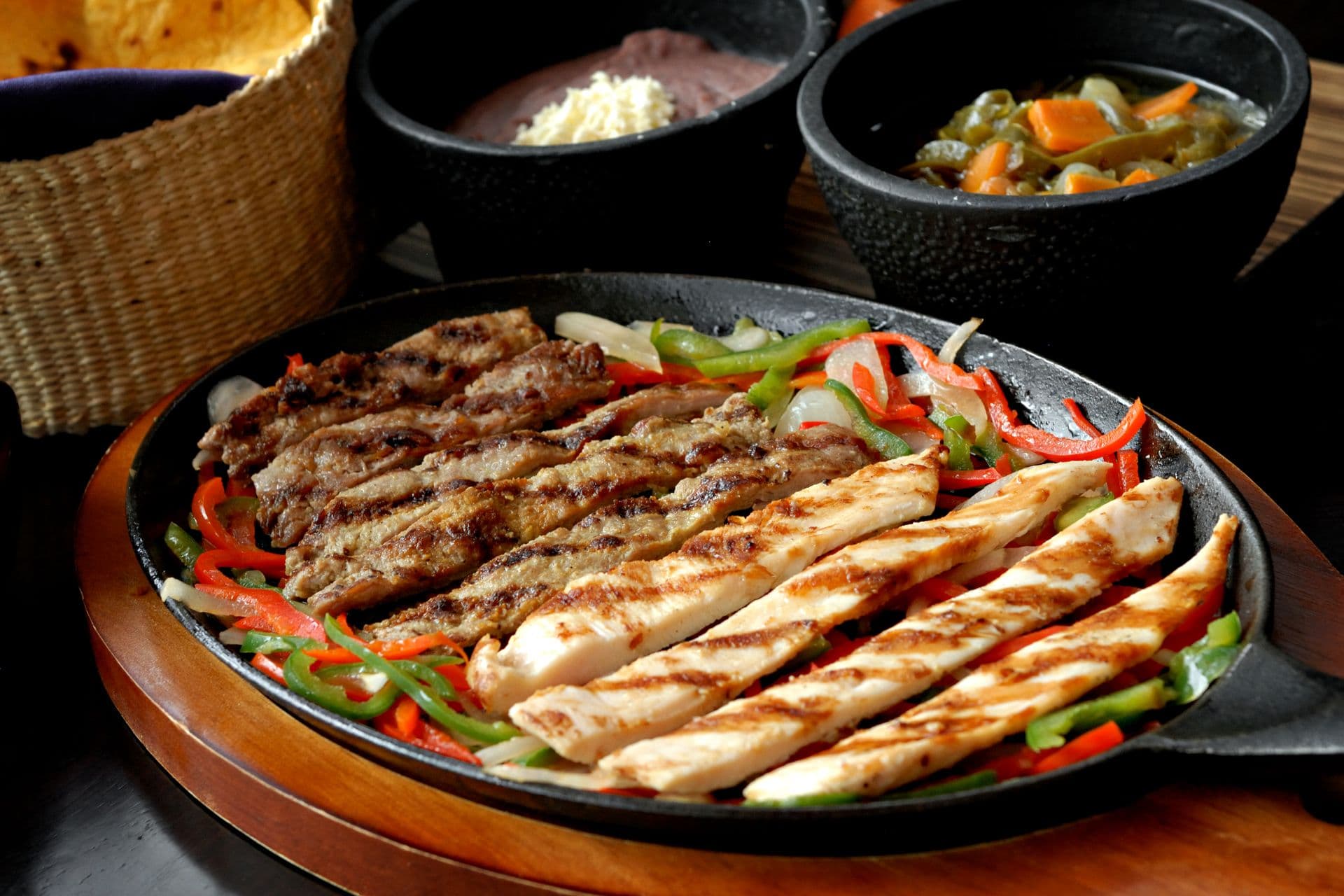 Pexels contributor · Pexels License
Steak Fajitas
43 min · moderate
Steak fajitas start with a well-marbled cut like skirt or flank, a short lime-and-spice marinade, and a very hot skillet. Sear the steak fast, rest it, then char peppers and onions in the same pan. Slice thin against the grain and pile into warm tortillas. Most cooks pull the beef at 130–135°F for medium-rare, well below the 145°F whole-cut mark.
Best Steak for Fajitas: Skirt vs. Flank vs. Sirloin
Skirt steak is the best cut for fajitas: it is loosely grained, well marbled, and drinks up marinade, giving that classic beefy chew when sliced across the grain. Flank steak is the leaner, easier-to-find backup, and top sirloin or flap meat work when you want a budget cut. Whatever you buy, slice it thin against the grain.
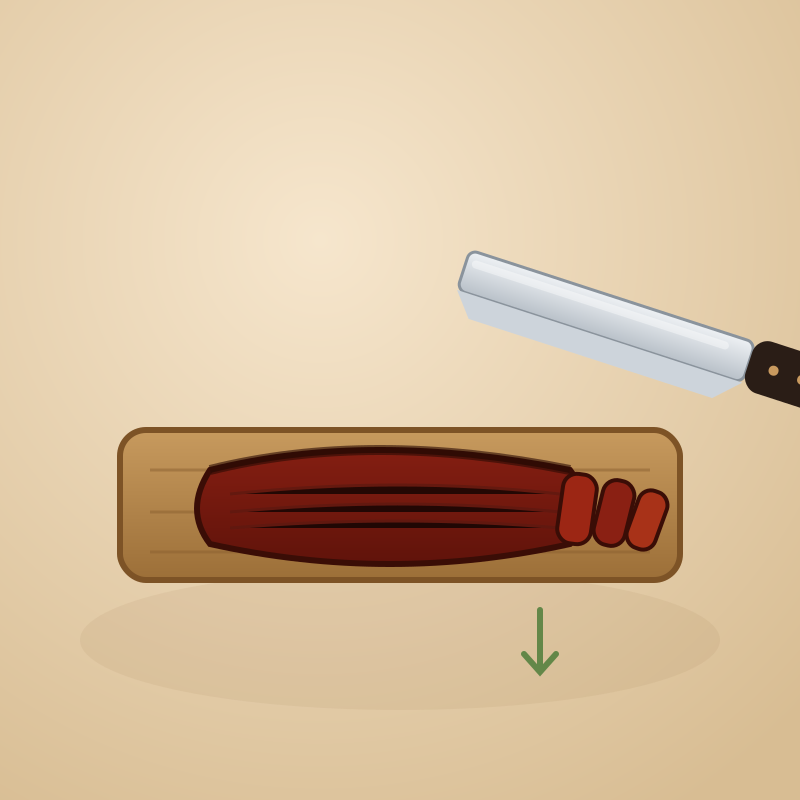
How to Slice Fajita Meat Against the Grain
Slice fajita meat thin and across the grain after it rests. Look at the surface to find the direction the muscle fibers run, then cut straight across them at a slight angle into quarter-inch strips. Cutting against the grain shortens the fibers so each bite is tender. Always slice cooked, rested meat, not raw, and hold your knife low for wide, even pieces.