Gochujang Beef Fajitas (Korean-Inspired)
These gochujang beef fajitas swap the usual chili-lime seasoning for a sweet, savory gochujang marinade borrowed from Korean BBQ and bulgogi. It is a fajita-style interpretation, not a traditional Korean dish — real bulgogi is thin-sliced beef grilled Korean-style, not folded into tortillas. Sear the marinated skirt steak hard and fast in a screaming-hot cast iron skillet, watching closely since the marinade's sugar can scorch before the steak finishes.
- Prep
- 15m
- Cook
- 15m
- Rest
- 5m
- Total
- 35m
- Serves
- 4
- Level
- moderate
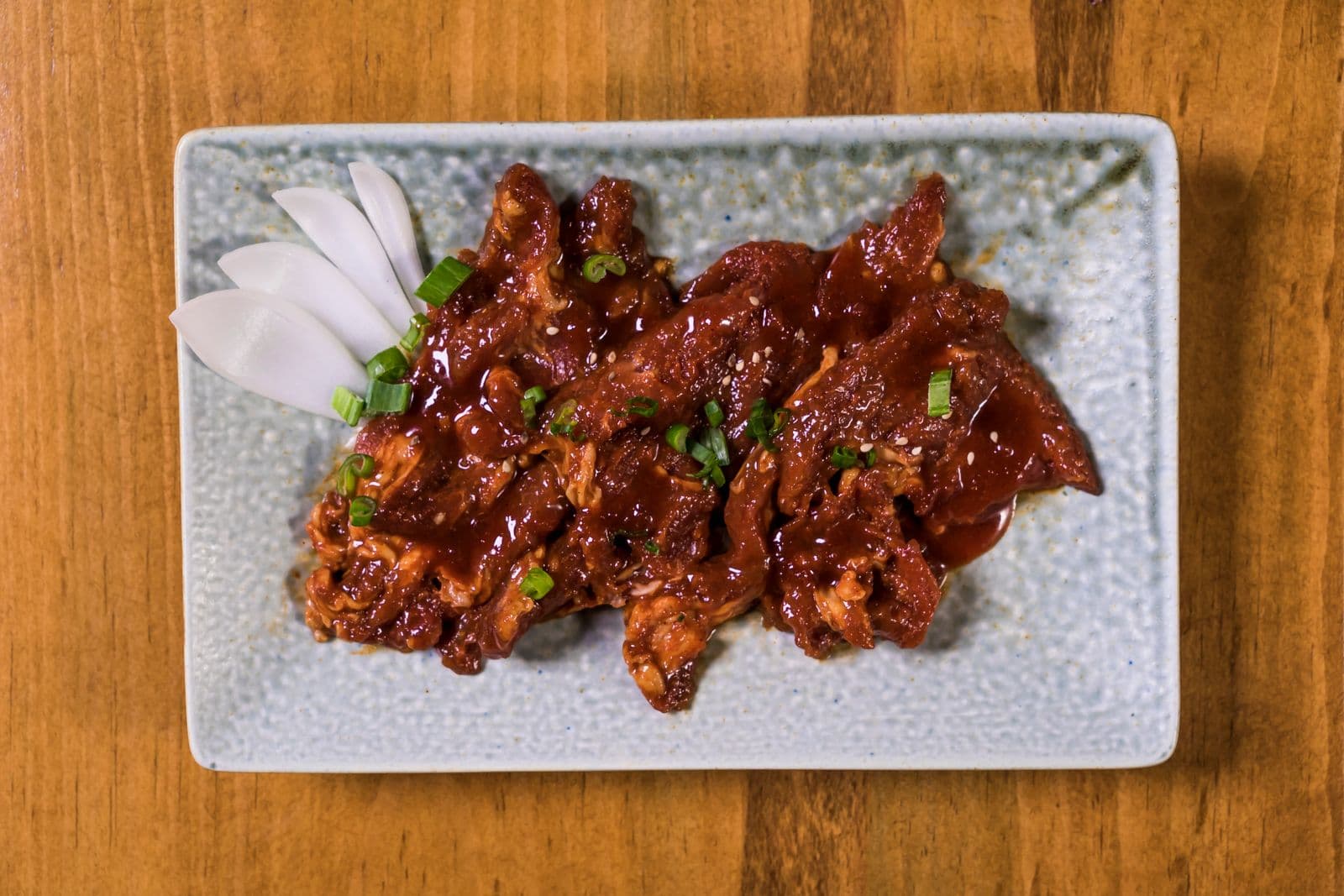 Pexels contributor · Pexels License
A fajita-style interpretation of Korean gochujang flavors, seared in cast iron — inspired by bulgogi, not a traditional Korean recipe.
Ingredients
Showing ingredients for 4 servings in US customary units.
Marinade & steak
- 1½ lbSkirt steak, trimmed and cut into 2–3 wide stripsPat dry before marinating so the gochujang clings instead of sliding off.Search
- 3 tbspGochujangKorean fermented chili paste; found in the international aisle or Korean market.Shop
- 2 tbspSoy sauceShop
- 1 tbspBrown sugarShop
- 3 clovesGarlic, mincedSearch
- 1 tspGinger, gratedSearch
- 1 tspSesame oilShop
- 1 tbspNeutral oilFor searing.Shop
Peppers & onions
Cook times are not scaled with servings — adjust pan size and cook in batches as needed. Salt and “to taste” items are intentionally left for your judgment.
🛒 links open an Amazon search for that ingredient. Some links may earn FajitaRecipe.com a commission if you buy through Amazon, at no extra cost to you.
Step by step
How to make it
Marinate
Step 1. Whisk the gochujang, soy sauce, brown sugar, garlic, ginger, and sesame oil into a smooth marinade. Toss with the steak strips, cover, and refrigerate 30 minutes to 2 hours.
~10 min
Sear steak
Step 2. Heat the neutral oil in a 12-inch cast iron skillet over high until just smoking. Lift the steak from the marinade, letting excess drip off, and sear 3–4 minutes per side to 145°F. Watch closely — the sugar in the marinade browns fast and can scorch if the pan runs too hot.
~8 min
Rest
Step 3. Move the steak to a cutting board, tent loosely with foil, and rest 5 minutes.
~5 min
Char vegetables
Step 4. In the same skillet, add the peppers and onion and char 7–8 minutes over high heat, tossing occasionally and scraping up the browned bits left by the steak.
~8 min
Slice
Step 5. Slice the rested steak thinly against the grain.
~2 min
Combine
Step 6. Toss the sliced steak with the charred peppers and onion.
~1 min
Serve
Step 7. Squeeze lime over the top and serve with warm tortillas.
Doneness & safety
Beef steak (whole cuts)145°F / 63°C
Cook whole-muscle beef (skirt, flank, sirloin) to a minimum internal temperature of 145°F (63°C), then rest 3 minutes. Many cooks pull skirt/flank medium-rare to medium for tenderness; 145°F is the published minimum for whole cuts.
Source: USDA Food Safety and Inspection Service · reviewed 2026-07-04
Marinating safely
Always marinate in the refrigerator, never on the counter. Discard used marinade or boil it before reusing as a sauce.
Source: USDA Food Safety and Inspection Service · reviewed 2026-07-04
Leftover storage
Refrigerate cooked fajita fillings within 2 hours (1 hour if above 90°F ambient). Store at or below 40°F, use within 3–4 days, and reheat to 165°F.
Source: USDA Food Safety and Inspection Service · reviewed 2026-07-04
🛒 Shop this recipe
Pantry & spices
- gochujangShop →
- soy sauceShop →
- brown sugarShop →
- cooking oilShop →
- neutral cooking oilShop →
- flour tortillasShop →
Fresh ingredients
Fresh items open an Amazon search — availability varies by location.
Cookware & tools
- Lodge 12-inch Cast Iron Skillet · L10SK3Find →
- Lodge Silicone Hot Handle Holder · ASHH11Find →
- ThermoWorks Thermapen ONE · Thermapen ONEFind →
- OXO Good Grips 12-inch Tongs · Good Grips 12" Locking TongsFind →
- Victorinox Fibrox 12-inch Granton Slicing Knife · 5.4233.30 (Fibrox 12" Granton)Find →
- John Boos Reversible Maple Cutting Board · RA03 (24 x 18 in)Find →
- ThermoWorks ThermoPop 2 · ThermoPop 2Find →
- Cuisinart SG-10 Electric Spice Grinder · SG-10Find →
- Glass Spice Jars with LabelsFind →
- Victorinox Fibrox Pro 8-inch Chef’s Knife · 5.2063.20 (Fibrox Pro 8")Find →
Already own these? Use what you have — no need to buy.
Recommendations are chosen to help you cook better fajitas; some Amazon links may earn a commission at no extra cost to you.
Substitutions
| Instead of | Use | Adjust | Expect | Avoid when |
|---|---|---|---|---|
| Skirt steak | Flank steak | Slice a bit thinner and sear the same way. | Slightly leaner and firmer texture. | — |
| Gochujang | Sriracha whisked with a spoonful of white miso paste | Start with 2 tablespoons sriracha plus 1 tablespoon miso for every 3 tablespoons gochujang. | Thinner, sharper heat without gochujang's deep fermented sweetness. | — |
| Brown sugar | Honey | Use about the same amount. | Slightly runnier marinade with a lighter caramel note. | — |
The science
Why a sugary marinade needs a watchful eye, not screaming heat
Gochujang and brown sugar both caramelize and char far faster than a plain oil-and-salt rub. The same smoking-hot cast iron that gives a dry-seasoned steak a deep, even crust will burn a sugary marinade into bitterness before the interior comes up to temperature. Sear over high heat, but pull the steak the moment it hits 145°F rather than chasing extra color, and wipe out any blackened marinade residue between batches if cooking in stages.
The call: Prioritize hitting 145°F over chasing a dark crust with this marinade.
Technique
Searing skirt steak and slicing against the grain
Skirt steak has long, visible muscle fibers running in one direction. Searing it hot and fast keeps the interior tender, but the real key to a tender bite is slicing across those fibers after resting, which shortens them so each piece is easy to chew. Slicing with the grain instead leaves long, stringy strands no matter how well the steak was cooked.
The call: Always slice perpendicular to the visible muscle fibers.
Equipment for this recipe
Disclosure: As an Amazon Associate, FajitaRecipe.com earns from qualifying purchases. Recommendations are chosen to help you cook better fajitas; some Amazon links may earn a commission at no extra cost to you. See our selection methodology.
For cast-iron fajitas
 Lodge
LodgeModel L10SK3
A heavy 12-inch Lodge gives two servings of steak enough hot surface to brown without crowding. It is still too small for a six-person batch, which should be seared in rounds.
Best for: Everyday 2–4 serving skillet fajitas with a hard sear.
 Lodge
LodgeModel ASHH11
A cast-iron handle reaches the same temperature as the pan. A slip-on holder is the difference between confidently moving the skillet and dropping it.
Best for: Anyone using a blazing-hot cast-iron or carbon-steel handle.
 ThermoWorks
Model Thermapen ONE
Thin fajita chicken and steak swing past target in seconds. A one-second read lets you pull chicken at 165°F and steak at your chosen doneness before carryover overshoots.
Best for: A one-second, dependable read on thin proteins.
OXOModel Good Grips 12" Locking Tongs
Twelve-inch tongs keep your hand out of the smoke while you toss peppers and flip strips in a ripping-hot pan.
Best for: Tossing peppers and turning strips over high heat.
For slicing steak
 Victorinox
Model 5.4233.30 (Fibrox 12" Granton)
Thin, even slices across the grain are what make skirt and flank tender. A long granton slicer does it in one clean stroke instead of sawing.
Best for: Clean, thin, against-the-grain slices on skirt and flank steak.
John BoosModel RA03 (24 x 18 in)
A roomy board with a juice groove lets steak rest and be sliced in one place; pour the caught juices back over the strips before serving.
Best for: Resting and slicing steak with room to spare.
ThermoWorksModel ThermoPop 2
You do not need a premium thermometer to cook safe chicken. The ThermoPop 2 is accurate and a few seconds slower — a great-value pick from the same maker.
Best for: A reliable read without the premium price.
For making seasoning
 Cuisinart
Model SG-10
Toasting whole cumin and grinding it fresh gives a homemade seasoning noticeably more aroma than pre-ground jars that have sat for months.
Best for: Grinding whole cumin and dried chiles for a fresher blend.
Homemade blend keeps its potency about six months in an airtight jar away from light and stove heat — worth it if you mix a big batch.
Best for: Storing homemade fajita seasoning so it keeps its punch.
For peppers & onions
VictorinoxModel 5.2063.20 (Fibrox Pro 8")
A sharp 8-inch chef’s knife handles the pepper and onion prep fajitas live on. The Fibrox handle grips even when your hands are wet from vegetables.
Best for: Slicing peppers and onions and general prep.
OXOModel Good Grips 12" Locking Tongs
Twelve-inch tongs keep your hand out of the smoke while you toss peppers and flip strips in a ripping-hot pan.
Best for: Tossing peppers and turning strips over high heat.
A fajita-style interpretation
This recipe is a fajita-style interpretation that borrows the sweet, savory, fermented-chili flavor of Korean gochujang, the way it is often used in bulgogi and other Korean BBQ marinades. It is not a traditional Korean dish — bulgogi is thin-sliced beef marinated and grilled in its own right, not served in tortillas as fajitas. Here, that flavor profile is adapted into a familiar cast iron fajita format for a home kitchen.
The call: Treat this as a gochujang-inspired fajita, not a substitute for bulgogi.
Serving & storage
Storing and reheating
Refrigerate leftovers within two hours and use within 3–4 days. Reheat gently in a covered skillet over medium-low heat; the gochujang glaze can scorch quickly a second time, so keep the heat lower than you did for the initial sear.
Frequently asked questions
+Is this a traditional Korean dish?
No. This is a fajita-style interpretation that borrows the gochujang flavor commonly used in Korean BBQ and bulgogi marinades. Traditional bulgogi is thin-sliced marinated beef grilled on its own, not served fajita-style in tortillas.
+Can I use flank steak instead of skirt steak?
Yes. Slice it slightly thinner than the skirt steak and sear it the same way, watching for 145°F.
+Why did my gochujang marinade burn in the pan?
Gochujang contains sugar, which caramelizes and scorches faster than a dry spice rub. Keep the pan hot but attentive, and pull the steak as soon as it reaches temperature rather than searing longer for extra color.
+How long should I marinate the steak?
Thirty minutes is enough to pick up flavor; up to 2 hours refrigerated deepens it further. Longer isn't necessary since gochujang is mainly a flavor marinade, not a tenderizer.
Testing, sources & disclosure
This recipe was developed and reviewed by our editors. We publish full kitchen-test notes here once a recipe has been cooked and verified in our kitchen.
- Author:
- FajitaRecipe Editorial
- Last reviewed:
- 2026-07-06
Sources
- Safe Minimum Internal Temperature Chart, USDA FSIS linkSupports: Beef steak should reach a safe minimum internal temperature of 145°F with a rest time
- Bulgogi, Encyclopaedia BritannicaSupports: Bulgogi is a classic Korean dish of thin, marinated grilled beef, part of the broader tradition of Korean barbecue
As an Amazon Associate, FajitaRecipe.com earns from qualifying purchases. We do not provide medical or dietary advice; follow USDA guidance for food safety.
Keep cooking
You might also like
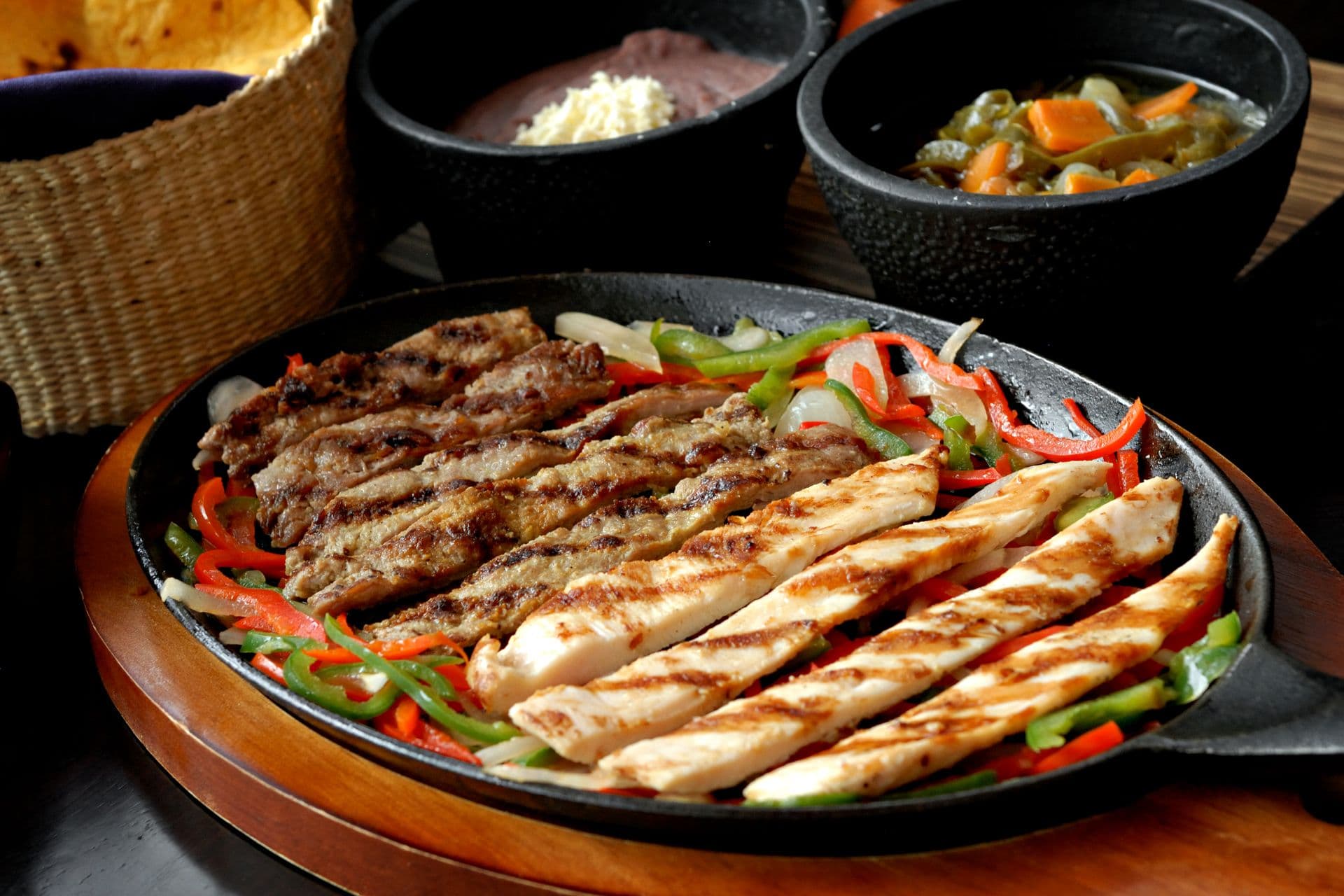 Pexels contributor · Pexels License
Steak Fajitas
43 min · moderate
Steak fajitas start with a well-marbled cut like skirt or flank, a short lime-and-spice marinade, and a very hot skillet. Sear the steak fast, rest it, then char peppers and onions in the same pan. Slice thin against the grain and pile into warm tortillas. Most cooks pull the beef at 130–135°F for medium-rare, well below the 145°F whole-cut mark.
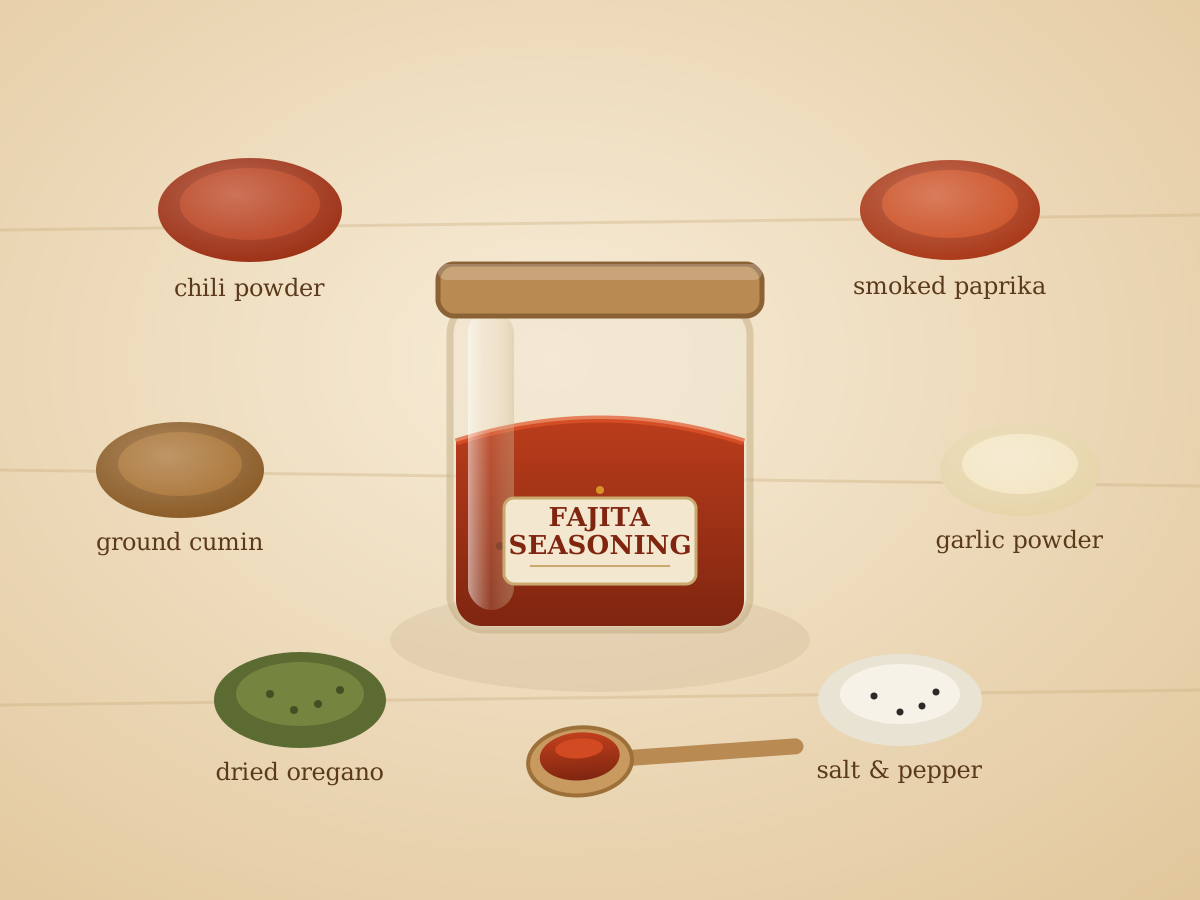
Homemade Fajita Seasoning
Homemade fajita seasoning is a chili-powder base rounded out with cumin, smoked paprika, garlic and onion powder, oregano, salt, cayenne, and black pepper. Mixing your own skips the anti-caking fillers packets rely on and lets you dial the salt and heat yourself. One batch whisks together in five minutes and keeps its punch for about six months in an airtight jar.
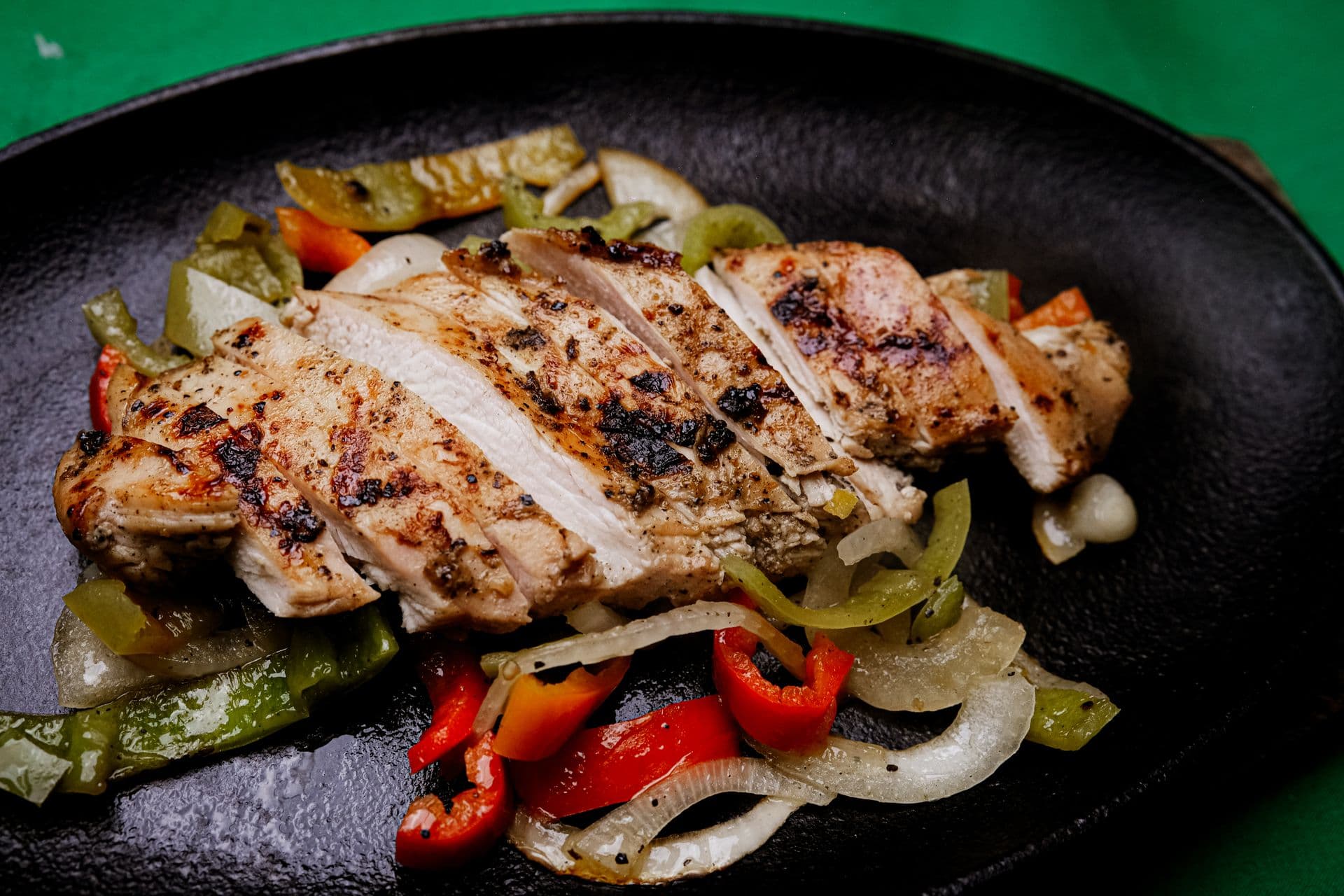 Pexels contributor · Pexels License
Classic Chicken Fajitas
30 min · easy
Classic chicken fajitas come together in one skillet in about half an hour. Sear seasoned strips of boneless skinless thigh over medium-high heat until browned, cook the peppers and onions in the same pan so they pick up the fond, then finish with a squeeze of lime. Cook the chicken to 165°F, pile it into warm tortillas, and add your toppings.